Please Choose Your Language
Views: 282 Author: Site Editor Publish Time: 2026-03-21 Origin: Site
The digital gold rush is no longer about bits and bytes alone; it is about gigawatts. As Artificial Intelligence (AI) transitions from simple chatbots to massive Large Language Models (LLMs), the physical infrastructure supporting this intelligence is under unprecedented strain. Data centers once pulled predictable amounts of electricity, but AI chips like the NVIDIA H100 consume significantly more power than traditional CPUs. This shifts the conversation from software capabilities to a hard physical reality: power grid demand is skyrocketing, and our aging infrastructure must adapt or fail.
We are witnessing a decoupling of digital growth and energy capacity. While AI efficiency improves every year, the sheer scale of deployment outpaces those gains. To understand if the grid can keep up, we must look at the hardware sitting between the high-voltage lines and the server racks. It isn't just about generating more "green" energy; it is about the Medium Voltage Switchgear and massive Prefabricated Substation units required to step down and distribute that power safely.
AI models require massive clusters of GPUs. These clusters generate heat and draw constant, high-density loads. Unlike residential areas where electricity use peaks in the evening, AI data centers demand a "flat" load—meaning they pull maximum power 24/7. This constant pressure accelerates the wear and tear on local distribution networks.
Grid operators now face a "connection queue" crisis. In major tech hubs, new data centers wait years just to get a high-voltage hookup. This isn't because of a lack of fuel, but a lack of delivery systems. The power grid demand is hitting bottlenecks at the transformer level. When a single data center campus requires as much electricity as a small city, the existing Low Voltage Switchgear and distribution lines simply cannot handle the throughput without catastrophic failure or massive overheating.
| Component | Traditional Data Center Need | AI-Ready Data Center Need |
| Power Density | 5–10 kW per rack | 50–100+ kW per rack |
| Cooling Power | Air-cooled (Lower draw) | Liquid-cooled (High pump/chiller draw) |
| Grid Interaction | Standard 11kV/33kV | Dedicated Prefabricated Substation |
Most of our electrical architecture was designed for a 20th-century load profile. It assumed a mix of industrial motors and domestic lighting. AI computing is different. It is highly sensitive to power quality. A slight dip in voltage can crash a million-dollar training run. Therefore, the power grid demand for AI isn't just about quantity; it’s about "clean," stable, and uninterrupted delivery.
The bottleneck often starts at the point of entry. To manage these loads, facilities need upgraded Medium Voltage Switchgear to isolate circuits and prevent surges from cascading through the system. If a Circuit Breaker trips due to an AI-induced thermal overload, the downtime costs are astronomical. We see a massive shift toward modularity to solve this. Instead of building brick-and-mortar power houses, engineers now drop a Prefabricated Substation directly onto the site to shave months off construction timelines.
To bridge the gap between high-voltage transmission and the server floor, transformers must evolve. In the past, a standard transformer sat on a pad and hummed quietly for 30 years. Today, those units are being pushed to their thermal limits. The power grid demand in urban areas often requires a Pad Mounted Transformer because they offer a compact, tamper-resistant solution that fits into the tight footprints of edge computing sites.
In more distributed or rural AI edge deployments, we rely on different hardware. A Single Phase Pole Mounted Power Transformer might serve a small 5G-integrated AI node. While these are smaller, the cumulative impact of thousands of these units adds a new layer of complexity to power grid demand management. They must be smarter, often including sensors to report health back to the utility.
Every step of the way, the system needs a safety net. A high-performance Circuit Breaker is the last line of defense. As AI loads fluctuate during "inference" bursts, these breakers must handle transient currents without nuisance tripping, yet remain sensitive enough to prevent fires. It is a delicate balancing act that requires top-tier engineering.
The traditional way of expanding the grid—planning for a decade and building for five years—is too slow for the AI era. Big Tech companies are now bypassing traditional utility timelines by building their own "micro-grids." Central to this strategy is the Prefabricated Substation. It arrives on a flatbed truck, pre-wired and pre-tested, ready to handle the power grid demand of a new server wing immediately.
Within these substations, the organization of power is critical. We use Low Voltage Switchgear to distribute electricity from the main transformer to the individual server rows. This gear acts as the "brain" of the power room, monitoring loads and ensuring that no single rack exceeds its thermal envelope. Without this granular control, the sheer power grid demand would melt standard industrial wiring.
Speed: Modular units reduce site work by 40%.
Reliability: Factory-controlled environments ensure higher quality than field-built sites.
Scalability: You can add another Distribution Box or switchgear cabinet as more racks are installed.
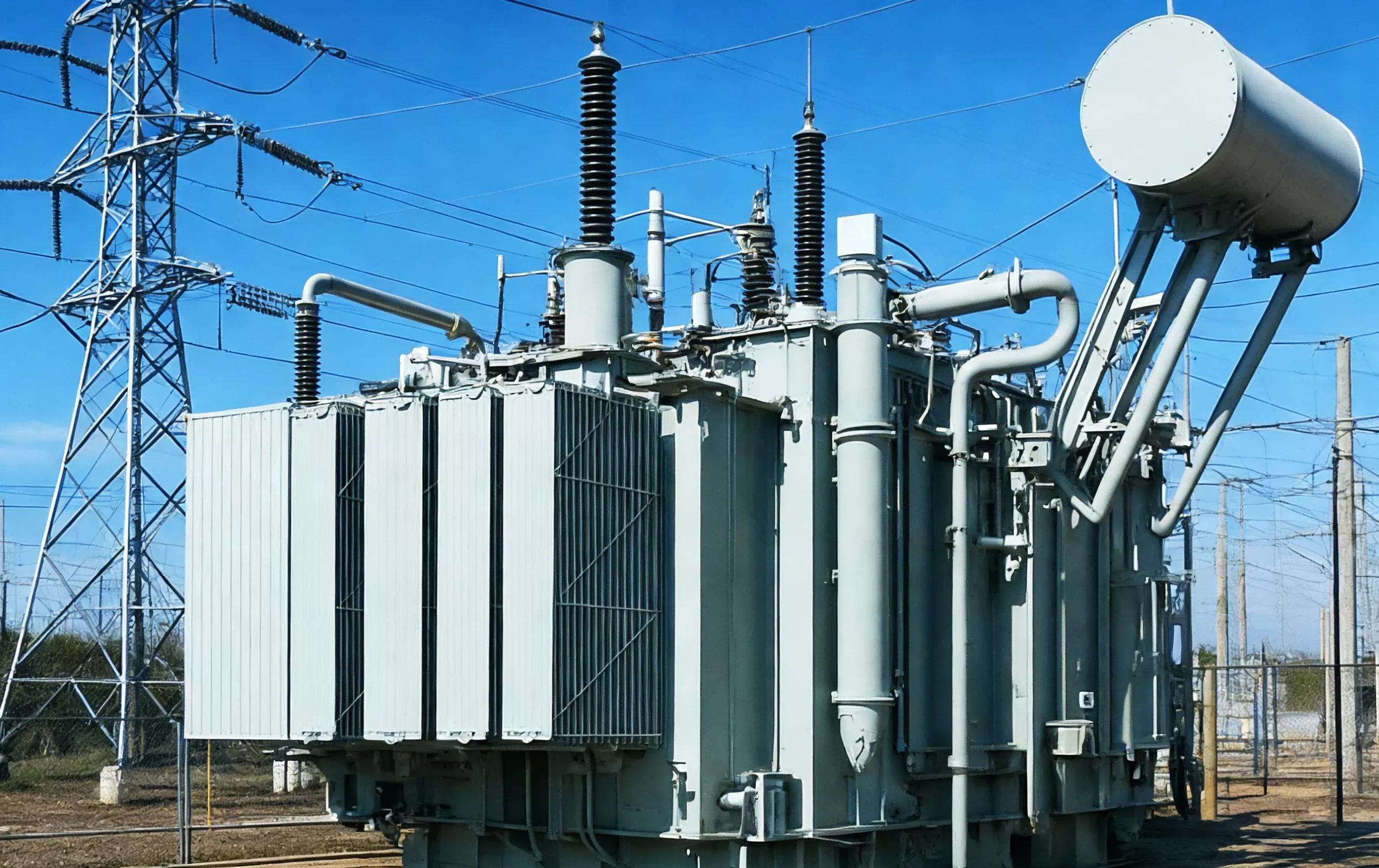
There is a common misconception that renewable energy alone will solve the power grid demand problem. While wind and solar provide the electrons, they don't provide the stability. AI needs 99.999% uptime. This means we need a massive increase in energy storage and "buffer" hardware.
We are seeing a trend where data centers integrate high-capacity Distribution Box units that can switch between grid power, battery backup, and onsite generation. This flexibility reduces the peak power grid demand on the public utility. By smoothing out the "spikes," AI companies become better neighbors to the residential areas sharing the same lines.
As we look toward the next decade, the hardware must become more "dense." We cannot simply keep adding more wires; we have to make the existing wires carry more. This involves upgrading to Medium Voltage Switchgear that can handle higher voltages in smaller enclosures.
The industry is also moving toward "Smart Transformers." Imagine a Pad Mounted Transformer that communicates directly with the AI's workload scheduler. If the power grid demand is too high, the transformer tells the AI to slow down its training for ten minutes. This level of integration is the only way the grid stays upright as we move toward AGI (Artificial General Intelligence).
The answer to "Can the power grid keep up?" is: Yes, but only if we rebuild the middle. The power generation is there, and the AI demand is definitely there. The crisis lies in the distribution hardware. By investing in robust Prefabricated Substation designs, reliable Circuit Breaker technology, and high-efficiency Low Voltage Switchgear, we can create a network capable of fueling the AI revolution.
The future of intelligence is physical. It is made of copper, steel, and silicon. To meet the rising power grid demand, we must treat the power chain with the same urgency as the software code.
At ZISHENG, we don't just watch the power grid demand grow; we build the tools to manage it. We are a premier manufacturer based in China, specializing in high-performance power equipment that powers the world's most demanding industries. Our factory is equipped with state-of-the-art production lines for Pad Mounted Transformer units and Single Phase Pole Mounted Power Transformer systems.
We take pride in our "Green Factory" status, ensuring that while we help you solve AI energy challenges, we do so sustainably. Our strength lies in our integrated R&D and manufacturing capability. Whether you need a custom Prefabricated Substation for a data center or robust Medium Voltage Switchgear for an industrial complex, our engineering team delivers precision-engineered solutions. We own the entire process, from the first coil winding to the final testing of every Distribution Box, ensuring your infrastructure never becomes the bottleneck.
Q: How much does AI increase power grid demand compared to standard cloud computing?
A: AI workloads can be 5 to 10 times more energy-intensive per square foot than traditional cloud hosting, primarily due to the power-hungry nature of GPUs and the cooling they require.
Q: What is the most critical component in a data center's power chain?
A: While all are important, the Medium Voltage Switchgear and the Pad Mounted Transformer are vital because they bridge the gap between high-voltage utility lines and the sensitive electronics inside.
Q: Can a Prefabricated Substation handle extreme weather?
A: Yes. Modern Prefabricated Substation units are designed for all-weather durability, providing a self-contained, climate-controlled environment for sensitive Circuit Breaker and switchgear components.
Q: Why is a Distribution Box necessary if I have a main transformer?
A: A Distribution Box provides local control and protection. It allows you to split power into smaller, manageable circuits, ensuring that a fault in one server rack doesn't shut down the entire facility.
Q: Are pole-mounted transformers still relevant for AI?
A: Absolutely. For "Edge AI" and 5G nodes in urban environments, a Single Phase Pole Mounted Power Transformer is often the most efficient way to provide localized power without a massive footprint.