
Please Choose Your Language
Views: 333 Author: Site Editor Publish Time: 2026-03-31 Origin: Site
The artificial intelligence revolution isn't just happening on screens; it’s happening in the physical world. While we marvel at Chatbots and generative art, the hidden backbone of this tech—the power infrastructure—is under immense pressure. Data centers are evolving from simple storage hubs into high-performance computing (HPC) powerhouses. This shift demands a radical rethink of how we distribute, manage, and protect electricity.
If we don't upgrade our current systems, the AI dream will hit a physical wall. In this guide, we dive deep into the specific hurdles facing modern electrical grids and the hardware solutions needed to keep the lights on in the age of intelligence.
AI models require an exponential increase in computing power compared to traditional cloud processing. A single AI server rack can pull 50kW to 100kW, whereas older setups stayed below 10kW. This density gap creates a massive headache for existing power infrastructure.
We can't just plug these new servers into old outlets. The load isn't just higher; it's "peakier." AI training involves massive bursts of energy followed by slight dips. This volatility can destabilize a local grid if it lacks the right buffering tools. To handle this, engineers are looking at more localized, robust hardware.
Using a Prefabricated Substation is becoming the standard for rapid scaling. These "plug-and-play" units allow data center operators to deploy high-capacity power points without waiting years for traditional brick-and-mortar construction. They house everything from transformers to switchgear in a weather-proof enclosure, making them the front line of defense against AI energy surges.
The journey of an electron from the plant to an AI chip is complex. The primary challenge in the power infrastructure is stepping down high voltages efficiently without losing energy as heat. Every percentage point lost in conversion equals millions of dollars in wasted operational costs.
For large-scale AI campuses, the Medium Voltage Switchgear acts as the primary traffic controller. It directs power from the utility to various parts of the facility. If this component fails, the entire operation goes dark.
Once power enters the facility, it must be refined.
Medium Voltage Switchgear: Handles incoming utility power (typically 5kV to 35kV).
Low Voltage Switchgear: Distributes power to the actual server rows (typically under 1kV).
By optimizing these stages, we reduce the "Total Cost of Ownership." Modern power infrastructure designs now integrate smart monitoring into this gear to predict failures before they happen.
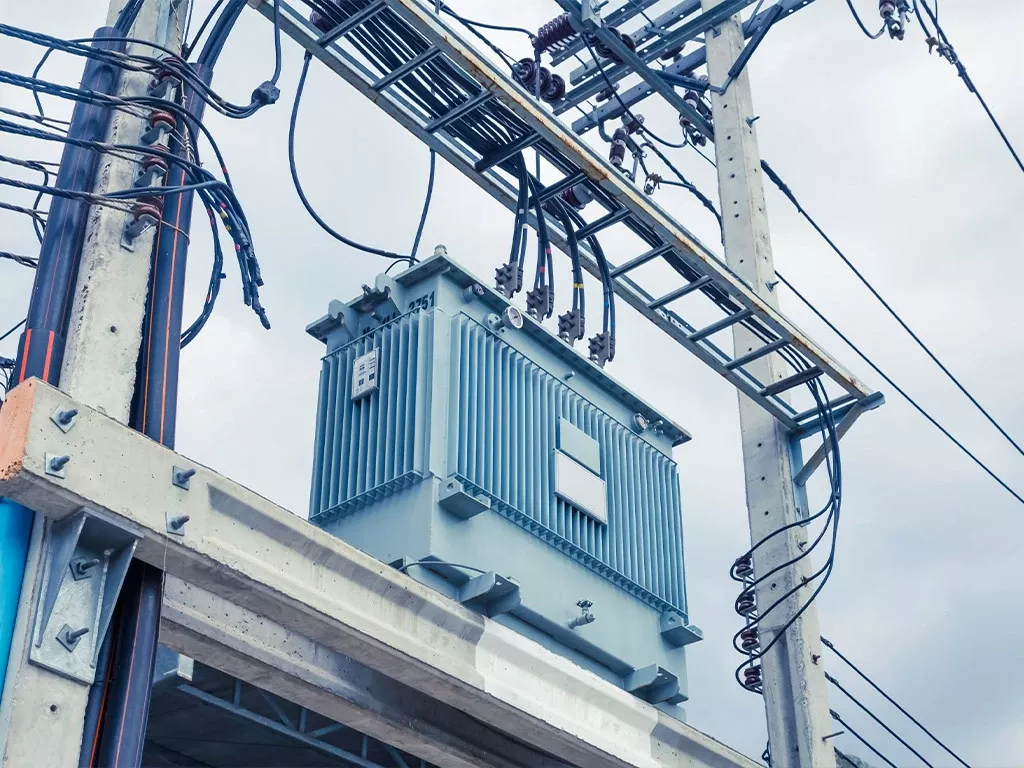
Transformers are the unsung heroes of the AI era. Without them, we couldn't move power across distances or into delicate hardware. However, the AI era requires transformers that are smaller, more efficient, and incredibly durable.
In many suburban or edge-computing AI deployments, we see a shift toward specialized units. A Single Phase Pole Mounted Power Transformer is often used in decentralized networks to provide stable power to smaller edge nodes. While large data centers get the headlines, AI also lives at the "edge"—in smart cameras and local sensors—which rely on these pole-mounted units.
| Feature | Pad Mounted Transformer | Pole Mounted Transformer |
| Placement | Ground level, often in cabinets | High up on utility poles |
| Safety | Tamper-resistant, ideal for public areas | Out of reach, saves ground space |
| Capacity | High (Great for large AI hubs) | Moderate (Great for edge AI) |
| Application | Heavy-duty power infrastructure | Residential/Light commercial grids |
A Pad Mounted Transformer is frequently the go-to for localized AI clusters because it can be placed right outside the building, keeping the high-voltage lines short and efficient.
When an AI cluster ramps up for a training session, the sudden draw can cause "nuisance tripping" or, worse, fire hazards. The power infrastructure must be smart enough to distinguish between a legitimate surge and a dangerous fault.
The Circuit Breaker is the primary safety mechanism here. In an AI data center, we don't just use standard home breakers. We use high-interrupting capacity industrial versions that can handle massive short-circuit currents.
Furthermore, the Low Voltage Switchgear must be modular. As AI demands grow, we need to add more circuits without shutting down the entire system. This "hot-swappable" capability ensures that the AI never stops learning.
AI consumes power, and power generates heat. This creates a vicious cycle. If the power infrastructure gets too hot, its efficiency drops, causing it to draw even more power. Most people think about cooling the CPUs, but we also have to cool the transformers and switchgear.
We are seeing a trend where power infrastructure is being designed with better airflow and even liquid cooling integration. For example, a Prefabricated Substation might now include dedicated HVAC systems just to keep the internal Medium Voltage Switchgear at an optimal 25°C.
If these components overheat, the insulation breaks down. This leads to "arc flashes"—explosive electrical discharges that can destroy equipment and injure workers. High-quality Distribution Box units are now built with better venting and heat-reflective coatings to mitigate this risk.
We often think of AI as a giant brain in a warehouse in Virginia or Oregon. But "Inference"—the act of the AI actually doing a task—often happens closer to the user. This is "Edge AI," and it creates a fragmented power infrastructure challenge.
Instead of one giant power feed, we now need thousands of smaller, reliable power points. This is where the Distribution Box becomes vital. It takes the power from a larger source and splits it into the final circuits for edge servers.
Reliability: Edge nodes are often in hard-to-reach places.
Compactness: Space is at a premium in urban environments.
Protection: They must withstand outdoor elements.
The biggest irony of the AI era? Many companies want "Green AI," but the power infrastructure required to run it is massive. To solve this, we are integrating renewable energy directly into the power chain.
Microgrids are becoming popular. These are small-scale power grids that can operate independently. They often use a mix of solar, battery storage, and a Prefabricated Substation to bridge the gap between the green energy source and the AI load.
We must ensure that the hardware, such as the Single Phase Pole Mounted Power Transformer, is made with recyclable materials and high-efficiency cores (like amorphous steel) to reduce "no-load" losses.
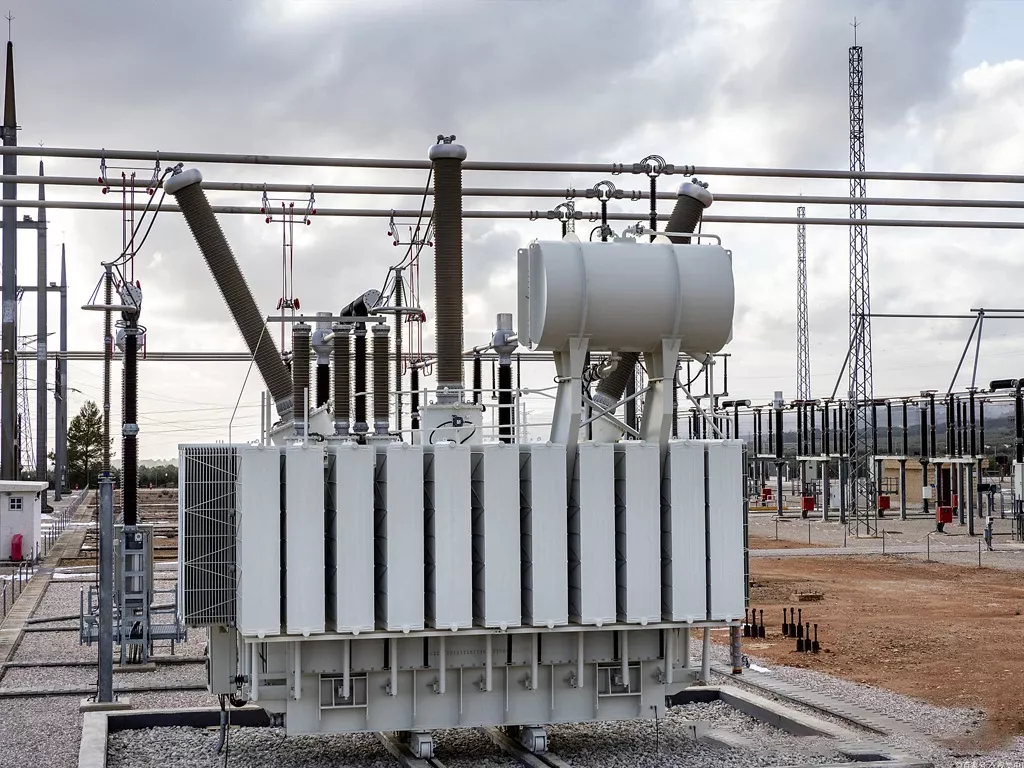
As the global grid ages, it becomes less reliable. Yet, AI requires 99.999% uptime. This "gap" is where the most significant power infrastructure investment is happening.
We are moving toward "Software-Defined Power." This means the Medium Voltage Switchgear and Circuit Breaker systems are connected to the cloud. They can "self-heal" by rerouting power automatically if a line goes down.
High-Capacity Transformers: Use a Pad Mounted Transformer for high-density zones.
Redundant Protection: Ensure every line has a dedicated, high-speed Circuit Breaker.
Modular Distribution: Use high-quality Distribution Box setups for easy maintenance.
Rapid Deployment: Lean on Prefabricated Substation designs to beat construction delays.
The AI era is a physical challenge as much as a digital one. To keep up with the pace of innovation, our power infrastructure must become more modular, efficient, and resilient. From the Medium Voltage Switchgear that manages the intake to the Distribution Box that feeds the racks, every component plays a role in the global intelligence race. By investing in robust hardware like Pad Mounted Transformers and advanced Low Voltage Switchgear, we can ensure that the grid doesn't just survive the AI era—it thrives in it.
ZISHENG isn't just a manufacturing site; it's a hub of precision engineering. We specialize in producing heavy-duty equipment like the Pad Mounted Transformer and Medium Voltage Switchgear that power today’s largest data projects.
We take great pride in our manufacturing strength. Our facility is equipped with advanced testing labs where we push every Circuit Breaker and Prefabricated Substation to its limit before it ever reaches a customer. We understand that in the AI world, there is no room for downtime. That’s why we focus on "quality at the source," ensuring our Single Phase Pole Mounted Power Transformers and Distribution Box units meet the strictest international standards. When you work with us, you aren't just buying hardware; you're gaining the reliability of a partner who understands the high stakes of the AI power transition.
Q1: Why is a Pad Mounted Transformer better for AI data centers than traditional types?
A: It's mostly about safety and space. These units are self-contained and tamper-resistant, allowing them to sit right next to the building. This reduces the distance the low-voltage power has to travel, which cuts down on energy loss.
Q2: What is the main difference between Medium Voltage and Low Voltage Switchgear?
A: Think of Medium Voltage Switchgear as the "Main Gate" for the utility's power. Low Voltage Switchgear is the "Internal Traffic Cop" that sends that power to specific server racks and cooling systems at a safer, usable voltage.
Q3: Can AI help manage power infrastructure?
A: Absolutely. AI is being used to predict when a Circuit Breaker might fail or when a transformer is overheating. This "Predictive Maintenance" is the future of grid management.
Q4: Why are Prefabricated Substations becoming so popular?
A: Speed. Traditional substations take years to permit and build. A Prefabricated Substation can be built in a factory and shipped to the site, saving months of time for urgent AI expansions.


