Please Choose Your Language
Views: 412 Author: Site Editor Publish Time: 2026-03-24 Origin: Site
The AI revolution is no longer a distant dream; it is here, and it is hungry. As we integrate Large Language Models (LLMs) and complex neural networks into every facet of our lives, from healthcare to high-frequency trading, a silent crisis is brewing in the shadows of the data center. That crisis is the unprecedented surge in electricity consumption. Training a single cutting-edge AI model can require as much power as hundreds of households use in a year.
This blog explores why AI computing demands so much energy, how it strains our current infrastructure, and the specific hardware solutions—from a Prefabricated Substation to a high-performance Circuit Breaker—required to keep the digital world spinning. We are witnessing a fundamental shift in how power is distributed and managed. Understanding the rising power demand behind AI computing is the first step toward building a sustainable, high-tech future.
Artificial Intelligence thrives on data, but processing that data requires massive computational "muscle." Unlike traditional software, AI training involves billions of parameters. Each parameter requires a mathematical calculation performed by a GPU (Graphics Processing Unit). These GPUs run at full throttle for weeks or months at a time, leading to a massive spike in electricity consumption.
When we look at the hardware level, the heat generated by these processors requires even more energy for cooling systems. It is a double-edged sword: you need power to compute, and you need power to keep the computers from melting. This cycle has pushed the total electricity consumption of data centers to nearly 2% of global demand, with projections suggesting it could double by 2030.
| AI Task | Estimated Electricity Consumption |
| Single AI Query | ~10x more than a standard Google search |
| Training GPT-3 | ~1,287 Megawatt-hours (MWh) |
| Global Data Center Growth | 15% - 20% Annually (Projected) |
The existing electrical grid was not designed for the concentrated, "always-on" load of AI-heavy data centers. Standard municipal grids often struggle to provide the consistent, high-voltage supply required. This is where specialized equipment like the Medium Voltage Switchgear becomes critical. It acts as the gatekeeper, managing the flow of electricity from the utility provider to the facility.
Without a robust Medium Voltage Switchgear system, a data center risks catastrophic failure. AI chips are sensitive; even a millisecond of power fluctuation can corrupt a training session worth millions of dollars. Therefore, the infrastructure must be as "intelligent" as the AI it supports. We are seeing a move toward decentralized power hubs where a Prefabricated Substation is deployed directly on-site to reduce transmission losses and improve reliability.
To prevent surges, every modern facility relies on a high-grade Circuit Breaker. These aren't your household switches. They are industrial-grade units designed to interrupt massive currents instantly. As AI clusters grow, the demand for more responsive Circuit Breaker technology increases to protect expensive GPU clusters from electrical faults.
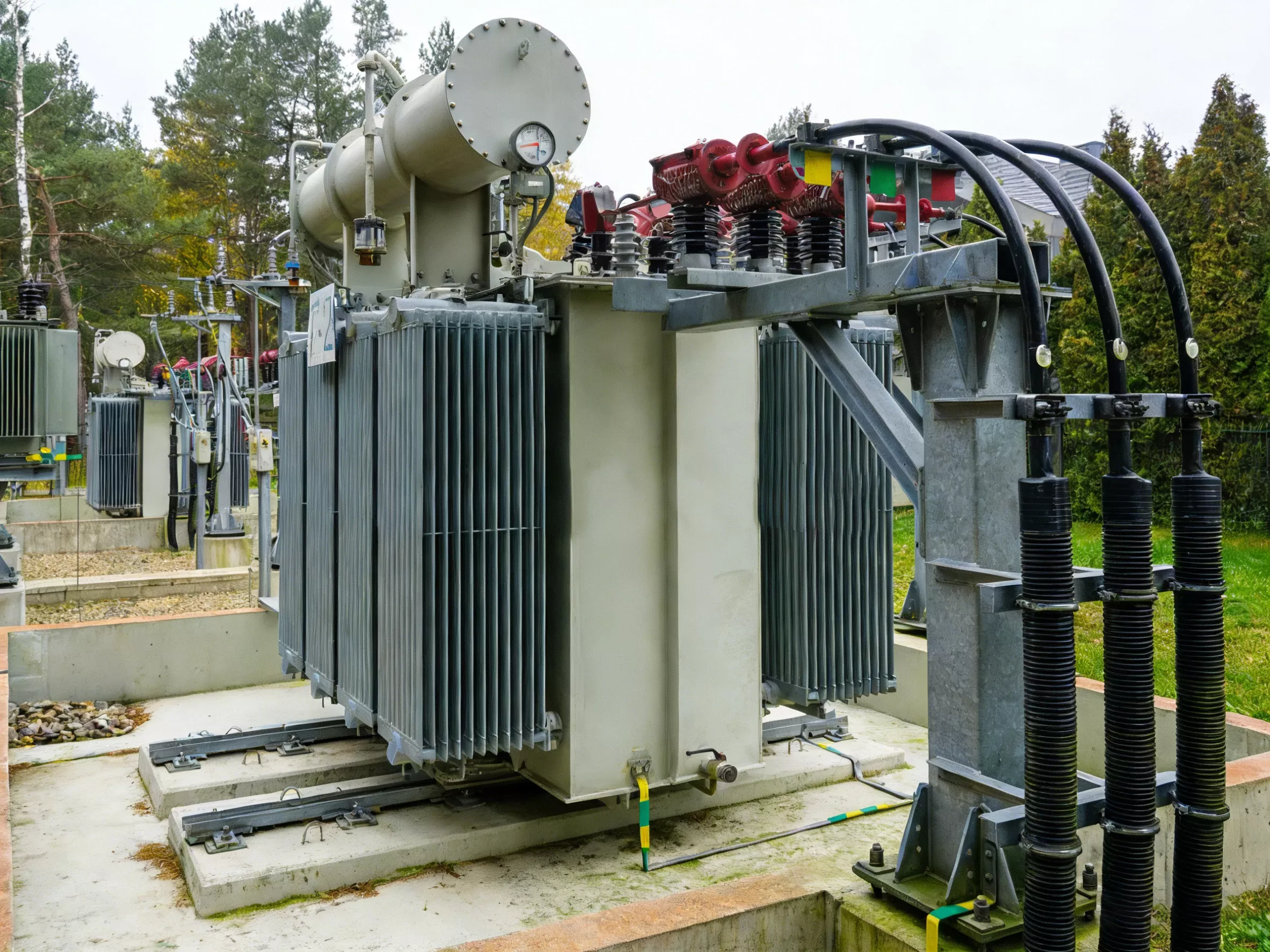
How do we get high-voltage power down to a level that a server can actually use? This is the job of the transformer. In the context of AI, we need high efficiency to minimize the electricity consumption lost as waste heat during conversion.
For large-scale data centers, the Pad Mounted Transformer is the industry standard. These units are tamper-resistant and sit outdoors, often on a concrete pad. They take the medium voltage from the grid and step it down for the facility's internal distribution. Because AI facilities are often located in urban or suburban "edge" locations, the compact design of a Pad Mounted Transformer is essential.
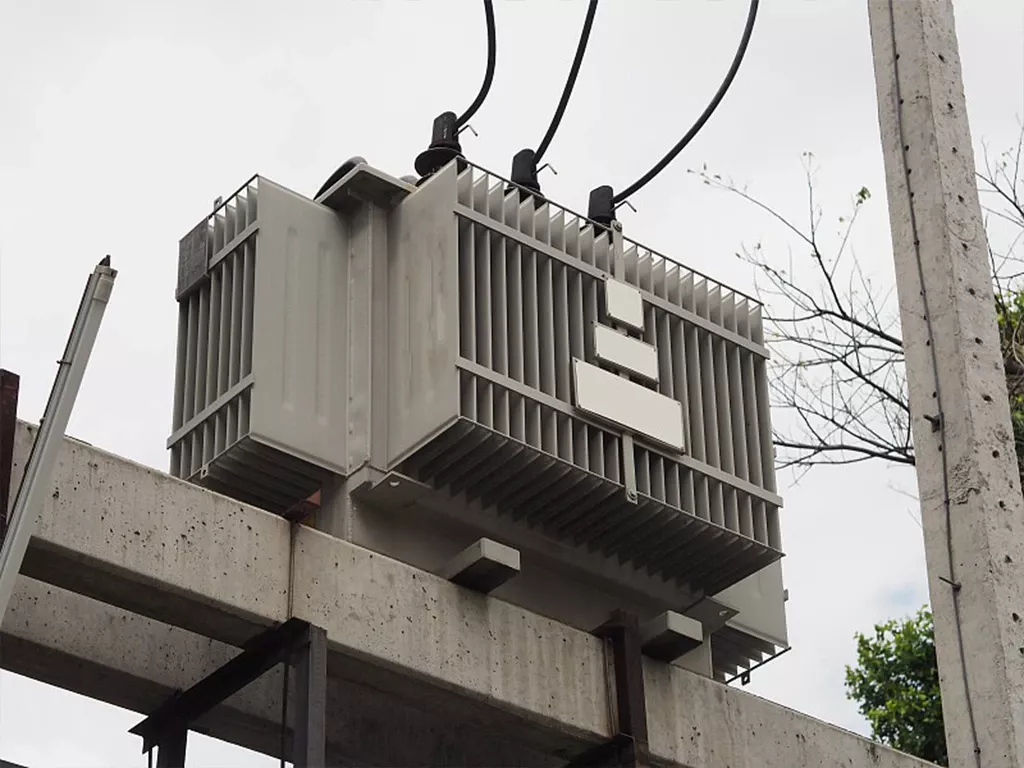
Not all AI happens in a giant warehouse. Edge computing—where AI runs on local towers or small neighborhood hubs—is growing. In these scenarios, a Single Phase Pole Mounted Power Transformer is often the best choice. It provides a localized power boost to support 5G AI integration without requiring a massive footprint. It keeps the electricity consumption localized and efficient.
Once the power enters the building, it must be subdivided and sent to thousands of individual server racks. This is a complex logistical dance. The Low Voltage Switchgear handles this internal routing. It ensures that if one rack fails, it doesn't take down the entire floor.
Efficient Low Voltage Switchgear reduces "vampire" power loss. Every watt saved in distribution is a watt that can go toward actual computing. Inside the server room, the Distribution Box acts as the final checkpoint. These boxes must be rated for high continuous loads, as AI servers rarely "idle" like traditional web servers do.
Reliability: A high-quality Distribution Box prevents localized overheating.
Scalability: Modular Low Voltage Switchgear allows data centers to add more AI racks without a total system overhaul.
Safety: Integrated Circuit Breaker units within these systems provide multi-layered protection.
Speed is everything in the AI race. Companies cannot wait three years to build a traditional brick-and-mortar substation. This is why the Prefabricated Substation has become a game-changer. These are "all-in-one" units that arrive at the site pre-assembled and pre-tested.
A Prefabricated Substation typically includes:
Medium Voltage Switchgear for primary control.
A high-efficiency transformer (often a variant of a Pad Mounted Transformer).
Low Voltage Switchgear for outgoing circuits.
Integrated cooling and fire suppression systems.
By using a Prefabricated Substation, companies can deploy AI capacity in months rather than years. It also allows for better monitoring of total electricity consumption, as the entire power path is integrated into a single digital management system.
While hardware helps manage the load, we cannot ignore the sheer volume of electricity consumption. AI developers are now looking at "green" AI. This involves optimizing code to require fewer floating-point operations. However, hardware remains the primary lever for sustainability.
By upgrading to modern Medium Voltage Switchgear and high-efficiency transformers, facilities can reduce their "Power Usage Effectiveness" (PUE) ratio. A lower PUE means less energy is wasted on non-computing tasks like cooling and lighting. High-quality electrical components are the foundation of any "Green Data Center" initiative.
"Energy efficiency in AI is no longer an elective; it is a business imperative. The cost of electricity consumption is now a primary factor in the ROI of AI projects." (Needs Verification: Estimated industry sentiment 2024-2025).
The next generation of AI power management will likely move toward solid-state technology. Traditional mechanical Circuit Breaker designs are being supplemented by digital monitoring systems that can predict a fault before it happens.
We will see more "smart" Distribution Box units that can communicate directly with the AI's workload management software. If the AI detects a massive compute spike coming, it can signal the Low Voltage Switchgear to prepare for the thermal load. This synergy between software and hardware is the only way to manage the skyrocketing electricity consumption of the next decade.
The rising power demand behind AI computing is a monumental challenge, but it is also an opportunity for innovation in power infrastructure. From the massive Pad Mounted Transformer that fuels a campus to the precise Circuit Breaker that protects a single GPU, every component plays a vital role. By focusing on high-efficiency Low Voltage Switchgear and the rapid deployment of a Prefabricated Substation, we can build a world where AI flourishes without overwhelming our energy resources. Minimizing electricity consumption through better hardware is the smartest "intelligence" we can apply.
Q: How much does AI increase a data center's electricity consumption?
A: AI workloads typically increase the power density of a server rack from 5-10kW to over 50-100kW, significantly raising total electricity consumption.
Q: Why is a Prefabricated Substation better for AI projects?
A: It allows for faster deployment and is specifically engineered to handle the high, consistent loads associated with AI clusters compared to general-purpose infrastructure.
Q: What is the role of a Circuit Breaker in an AI data center?
A: It protects sensitive and expensive AI hardware from electrical faults and surges, ensuring uptime and preventing data loss.
Q: Can a Single Phase Pole Mounted Power Transformer support AI?
A: Yes, primarily for "Edge AI" applications where smaller amounts of data are processed closer to the user, such as in smart city sensors.
At its core, ZISHENG is more than just a manufacturer; it is a dedicated partner in the global energy transition. ZISHENG’s factory is equipped with state-of-the-art automated production lines that specialize in high-performance power equipment. Whether it is a robust Pad Mounted Transformer or a complex Medium Voltage Switchgear assembly, ZISHENG maintains rigorous quality control standards that exceed international benchmarks.
ZISHENG has invested heavily in research and development to ensure that its products, such as the Prefabricated Substation, are optimized for the high-intensity demands of modern AI data centers. The strength of ZISHENG lies in its ability to provide tailor-made solutions—from the initial Distribution Box to the final Circuit Breaker—ensuring that every facility operates with maximum efficiency and minimal electricity consumption.
ZISHENG is proud to support the infrastructure that powers the future of intelligence.