
Please Choose Your Language
Views: 341 Author: Site Editor Publish Time: 2026-03-26 Origin: Site
The world is currently standing at a unique intersection of innovation and infrastructure. As artificial intelligence (AI) evolves from a niche tech experiment into a global economic engine, it brings a massive appetite for energy. We are witnessing a historic surge in electricity demand, driven by the high-performance computing required to train Large Language Models (LLMs) and run real-time inference.
This "AI Boom" isn't just about software; it's a physical challenge for our power grids. To keep the lights on and the servers humming, we need more than just code. We need a robust hardware foundation—everything from the Pad Mounted Transformer in the parking lot to the Medium Voltage Switchgear deep within the utility room. In this article, we'll explore how AI is reshaping the global energy landscape and what it means for the future of power distribution.
Artificial Intelligence is fundamentally different from traditional computing. While a standard Google search uses a tiny fraction of a watt-hour, a single ChatGPT query can consume nearly ten times that amount. This is because AI relies on massive GPU clusters that run at full throttle 24/7. Consequently, the electricity demand from data centers is projected to double by 2030, reaching approximately 945 TWh globally (Source: IEA, verified).
| Region | Current Data Center Load (TWh) | Projected 2030 Load (TWh) | Growth Rate |
| United States | ~200 | 440 | 120% |
| China | ~100 | 275 | 175% |
| Europe | ~100 | 150 | 50% |
The numbers tell a clear story: AI is pushing the grid to its limits. In regions like Northern Virginia or parts of China, the local electricity demand is growing so fast that utilities are struggling to keep up. This puts immense pressure on infrastructure. We see an urgent need for more Distribution Box units and upgraded Circuit Breaker systems to handle the increased load without causing regional blackouts.
The primary bottleneck for AI expansion today isn't just chip supply—it's the power delivery hardware. A single AI-focused data center can consume as much power as 100,000 households. To manage this, the transition from the high-voltage grid to the server rack must be flawless.
The journey of power starts at the substation. Here, a Prefabricated Substation serves as a modular, ready-to-use hub that integrates all necessary components. Inside these units, the Medium Voltage Switchgear acts as the "brain," protecting the system and directing power where it needs to go.
Without a reliable Circuit Breaker, a minor surge in an AI training cluster could take down an entire facility. Furthermore, as these centers expand into urban or suburban areas, the Pad Mounted Transformer becomes essential. It provides a safe, tamper-proof way to step down voltage in a compact footprint near the building.
Traditional server racks used to draw 7-10 kW. Today, AI racks are pushing 30-100 kW or more. This jump in density means the internal wiring and power distribution must be much more sophisticated. It isn't just about "more" power; it's about "cleaner" and "more stable" power.
Precision Distribution: A high-quality Distribution Box is required to split high-capacity feeds into smaller, manageable lines for individual racks.
Voltage Stability: AI chips are sensitive. Fluctuations in voltage can lead to data errors or hardware damage. This is why a Single Phase Pole Mounted Power Transformer is often used in smaller, edge-computing sites to ensure localized stability before power enters the facility.
Safety First: With higher currents, the risk of electrical fire increases. Using high-spec Low Voltage Switchgear ensures that every circuit is monitored and protected against overcurrent.
By investing in these components, data center operators can satisfy the rising electricity demand while maintaining the 99.999% uptime that the tech industry requires.
One of the biggest challenges of the AI boom is speed. Companies like Microsoft, Google, and Meta need capacity now. Traditional construction of power substations can take years. This has led to a massive shift toward "plug-and-play" infrastructure.
A Prefabricated Substation is the perfect solution for this. Because it is built and tested in a factory environment, it can be deployed in weeks instead of months. These units come pre-installed with:
Medium Voltage Switchgear for primary protection.
High-efficiency transformers to reduce energy loss.
Integrated Circuit Breaker panels for secondary distribution.
This modularity allows companies to scale their energy capacity in lockstep with their server deployments. It also makes it easier to integrate renewable energy sources, like on-site solar or wind, which helps offset the massive electricity demand and meet corporate "net-zero" goals.
The impact of AI on electricity demand varies by geography. In the U.S., the focus is on upgrading aging urban grids. In emerging markets, the focus is on building brand-new infrastructure from scratch.
Much of the U.S. grid was built decades ago. To support AI, utilities are rapidly replacing old equipment with modern Low Voltage Switchgear and more efficient Pad Mounted Transformer units. They are also looking at "grid-enhancing technologies" to squeeze more capacity out of existing lines.
In Europe, strict environmental regulations are forcing data centers to become ultra-efficient. This means using a Single Phase Pole Mounted Power Transformer for decentralized "edge" AI nodes to reduce transmission loss. In China, the scale of development is unmatched, with massive "energy-computing" hubs being built in the western provinces where electricity is cheaper and more abundant.
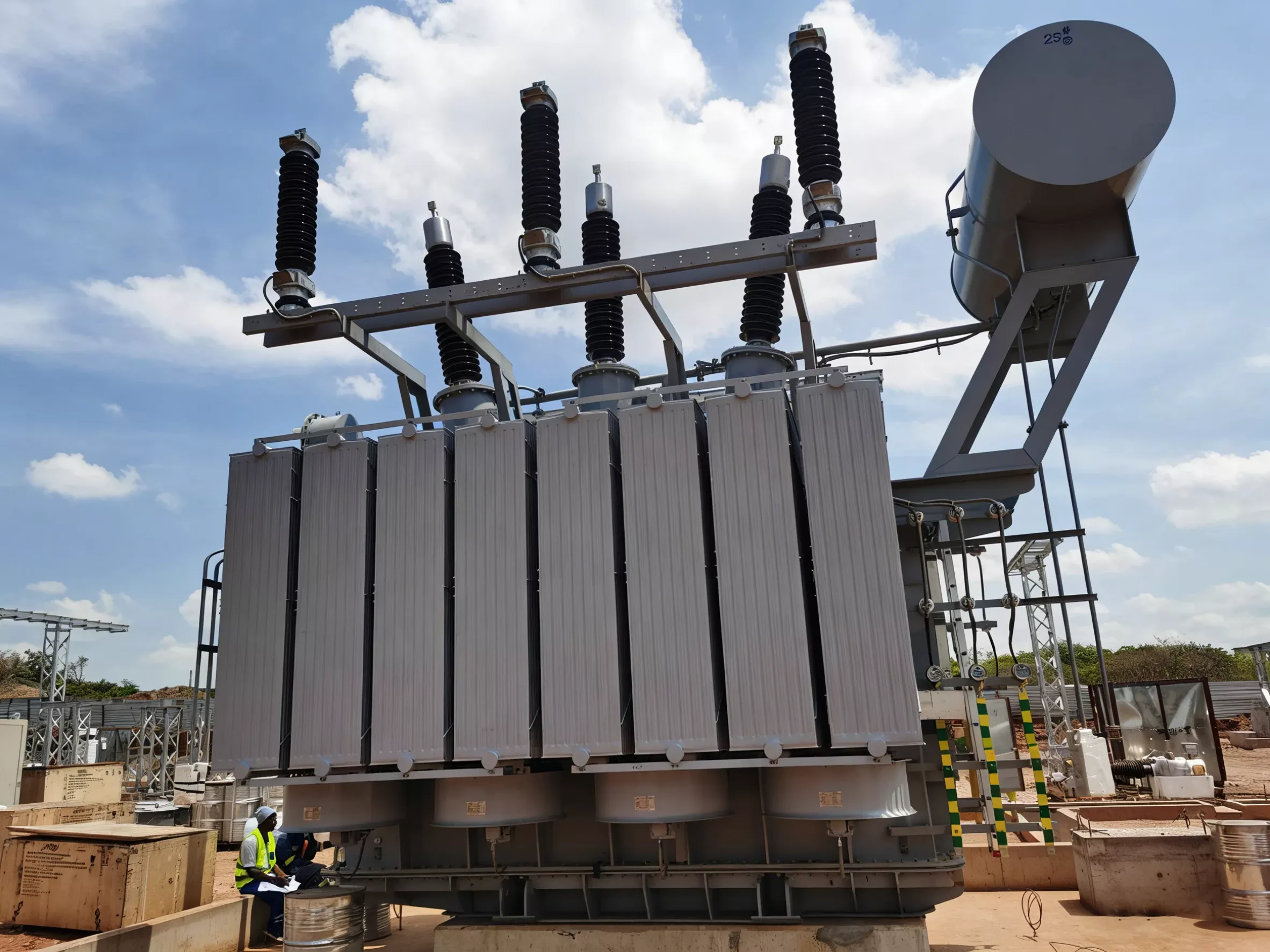
As the complexity of the grid increases, so does the risk of failure. AI workloads are "bursty"—they can go from idle to full power in milliseconds. This creates "harmonic distortions" that can stress electrical components.
To mitigate these risks, engineers rely on high-performance Medium Voltage Switchgear that can handle rapid switching cycles. Inside the data center, the Distribution Box must be equipped with smart sensors to detect heat buildup before a failure occurs.
"There is no AI without energy. Affordable, reliable, and sustainable electricity will be the ultimate determinant of who wins the AI race." (Source: IEA Executive Summary, 2026).
This reliability starts with the Circuit Breaker. If it trips too slowly, expensive GPUs are fried. If it trips too easily, the AI training run—which might have been running for weeks—is lost. High-quality electrical hardware is the unsung hero of the digital age.
We are moving into the "Age of Electricity." By 2030, global electricity demand will likely be 50% higher than it was in the previous decade. AI will be a major part of that, but so will electric vehicles and the electrification of heating.
To survive this surge, we need a "Smart Grid" that can balance these loads in real-time. This involves:
Smart Transformers: Using data to predict when a Pad Mounted Transformer might fail due to overheating.
Decentralized Power: Using a Single Phase Pole Mounted Power Transformer to support residential EV charging and local AI processing.
Resilient Infrastructure: Standardizing the use of the Prefabricated Substation to ensure that new power capacity can be added anywhere, anytime.
The AI boom is a double-edged sword. It offers incredible potential for human progress, but it demands an unprecedented amount of energy. Meeting this electricity demand requires a massive global effort to upgrade our physical infrastructure. From the Medium Voltage Switchgear in the primary substation to the Distribution Box at the end of the line, every piece of the puzzle must be built for reliability, efficiency, and scale.
The future of AI isn't just written in Python or C++; it's built with copper, silicon, and high-quality electrical engineering. If we get the hardware right, the possibilities are limitless.
At its core, ZISHENG is more than just a manufacturer; it is a partner in the global energy transition. With a state-of-the-art factory specializing in high-performance power solutions, ZISHENG has built a strong reputation for reliability and engineering excellence.
ZISHENG understands the unique pressures that the AI era places on modern power grids. That is why ZISHENG’s Prefabricated Substation designs and Medium Voltage Switchgear are engineered to meet the highest international standards.
ZISHENG takes pride in delivering the “muscle” behind the world’s most advanced “brains,” ensuring that customers have access to stable, scalable power solutions needed to lead the next industrial revolution.
Q: How much will AI increase total global electricity demand?
A: While data centers currently account for about 1.5% to 2% of global usage, this is expected to grow significantly. By 2030, AI and data centers could represent up to 4% or more of total global electricity demand.
Q: Why is a Pad Mounted Transformer important for AI?
A: AI data centers often need to be close to urban centers for low latency. A Pad Mounted Transformer allows high-voltage power to be safely stepped down in public or crowded areas with a minimal footprint.
Q: Can the current grid handle the AI boom?
A: Not without upgrades. Most regions require significant investment in Medium Voltage Switchgear and Circuit Breaker technology to manage the high-density, 24/7 loads required by AI clusters.
Q: What is the benefit of a Prefabricated Substation?
A: It reduces deployment time by up to 50%. Since it comes pre-assembled with transformers and Low Voltage Switchgear, it minimizes on-site labor and testing, allowing AI companies to scale faster.
Q: How does a Distribution Box help with energy efficiency?
A: By providing precise power routing and monitoring, a high-quality Distribution Box reduces "vampire" power loss and ensures that electricity is only used where and when it's needed.


