Please Choose Your Language
From 220kV Hub Substations to 33kV Terminal Distribution, ZiSheng Electrical Provides a Full-Chain Equipment Solution for KETRACO’s Kenya Project
This article documents how we addressed real-world challenges in Kenya’s power expansion project, including heat dissipation at high altitude, moisture protection near the lake environment, and coordinated delivery of multiple equipment models.
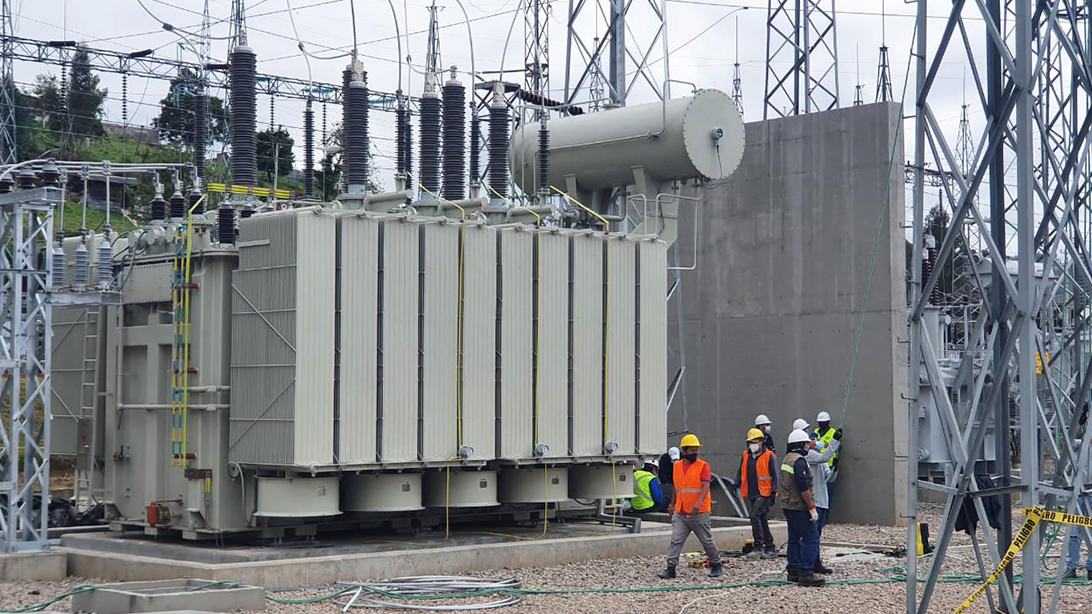
For Kenya’s power expansion project, we were awarded the contract to supply 30 transformers.
The project owner is KETRACO, and the project is part of the Western Grid Upgrade EPC Project. The equipment scope includes:
6 units of 150MVA transformers (220/66kV)
14 units of 63MVA transformers (132/33kV)
10 units of 30MVA transformers (33/11kV)
The equipment covers the entire chain from high-voltage transmission to terminal distribution.
This was not our first African project, but every project comes with its own challenges. For these 30 units in western Kenya, the main difficulties came down to three areas: environment, coordination, and delivery schedule.
The project site is located at an altitude of approximately 1,200 meters, near Lake Victoria.
Anyone experienced in high-altitude projects understands that when air density decreases, two issues occur simultaneously:
The external insulation margin decreases.
Heat dissipation efficiency is reduced.
A transformer designed for standard low-altitude areas cannot simply be installed in such an environment without modifications; otherwise, long-term operation may face reliability risks.
Our approach was straightforward, but every step strictly followed engineering requirements:
Altitude correction was carried out according to IEC 60076 standards.
We recalculated bushing creepage distances and air clearances to increase insulation safety margins.
Temperature rise was recalculated, and the cooling surface area was optimized.
Instead of simply adding more radiators, we matched the cooling design based on the actual ambient temperature profile of the project location.
A fully sealed corrugated oil tank structure was adopted.
This design was not simply to eliminate the conservator tank; more importantly, it reduces the exchange of external humid air with the transformer interior.
Since the Kenya project site is close to Lake Victoria and experiences high humidity throughout the year, traditional designs with breathers carry a higher risk of moisture ingress during long-term operation.
There is one manufacturing process that is often underestimated: vacuum oil filling.
At our factory, all transformers underwent vacuum drying treatment followed by vacuum oil filling.
The objective was simple:
To reduce residual moisture inside the insulation materials to the lowest possible level.
For equipment operating in high-humidity environments, this process is often more critical than simply selecting a certain brand of insulation paper.
The corrosion protection system was designed to meet coastal environment standards:
Zinc-rich primer as the base layer
Epoxy intermediate coating
Polyurethane topcoat
The reason was not just because the specification required a higher protection level. In a previous East African project, we observed that conventional coatings developed rust spots after only three years in a lakeside environment.
This project involves three voltage levels: 220kV, 132kV, and 33kV. If three different suppliers were selected for each voltage level, technical interfaces, commissioning coordination, and future spare parts management would become significantly more complicated.
Our solution was to supply all three voltage levels through Sheng Electrical, using:
A unified design system
A unified testing process
Unified technical standards
For the EPC contractor, this means:
Technical communication only needs to be handled with one team.
During installation and commissioning, equipment across different voltage levels follows consistent interface logic, reducing the risk of coordination issues.
During future operation and maintenance, the 14 units of 63MVA transformers and 10 units of 30MVA transformers can follow unified spare parts management and maintenance procedures, eliminating the need to maintain separate inventories for different manufacturers’ equipment.
This is not just a technical issue — it is a project management issue.
After more than 15 years of participating in EPC projects, we have gradually realized one thing:
EPC contractors are not most worried about expensive equipment; they are most concerned about delays caused by disputes and coordination problems between different suppliers.
The project includes:
Three transformer capacities
Three voltage levels
A total of 30 units of equipment
The manufacturing cycles vary significantly among different models.
Key materials were secured in advance.
Grain-oriented silicon steel and copper conductors account for a significant portion of transformer costs and are also among the materials most vulnerable to supply chain risks.
After project confirmation, we placed orders with steel mills and copper rod suppliers within the first week, bringing material preparation forward by nearly one month compared with normal production scheduling.
All factory tests were conducted in accordance with IEC 60076, including:
Transformer ratio test
DC resistance measurement of windings
No-load loss test
Load loss test
Insulation resistance test
Induced voltage withstand test
Lightning impulse test
Partial discharge test
For the 150MVA transformers, additional temperature rise tests were conducted according to project requirements.
All test data was fully archived and delivered together with the equipment to the project site.
Anyone with overseas project experience understands this:
Sometimes delivering complete documentation is even more important than delivering the equipment itself.
When many customers first engage in overseas EPC projects, they often ask one question:
Besides manufacturing equipment, how far can a supplier support the project?
We usually divide our support into three stages:
When customers provide the single-line diagram, grid parameters, load requirements, and site environmental data, we review everything in detail with them, equipment by equipment.
How to match the voltage levels, how to select the transformer capacity, and how to optimize the design structure — all of these decisions need to be completed during the engineering design stage.
The more detailed the early-stage design is, the fewer problems will occur later.
A dedicated project team follows up throughout the manufacturing process, and key production milestones are photographed and documented.
If customers want to inspect the progress, they are welcome to visit our factory at any time. They can also appoint a third-party inspection company to conduct manufacturing supervision.
We have been implementing transparent production management for many years, and the process has become highly standardized and efficient.
Technical documents are prepared according to project requirements, including:
Test reports
Technical specification sheets
Outline drawings
Installation manuals
Packing lists
Export documentation
For transportation, we can assist with coordination. During installation and commissioning, we provide technical guidance documents and professional support.
For us, the western Kenya project is more than just a single order.
It represents a typical African power grid upgrade project — with challenging environmental conditions, multiple voltage levels, and a tight delivery schedule. Successfully managing such a project demonstrates that our capabilities in design, manufacturing, project management, and export coordination are well integrated without major gaps.
When we first entered the transformer business 15 years ago, competition was mainly about price.
Today, the focus has shifted to more practical factors:
Can the equipment operate reliably after arriving at the project site?
Are the technical documents complete and accurate?
Can the supplier provide timely and effective support throughout the project?
These details may seem small, but they are often the factors that determine whether a project succeeds or fails.
If your project is located in Africa or other challenging environments and requires IEC-compliant power transformers, we welcome the opportunity to work with you.
We can get involved from the early solution design stage, helping you clarify:
Equipment selection
Technical specifications
Delivery schedules
Together, we can ensure that your project moves forward smoothly from planning to successful operation.