Please Choose Your Language
Views: 0 Author: Zisheng Electric Technical Engineer Publish Time: 2026-09-04 Origin: Site
A noise limit written as “65 dB” looks precise until two suppliers interpret it differently. One may quote sound power; another may quote sound pressure at a stated distance. One may include all cooling fans; another may describe the transformer with the fans stopped. For a Zisheng Electric enquiry, the useful starting point is not the lowest number. It is a transformer sound level specification that defines what the number represents and how it will be verified.
This matters in industrial plants, enclosed substations and equipment installed near occupied buildings. Acoustic performance affects layout and operating restrictions, but an unnecessarily severe requirement also affects cost and design choices. Procurement needs a measurable guarantee that the factory can demonstrate and the site acoustic designer can use. Those are related tasks, not identical tasks.
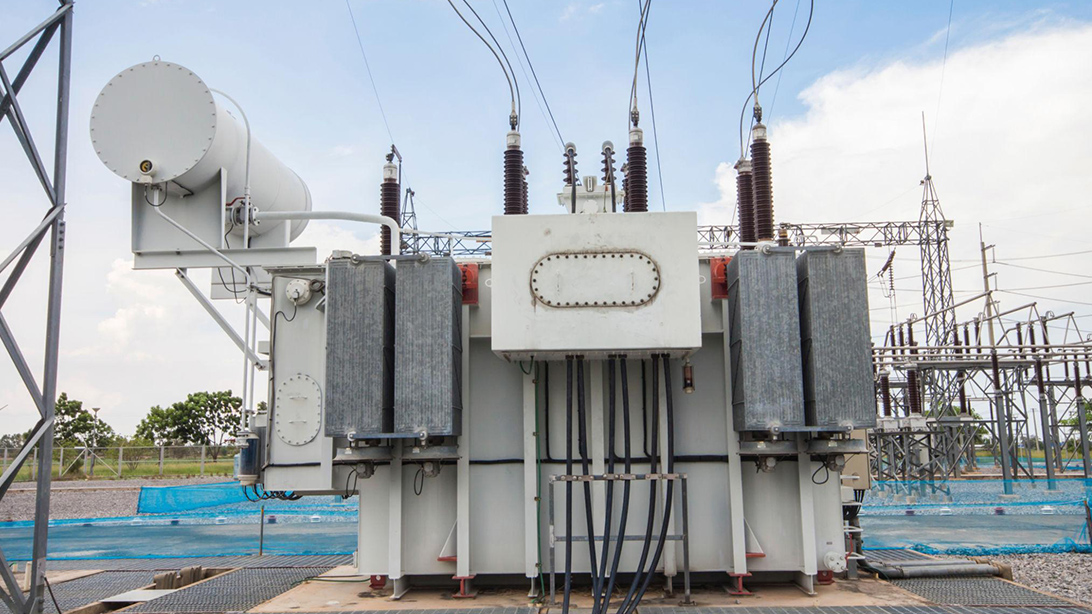
Equipment location and surrounding structures matter when translating factory acoustic data into site performance.
Sound pressure describes the acoustic pressure variation at a measurement position. Its reported level depends on the source, distance and surrounding acoustic conditions. Sound power describes the acoustic energy emitted by the source per unit time. Under a defined operating condition, it is the more useful source input for many site-noise calculations. Neither quantity should be accepted without its measurement basis.
Both can be expressed in decibels, which is why a short datasheet line can be misleading. A-weighting applies a frequency weighting to the result; it does not turn sound pressure into sound power. Write the full quantity, weighting and reference convention in the enquiry. Do not compare two bare dB(A) values and assume they describe equivalent guarantees.
At Zisheng Electric, the engineering question behind a noise enquiry is: does the buyer need an equipment sound-power guarantee, a factory sound-pressure result under defined conditions, or a sound-pressure limit at a site receptor? If the answer is a boundary or occupied-room limit, the equipment datasheet also needs an acoustic design interface. The transformer alone cannot describe every reflection and transmission path at the site.
Specification item | Risk if omitted | Procurement check |
|---|---|---|
Acoustic quantity and weighting | A sound-pressure offer may be compared with a sound-power requirement | State the required quantity explicitly; identify frequency-band data where needed. |
Operating and cooling condition | A quiet fan-off test may not represent the guaranteed operating duty | List electrical conditions and every cooling-device operating state covered by the guarantee. |
Measurement method and arrangement | Different measurement surfaces or environments produce incompatible results | Agree the applicable method, measurement arrangement and report content before FAT. |
Background and environmental assessment | Unrelated noise or reflections can invalidate a simple comparison | Require a documented assessment using the selected test method. |
Acceptance rule and uncertainty | A result near the limit leads to a dispute at the witness test | Agree the decision rule, reporting precision and handling of uncertainty in the contract. |
Transformer sound is not produced by one component alone. Core vibration is associated with magnetic excitation. Electromagnetic forces in windings can contribute under load. Fans and pumps, where fitted, introduce additional acoustic sources. Tank panels, supports and attached structures influence how vibration is radiated. A specification should identify the operating case instead of treating the whole installation as a fixed noise source.
A transformer that operates most of the day without forced cooling may still need to meet a defined limit when the full cooling group starts. Conversely, requiring the maximum cooling condition at every operating point may not match the actual duty. Ask the design team to state which operating cases govern thermal capability and which govern acoustic acceptance.
The oil-immersed power transformer configuration and its cooling equipment should therefore be reviewed together. Do not use an acoustic guarantee for a different radiator, fan or pump arrangement without an engineering assessment. A quoted model family is not a substitute for the actual supplied configuration.
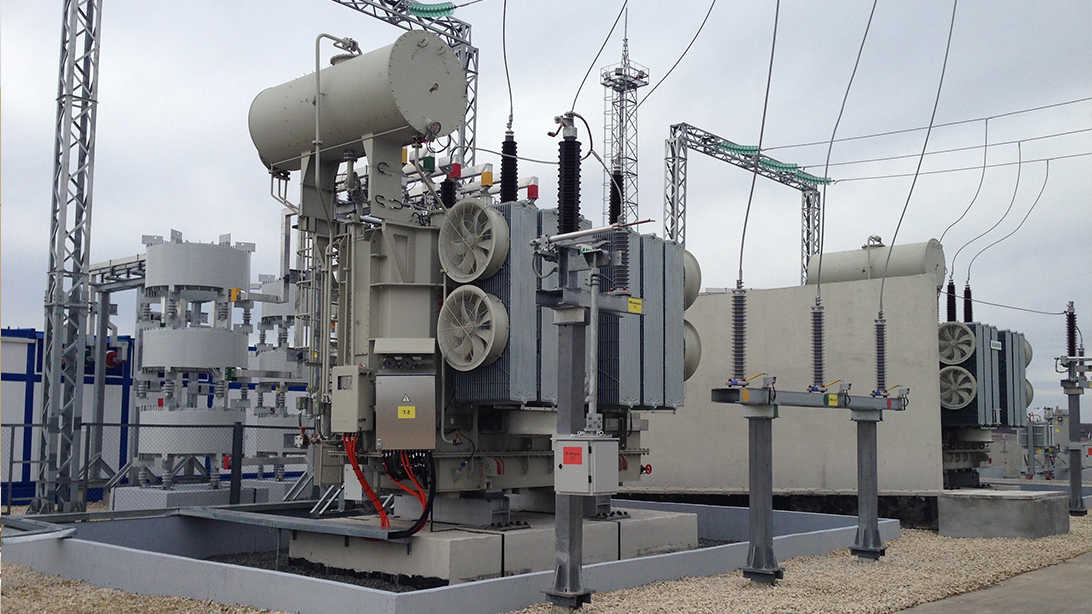
State whether cooling fans are operating when an acoustic value is quoted.
Cooling equipment has a thermal function. Any proposal to change fan staging, speed or operating thresholds must be checked against the approved thermal design and loading duty. A lower acoustic reading achieved by removing necessary cooling is not an acceptable solution. Request the operating restrictions, control sequence and guaranteed capacity associated with each proposed arrangement.
For equipment with variable-speed cooling, specify the speed or control condition used for each guarantee. A report that simply says “fans running” may leave an important ambiguity. The project should also establish whether a particular normal, emergency or seasonal case belongs in the acoustic assessment; do not assume one operating condition covers them all.
IEC 60076-10:2016 defines sound-pressure and sound-intensity methods used to determine sound-power levels for transformers, reactors and associated cooling devices. Its primary focus is factory measurement, while recognizing that site conditions can differ. That scope does not create one permissible noise value for every transformer size or installation. The purchaser still needs to specify the performance requirement and applicable test conditions. Standards reference: IEC 60076-10:2016, Determination of sound levels.
The enquiry should identify the applicable standard edition and any project-specific additions. Ask for a method statement with the proposed measurement arrangement, equipment operating conditions, instrumentation and reporting format. Detailed distances, surface definitions, corrections and validity checks must come from the selected standard and agreed procedure, not from a generic internet checklist.
The IEC application guide explains acoustic principles, measurement considerations and why factory and in-service results may differ. This makes it useful when discussing the boundary between a factory guarantee and a site prediction. Standards reference: IEC 60076-10-1:2016, Determination of sound levels — Application guide; consult the applicable amendments for the project.
Core material, magnetic loading, joint construction and mechanical assembly can influence excitation-related sound. Winding geometry and support design influence the mechanical response to electromagnetic forces. Cooling-device selection changes both acoustic performance and heat removal. The correct response to a stringent limit is a coordinated design review, not a promise that thicker steel or a larger tank will always solve the problem.
Ask the manufacturer which measures are included in the offered design and what evidence supports the proposed guarantee. Avoid accepting an unexplained percentage reduction. A change that improves one frequency range may not provide the same improvement across the whole spectrum. Where a site assessment needs band data, obtain that requirement before manufacturing rather than after a broadband result has been issued.
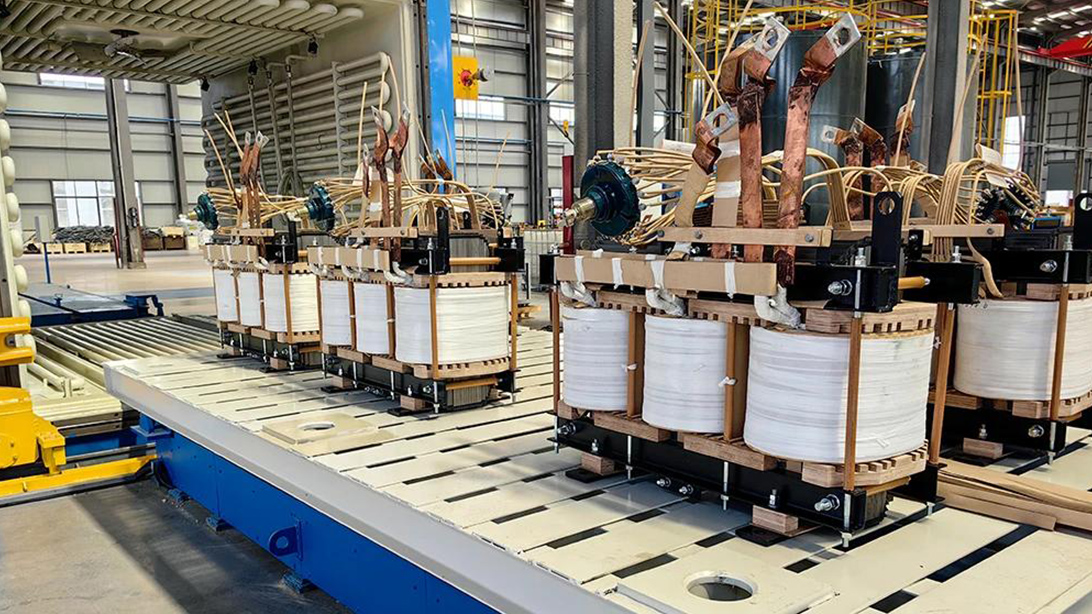
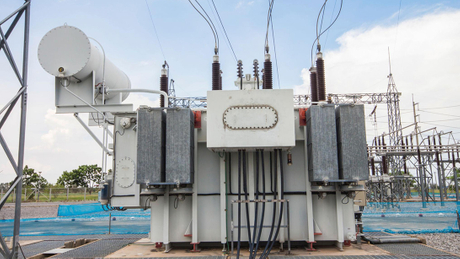
Mechanical assembly is part of acoustic design, but a photograph cannot establish a guaranteed sound level.
Acoustic and loss guarantees are different properties. A favorable no-load loss test result is valuable electrical evidence, but it is not an acoustic acceptance test. Keep both requirements in the technical comparison without treating one as proof of the other.
Before the witness date, review the unit identification, approved acoustic requirement and measurement procedure. Confirm that the equipment presented for test matches the guaranteed arrangement. If cooling components or temporary supports differ from the final supply, the report needs an explicit explanation and an agreed basis for interpreting the result.
Record the electrical operating conditions and relevant tap position, cooling-device status, measurement positions, instrumentation identification and calibration information. Include the background assessment and any corrections required by the method. Raw observations and the final reported quantity should be distinguishable; otherwise a reviewer cannot tell which number is being compared with the guarantee.
An unrelated machine operating nearby can affect a sound-pressure measurement. Reflections and the test environment also matter. Do not resolve a questionable result by subtracting arbitrary decibel values or choosing the quietest microphone position. Apply the selected method’s validity checks and correction rules. If the conditions do not support a valid result, improve the setup or agree a suitable retest.
The witness record should identify any excluded disturbance and how it was handled. Repeated measurements must be traceable to the same operating condition. An unexplained replacement of a result with a lower number is not a satisfactory test record, even when the final number falls below the contractual limit.
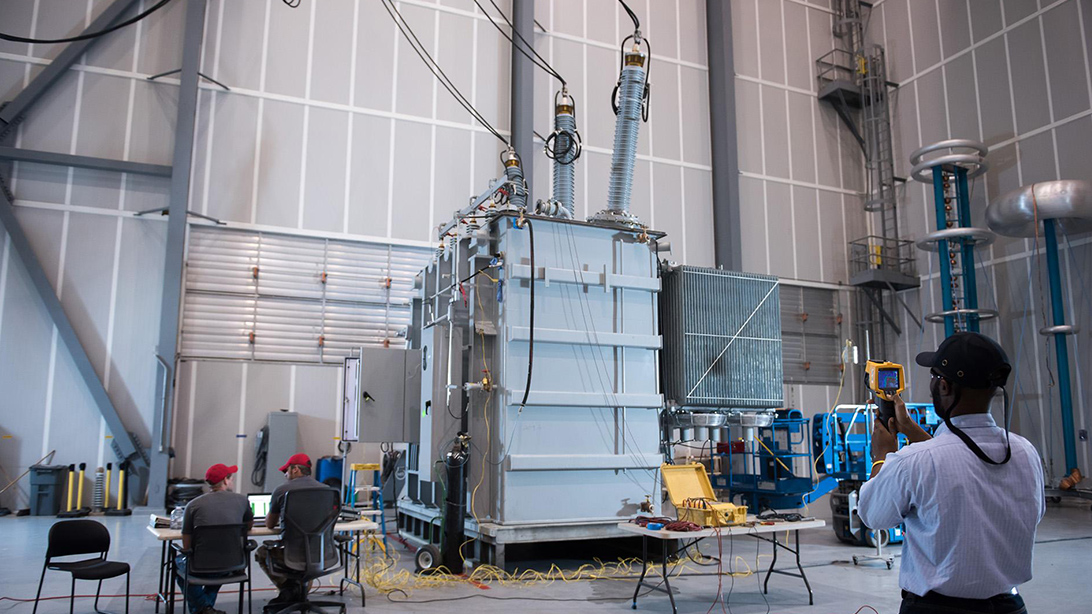
Factory testing requires documented conditions; this image does not represent a specific sound-level measurement.
Define how compliance will be decided before FAT. Identify the guaranteed quantity, limit, operating cases, required reporting precision and treatment of measurement uncertainty. A number rounded to the nearest whole decibel may hide information that matters near a contractual boundary. Do not invent an extra tolerance during the witness test.
If a reported value exceeds the agreed limit, establish whether the issue concerns the equipment, test validity or the interpretation of the specification. Review the setup and records before prescribing a modification. Any corrective action that changes cooling performance, structural details or control settings needs the relevant engineering checks as well as an acoustic retest where required.
Situation | Misleading shortcut | Better engineering response |
|---|---|---|
Two quotations contain different dB(A) values | Choose the smaller number immediately | Align sound quantity, duty and measurement basis before comparison. |
Fan-off FAT result meets the limit | Assume full-cooling performance also complies | Verify the separately specified cooling cases and the supplied fan arrangement. |
A site reading is higher than the factory value | Declare the factory result incorrect | Check quantity, measurement position, operating duty, reflections and other noise sources. |
A result is close to the guarantee | Add an informal tolerance | Apply the pre-agreed decision rule and documented uncertainty treatment. |
An acoustic enclosure is proposed | Treat noise reduction as the only design objective | Review cooling airflow, access, fire considerations and maintenance together. |
A transformer sound-power value is an input to a site assessment, not a prediction of what a person will measure beside a wall. Buildings, barriers, openings, ground conditions and other equipment affect the result. Multiple sources also require an appropriate acoustic calculation; decibel values are not ordinary numbers that can be added arithmetically.
For an enclosed substation, coordinate acoustic measures with ventilation. Restricting an opening may reduce one transmission path while increasing temperature. Vibration isolation needs to be compatible with supports, seismic or mechanical requirements where applicable, and connected cables or buswork. A rigid connection can create an unintended transmission path even when an isolation element is installed elsewhere.
The same discipline applies to a smaller distribution transformer for a substation: capacity alone does not determine the acoustic requirement. Review the duty and installation constraints alongside the broader industrial transformer design factors. Use site-specific acoustic criteria rather than a generic limit assigned to a country or project label.
A useful enquiry includes the transformer datasheet, expected operating duty, cooling requirements, installation layout and the acoustic quantity to be guaranteed. If the project has a boundary-noise or occupied-space criterion, include the acoustic consultant’s equipment-data requirements. Identify whether frequency-band information, a witnessed factory test or a particular report format is needed.
A clear transformer sound level specification makes supplier comparison more reliable and reduces last-minute changes. Zisheng Electric can provide technical matching for oil-immersed power transformers, distribution transformers and related equipment based on project capacity, voltage level, environmental conditions and technical specifications. Send the datasheet, layout and acoustic requirements; our engineering team will review them and respond to project inquiries within 24 hours.