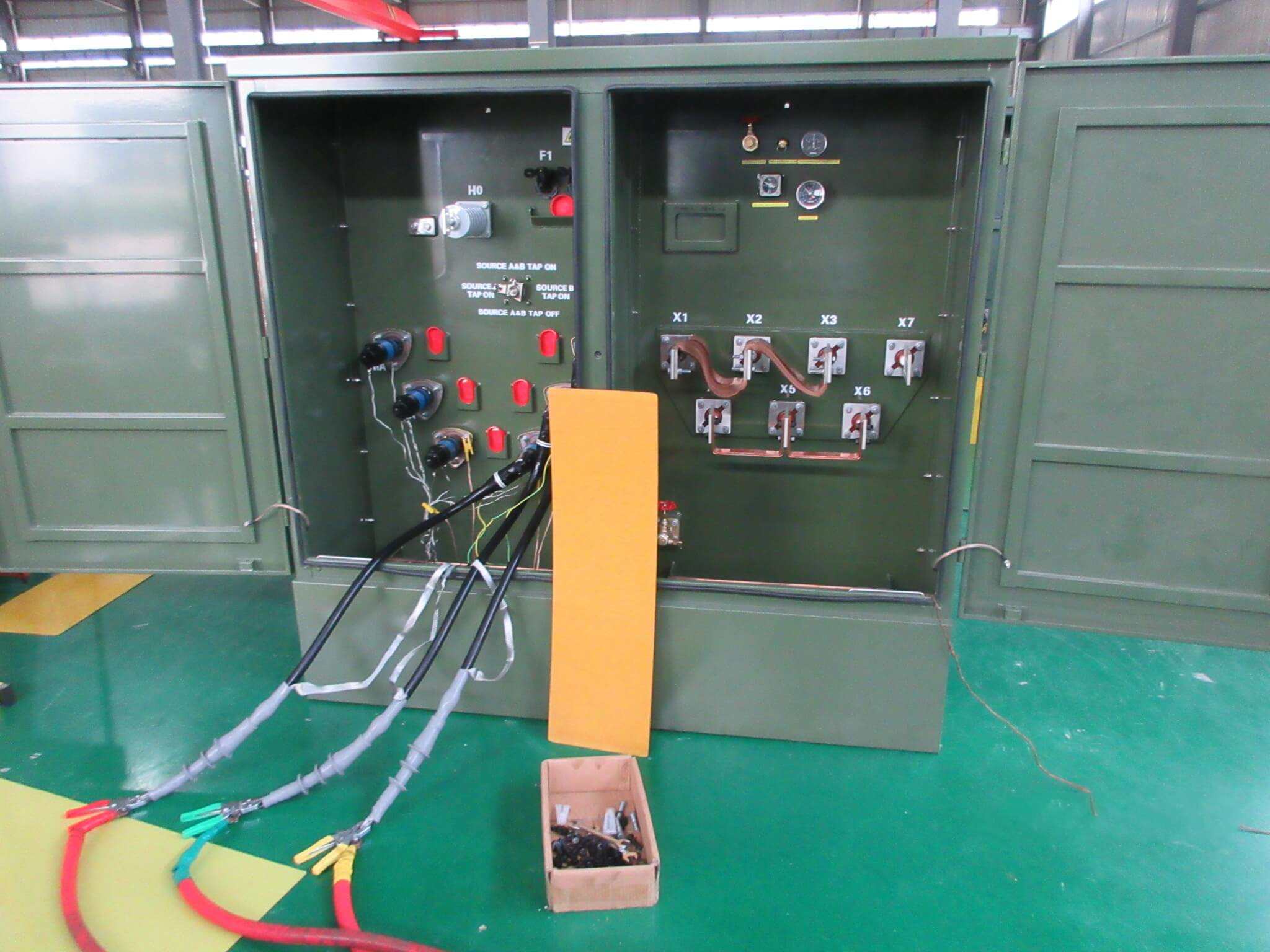
The 225kVA three-phase pad transformer is an efficient and reliable power conversion device designed for commercial, industrial and distribution systems. With a high power capacity of 225kVA, the transformer is able to provide a stable three-phase power supply for large-scale equipment to meet high load requirements. Its rugged housing is made of weather-resistant materials and meets NEMA 3R standards, ensuring long-term stable operation in outdoor environments and preventing the influence of external factors such as water, dust and corrosion.
480GrdY/277 208GrdY/120 400GrdY/230 Customized(208Y/120 V to 4,160 V)
Frequency
50/60Hz
Vector Group
Dyn1/Yyn0/Dyn11/Dyn5
Winding Material
Aluminum/Copper
Efficiency
As IEEE,Doe 2016,CAS Std or Customized
Impedance Voltage
Nominal 3.5% or Customized 1.1-5.75%
Altitude
≤1,000m or Customized
Color
ANSI 70 Light gray/Munsell 7GY3.29/1.5 or customized etc
Tank material
Mild Steel, 304 Stainless Steel
Insulating Oil Weight
850L
Total Weight
2500 kg
Outline Dimensions(L×W×H)in.
1360×1480×1660 (mm)
Accessories
Lifting Lug
ELSP Fuse
Hinged Door
BAY-O-NET Fuse
Parking Bracket
Tap Changer
Tank Cover
Oil Level Gauge
L.V Bushing (4-Hole )
Pressure Relief Valve
Two/Four Position Load break Switch
Vacuum Pressure Gauge
HV Grounding Copper Bar
Terminal Block
Temperature Indicator
Door Handle
H.V Bushing Well(15kV)
Ground Strap
Grounding Copper Bar
Nameplate
1"'Drain Valve With 3/8" Sampler
IR Window
1" Upper Fill Valve Filter Press Connection
Terminal Box
Non-PCB decal
High Voltage Warning Signs
Zisheng ELECTRIC transformers offer pad mounted transformer a wide range of optional features to meet the diverse needs of electrical systems. The optional specifications for the 225kVA Three-Phase Pad Mounted Transformer offer flexibility to meet specific operational and environmental requirements. These options include various voltage ratings, such as 12kV/480V or 13.8kV/480V, to accommodate different power distribution needs. Customers can choose from different enclosure protection levels, such as NEMA 3R or IP55, for enhanced weather resistance and durability in outdoor installations.
Additional options may include custom tap configurations for voltage regulation, forced air or oil cooling systems for improved heat dissipation, and advanced protection devices like overcurrent protection, pressure relief valves, and temperature monitoring systems. The transformer can also be equipped with smart monitoring capabilities for remote performance tracking, ensuring continuous monitoring of critical parameters. Additionally, corrosion-resistant coatings and noise reduction designs are available for applications in harsh or noise-sensitive environments, allowing for optimal performance under various conditions. With these flexible options, we ensure that our transformers can be customized for specific applications, environments, and safety standards, offering long-term reliability and performance.
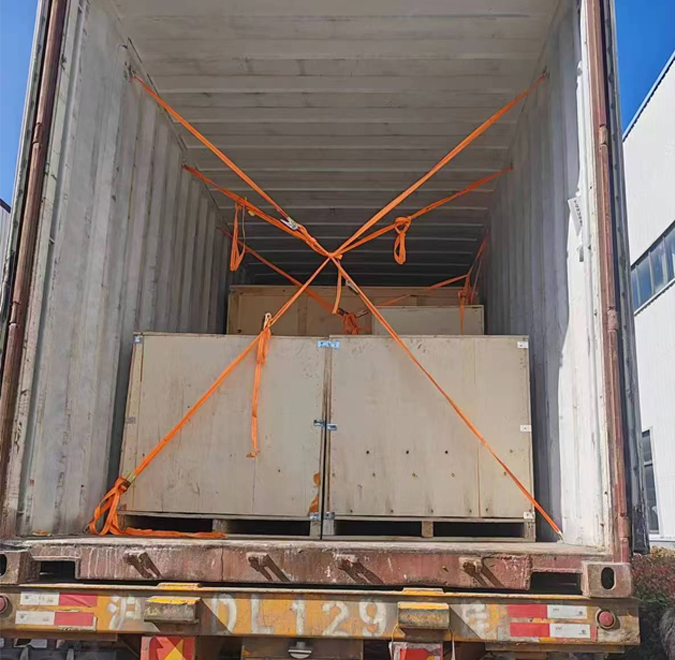
The 225kVA three phase pad mounted transformer receives thorough pre-packing preparation to guarantee arrival in pristine condition. This includes dielectric oil analysis (for fluid-filled shipments), nitrogen blanketing in dry transport to block moisture and oxidation, and robust protective covers on bushings, fittings, gauges, and valves to resist transit impacts and vibrations. The tank and enclosure undergo anti-corrosion treatments, temporary shielding on exposed parts, and firm securing of accessories to eliminate movement risks. Packing uses purpose-built heavy-duty wooden crates or reinforced skids matched to the transformer's size, fortified with steel bands, internal bracing, and load-spreading elements to manage typical dry weight of 2200–2800 lbs (increased when oil-filled). For international exports, crates satisfy ISPM 15 heat-treatment requirements, with vapor barriers, desiccants, and humidity trackers added. Oil-filled shipments incorporate sealed fittings, absorbent padding for leak containment, and full compliance with hazardous material transport regulations for insulating oils, including required labels and declarations. Shipping employs optimized methods for safety and efficiency depending on destination. Domestic North American deliveries utilize specialized heavy-haul trucking with lowboy trailers, secure tie-downs, and oversize load escorts as needed. Global shipments feature multimodal logistics: truck to port, ocean freight via 40ft open-top or flat-rack containers (or break-bulk for multiples), and onward trucking. Complete cargo insurance, real-time tracking, and detailed manifests provide end-to-end visibility. Clear markings for lift points, center of gravity, and handling instructions support safe crane or forklift maneuvers at all transfer points. On-site arrival calls for prompt inspection of transit damage, seal verification, oil level checks, and accessory inventory before offloading. Professional rigging using spreader bars is crucial to prevent structural stress. Our logistics team delivers full support, from freight coordination and export paperwork (invoices, origin certificates, test reports) to customs assistance, ensuring swift clearance and the transformer ready for pad mounting, connections, and immediate commissioning with optimal performance.
Progress test
Zisheng Electric manufacture pad mounted transformer have the strict quality control .The progress test for the 225kVA Three-Phase Pad Mounted Transformer is conducted throughout the manufacturing process to ensure the transformer meets all technical and safety standards. These tests include verifying the integrity of the core and windings, as well as checking the insulation resistance and dielectric strength at various stages. The transformer undergoes initial tests for winding resistance and turns ratio, followed by temperature rise tests to confirm it operates within safe thermal limits under load. Additionally, functional tests are performed to ensure all protection mechanisms, such as overload and short-circuit protection, are fully operational. The results from these progress tests help ensure that the transformer will perform reliably and safely before moving on to the final Factory Acceptance Test (FAT).
Design Tests
All transformer will be test after finished the production, test items as below: ♦ Insulation Power Factor ♦ Ratio, Polarity, and Phase Relation ♦ Winding Resistance ♦ Impulse Tests ♦ On load Loss Test ♦ No Load Loss Test ♦ Leak Test ♦ DC Insulation Resistance Test ♦ Transformer Turns Ratio/TTR (All Tap Voltages) ♦ Impedance Voltage & Load Loss (Rated Voltage) ♦ Polarity, 1-Ph / Phase Relation, 3-Ph (Rated Voltage) ♦ Excitation & No-Load Loss (Rated Voltage) ♦ Lightning Impulse ♦ Insulation Resistance (Rated Voltage) ♦ Temperature Rise ♦ Dielectric Withstand (Hipot)
Transformer Factory Acceptance Test
zisheng Electric will tests made for quality control by the manufacturer on every device or representative samples, or on parts or materials as required, to verify during production that the product meets the design specifications.
The Transformer Factory Acceptance Test (FAT) for the 225kVA Three-Phase Pad Mounted Transformer is a critical final verification process to ensure that the transformer meets all design specifications, performance standards, and safety requirements before shipment. The FAT includes a series of comprehensive tests, such as:
Dielectric Strength Test: Ensuring the insulation system can withstand the required voltage levels.
Temperature Rise Test: Verifying that the transformer operates within the permissible temperature limits under full load conditions.
Winding Resistance Test: Checking the resistance of the windings to confirm proper electrical conductivity.
Upon successful completion of the FAT, the transformer is cleared for shipment, ensuring it will perform reliably and safely during its service life.
Purpose of Testing
The purpose of testing the polarity of a single-phase transformer is to ensure that the primary and secondary windings are correctly oriented, preventing issues like improper phase connection. It also verifies that the transformer operates safely and efficiently in the intended electrical system.
Testing Equipment
Test equipment: Polarity Tester (e.g. Megger, Hioki, etc.) Voltage source: usually 500 V, 1000 V or customized as needed Environmental monitoring: Temperature and humidity meter (records ambient temperature and humidity)
Pre-Test Preparation
Disconnect the device from the power supply and ensure that it is properly grounded and discharged. Check the connection terminals and wiring to ensure that there is no looseness or contamination. Test under suitable environmental conditions: relative humidity less than 75% and no rain (recommended temperature: 20-30°C).
Test Progress
Connect the Test Instrument: Connect the test equipment to the bushing or terminal of the device under test and ensure proper grounding. Apply Test Voltage: Select the appropriate test voltage according to the rated voltage of the device. For single-phase systems, the applied voltage should comply with the equipment specifications (such as 220V or 380V, etc.).
Measure and Record
Start the test and record the following parameters: Phase sequence: Confirm whether the phase sequence of the power supply is correct. Polarity: Check whether the wiring meets the predetermined polarity (positive and negative terminals are connected correctly). Voltage: The actual voltage value during the test.
Temperature Correction
Measure different wiring points (such as input and output) for comparative analysis to ensure that the electrical polarity is consistent.
Repeat Testing (if necessary)
If necessary, correct the measured parameters to the reference temperature (usually 20°C) to ensure the accuracy of the test results.
Evaluation Criteria (Reference)
Correct polarity: The wiring meets the expected polarity requirements and meets the standard. Reverse polarity: If reverse polarity occurs, it should be corrected immediately and retested. Polarity uncertainty: If there is any uncertainty, further check the power.
We are willing to cooperate sincerely with clients all over the world with advanced technology, excellent quality, nice service, flexible operation and good reputation.
WhatsApp: +8619131285373 Email: info@bdzstransformer.com Address: No. 6799, North Third Ring Road, Jingxiu District, Baoding City, Hebei Province