Zisheng Electric treats a natural ester transformer specification as a coordinated equipment decision. Naming a liquid does not settle the insulation system, cooling arrangement, tank preservation, accessory compatibility or factory acceptance evidence. A useful enquiry connects the reason for choosing the fluid with the design checks and records needed to support that choice.
This guide is for engineers and procurement teams comparing a new liquid-immersed transformer package. It is not a procedure for replacing fluid in an existing unit. A retrofit needs its own manufacturer-led assessment of the actual equipment and service history. For a new build, the opportunity is to resolve the interfaces before materials are ordered and the tank arrangement is fixed.
State what the project expects the fluid choice to achieve. The driver might be a fire-risk assessment, an environmental requirement, an owner's material policy or a particular service strategy. Those are different acceptance questions. A liquid property on a datasheet does not, by itself, demonstrate that the complete installation satisfies the project's objective.
Separate mandatory requirements from preferences. If the owner requires a particular fluid classification or product approval, identify the approving party and the evidence they accept. If the enquiry merely says “environmentally friendly oil”, bidders may interpret it differently and return offers that cannot be compared. Ask for the exact proposed product, manufacturer, product revision and relevant test documents.
Keep the contractual boundary visible. The transformer manufacturer should confirm the equipment design basis. The liquid supplier should provide the product documentation. The installation designer should assess the resulting arrangement against the site brief. Allocating these responsibilities early avoids an assumption that one supplier's certificate covers the whole project.
IEC 62770:2024 addresses specifications and test methods for unused natural esters used as insulating and heat-transfer liquids. Its published scope is a basis for identifying the liquid requirements; it is not a complete transformer purchase specification. State the required edition in the contract and review the equipment guarantees separately.
Record rated duty, agreed losses, thermal performance, insulation requirements, cooling stages and the applicable transformer test scope in the equipment schedule. Request explicit confirmation that these guarantees refer to the offered fluid and complete construction. Do not carry a guarantee across from a different liquid simply because the transformer has the same nominal rating.
Material compatibility evidence should cover the complete wetted assembly.
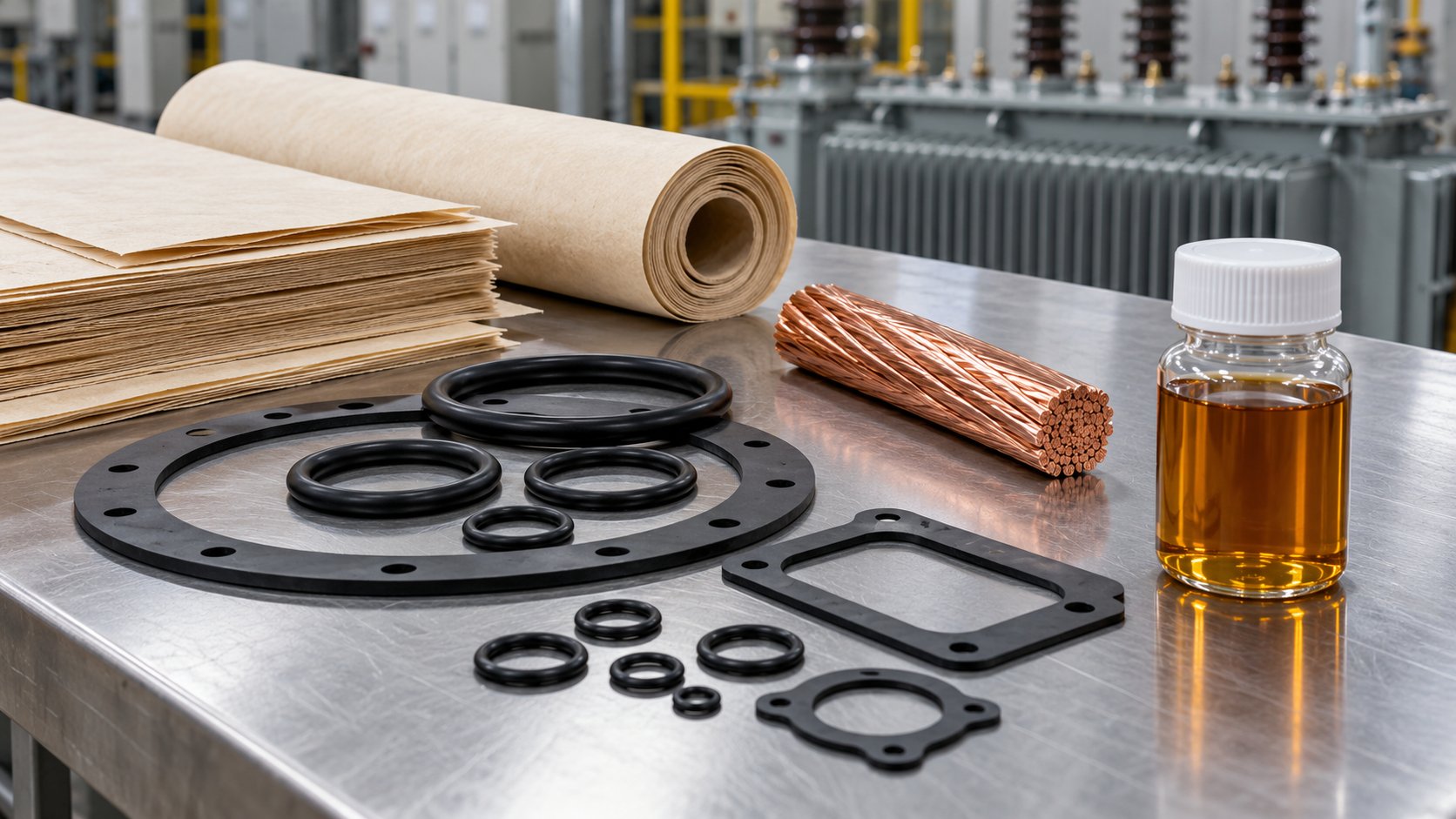
Ask the manufacturer to identify the materials and components that contact the liquid. The review should cover internal insulation materials, seals, gaskets, coatings where applicable, hoses used during processing and any accessory with a wetted interface. The useful deliverable is an equipment-specific compatibility statement supported by the manufacturer's design controls.
A general claim about a family of elastomers is weaker than confirmation of the actual material grade and component supplied. The same applies to an accessory described only by its commercial name. If a seal compound or accessory model changes after approval, the change should return to the compatibility review before substitution is accepted.
Do not turn the procurement check into an improvised laboratory qualification. Ask what evidence the manufacturer already holds, what its limits are and whether additional verification is necessary for this design. Any proposed test needs an agreed method, representative materials and acceptance criteria. A photograph of an immersed gasket is not sufficient evidence of long-term suitability.
Include the approved gasket and accessory identifiers in the spare-parts information. A site team should not have to choose a replacement based on dimensions alone. Where equivalent items are permitted, define who authorises the alternative and how that approval reaches the maintenance record. This is particularly useful when the transformer will operate far from the original service organisation.
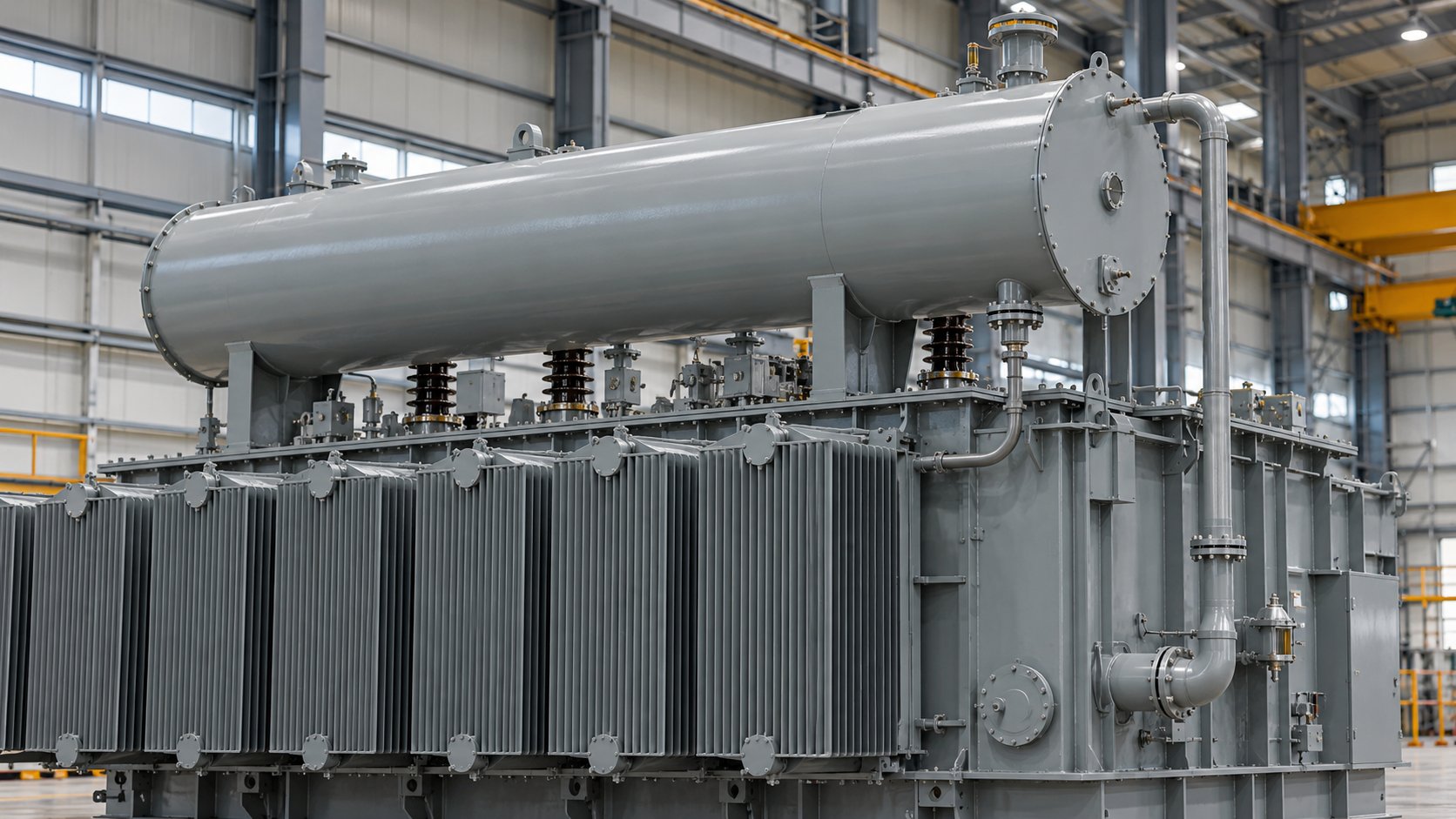
The IEC 62770:2024 scope notes that exposure to air can deteriorate natural ester and restricts its use to sealed units or conservators protected from atmospheric contact by a membrane or another suitable system. The engineering consequence is practical: the preservation arrangement must be part of the offered design, not an accessory decision left until shipment.
Request a drawing showing the selected preservation concept, its inspection points and the components required to maintain it. Identify the assumptions that apply during factory storage, transport, site assembly and operation. An acceptable final arrangement can still be undermined if temporary openings or incomplete assembly are left outside the preservation plan.
Clarify how the receiving team will recognise that the equipment has arrived in its intended condition. The manufacturer's instructions should define the relevant checks, the records to retain and the response to an abnormal finding. Avoid adding generic pressure values or valve positions to a purchase document without confirming that they apply to the actual transformer.
Coordinate these requirements with the transformer vacuum filling readiness review. The liquid choice does not remove the need to establish tank capability, accessory boundaries and a controlled processing method for the equipment being supplied.
Review the preservation arrangement against the proposed insulating liquid.
The design review should identify the fluid properties used in the thermal assessment and their source. Ask the manufacturer to confirm the proposed cooling arrangement for the specified load, ambient profile and installation conditions. Treat changes to the fluid, radiator arrangement or cooling controls as changes to the design basis requiring review.
A supplier may offer a familiar tank outline with a different internal or cooling design. Conversely, an unchanged general arrangement does not prove that the thermal assessment has been completed. Procurement should ask for the guarantee and supporting verification route, rather than prescribe a radiator count from another transformer.
Include the cold-start and storage conditions actually expected at the site. Ask the manufacturer to state any limitations or preparatory requirements that follow from the selected fluid and equipment design. Do not infer those limits from a generic fluid comparison chart. The relevant operating conditions should appear in both the accepted offer and the final manual.
If a temperature-rise test is part of the order, agree how its configuration represents the delivered unit. Identify the fluid, cooling equipment, relevant operating condition and measurement records in the test plan. Where design evidence is proposed instead of a particular test, the purchaser should understand the basis and approve that route explicitly.
The following table is a review tool, not a set of universal acceptance limits. Each row should lead to a named document and an accountable reviewer. Open items that affect the construction need a resolution date before the corresponding manufacturing activity begins.
Decision | Evidence to request | Why it matters | Release condition |
|---|---|---|---|
Exact fluid product | Current datasheet, safety information and applicable batch documentation | Prevents substitution behind a generic fluid description | Product identity accepted by the purchaser |
Wetted materials | Equipment-specific compatibility confirmation and component identifiers | Connects the liquid choice to the actual construction | Unresolved substitutions closed |
Preservation concept | Approved tank and conservator arrangement with handling instructions | Controls exposure through delivery and service | Factory and site responsibilities assigned |
Thermal duty | Offered guarantees and agreed verification route | Avoids assuming that a liquid change leaves every rating unchanged | Design basis accepted |
Site risk assessment | Product-specific fire and environmental data supplied to the installation designer | Separates liquid properties from installation acceptance | Relevant project review completed |
Future maintenance | Fluid identification, sampling instructions and approved replacement information | Supports consistent service decisions | Operator receives a usable technical file |
Agree the factory processing and cleanliness controls with the transformer manufacturer. Identify the equipment used, its suitability for the liquid and the method for preventing unintended mixing or contamination. Document any shared processing equipment and the manufacturer's approved changeover controls. These are questions for the manufacturing plan, not instructions for an untrained crew to improvise.
The product-specific handling guide should be available to the factory and receiving team. For example, Cargill publishes an FR3 fluid storage and handling guide. Such a document is relevant when that product is proposed; it should not be applied automatically to a different supplier's liquid or used to replace the transformer manufacturer's requirements.
Where site filling is included, define who supplies the liquid, who verifies its identity and who releases the equipment for service after processing. Reconcile quantities with the shipping configuration and approved drawings. Keep retained sample identity, laboratory reports and delivery records together so that a later question can be traced to a specific batch and activity.
Request the relevant product test reports and safety data, then pass them to the responsible installation designer. Avoid describing a transformer as fireproof or exempt from containment simply because an ester is proposed. The installation decision also depends on equipment, layout, exposure, fire strategy and the requirements accepted for the project.
Use the same discipline for environmental statements. A material characteristic does not automatically establish how a spill must be managed at a particular site. Specify the information that the owner's environmental team needs and record its decision. Do not invent local exemptions, disposal routes or certification requirements in the procurement schedule.
IEC 62975:2021 provides guidance for the use and maintenance of natural ester liquids in sealed transformers and related equipment within its stated scope. Agree the project maintenance basis and provide fluid-specific instructions rather than reusing a mineral-oil checklist without review.
Close the order with a document index linking the exact liquid, approved construction, factory records and operating manual. Include the contact route for questions about samples, replacement materials or changes in duty. A controlled technical file is more useful than a collection of unindexed certificates arriving after energization.
Ask every bidder to return a deviation schedule, including a positive statement when no deviation is proposed. A response such as “standard design” should point to an identified document, not leave the purchaser to infer the difference. Compare the proposed fluid product, preservation arrangement, verification scope and service obligations row by row. Where an alternative could meet the project objective, request the evidence and the impact on price, programme and maintenance before accepting it.
Keep the accepted deviation schedule with the purchase order. At drawing approval, check that the agreed alternative has reached the actual design documents. At shipment release, check that the supplied records describe the same configuration. This prevents a technically sound proposal from being lost between commercial clarification and manufacturing release.
Zisheng Electric's 110kV and 115kV power transformers and 132kV and 138kV power transformers provide starting points for a project discussion. The offered liquid, construction and guarantees require confirmation for the actual order. Coordinate the package with the site's transformer foundation interface review as dimensions, mass and installation arrangements are developed.
For a natural ester transformer specification, send Zisheng Electric drawings, datasheets, load lists, technical specifications, single-line diagrams, grid parameters, environmental conditions and installation-site conditions. Explain the fluid-selection objective and identify the approving parties. Our engineering team will review the requirements and respond to project inquiries within 24 hours.