Please Choose Your Language
Transformer Selection Is an Engineering Decision, Not Just a Specification Match
In 2026, we received an urgent email from an EPC contractor in Southeast Asia. The four 2 MVA transformers they had purchased for an industrial park were repeatedly tripping during commissioning. The insulation resistance was normal, and the winding resistance was also normal. The final investigation revealed that one critical point had been overlooked in the original technical specification: the factory had four large compressor motors, and no one had calculated the starting inrush current generated when they started simultaneously. In reality, these transformers were undersized for the actual load profile.
We frequently encounter similar situations in international projects. This is not because the transformer manufacturer supplied defective products, but because the selection decisions made during the design stage failed to fully consider the actual operating conditions, load characteristics, and environmental factors that the transformers would face during operation.
As a transformer manufacturer, our projects cover more than 30 countries — from desert installation projects in Saudi Arabia, to industrial parks in Southeast Asia, to mining sites in Africa — and we understand that transformer selection is essentially an engineering task. It is not only about matching the requirements listed in tender documents, but also about matching the real site conditions, load characteristics, and operating environment that will determine equipment performance over the next 25 years.
This guide covers the key transformer selection factors that our engineering team discusses every week with EPC contractors, electrical consultants, and project owners.
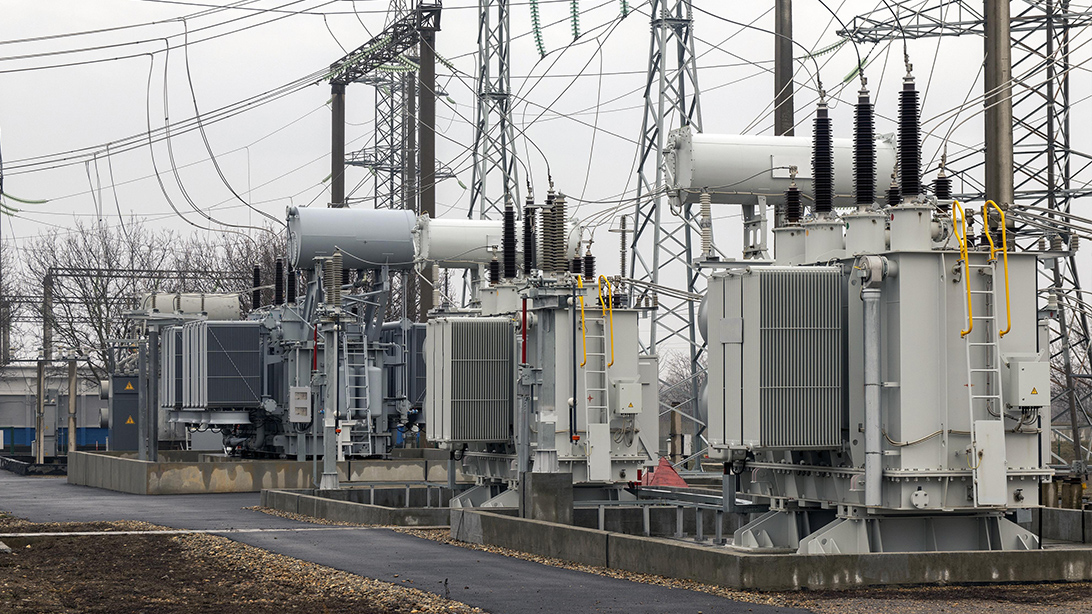
For outdoor power distribution systems above 2 MVA, oil-immersed transformers remain the mainstream choice. The reasons are straightforward: excellent heat dissipation capability, proven long-term reliability, and cost advantages in high-capacity applications.
However, within the category of "oil-immersed transformers", the factors that truly determine whether equipment can operate reliably for 25 years without major failures or require significant maintenance within 5 years are the details of the technical specifications.
Every transformer compliant with IEC 60076 standards has a cooling method designation on its nameplate — ONAN, ONAF, OFAF. Usually, discussions about selection end once this code is included in the technical specification.
But the real engineering question is:
What happens to the winding temperature when the transformer operates at 85% load on an afternoon in August with an ambient temperature of 50℃?
We have supplied equipment for multiple projects in Gulf Cooperation Council (GCC) countries, and the answer to this question directly affects the design solution. A standard transformer designed for a 40℃ ambient temperature and a 60K top oil temperature rise will experience significantly accelerated insulation aging when the ambient temperature increases by 10-15℃.
For projects in the Middle East, we typically adopt the following designs:
Top oil temperature rise limited to 50K, instead of the standard 60K
Increased radiator size to improve heat dissipation capacity
Use of mineral insulating oil with antioxidants
The additional manufacturing cost is relatively low. In comparison, the alternative — replacing degraded insulating oil every few years at sites with difficult logistics — results in much higher costs.
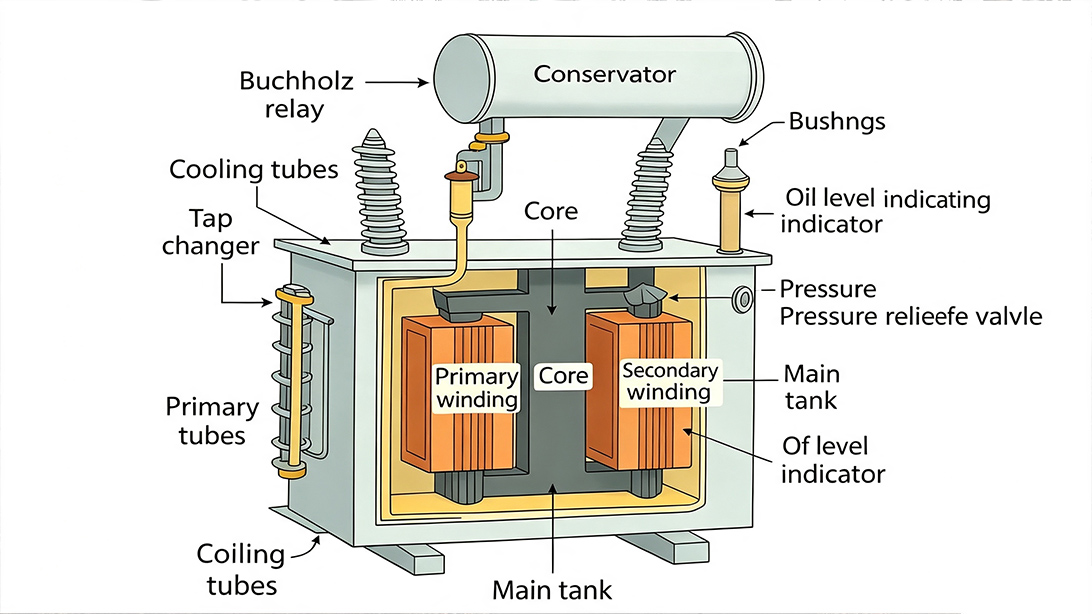
For distribution transformers below approximately 2.5 MVA, we are increasingly supplying fully sealed corrugated tank designs. There is no conservator tank, no breather, and no contact between oil and air.
This is extremely important in practical applications because:
Coastal areas such as Lagos, Mombasa, and Jakarta experience high humidity throughout the year
Moisture entering through poorly maintained breathers is one of the most common causes of reduced dielectric strength of insulating oil
Sealed tanks completely eliminate this failure mode
For larger capacity equipment, conservator tank designs remain the standard solution. However, we clearly advise customers: if the on-site maintenance team cannot inspect the silica gel breather every six months, they should choose a sealed tank design or include a budget for oil condition monitoring.
We once visited a site in West Africa where the breather had not been inspected for 18 months. The silica gel was completely saturated. Oil sample testing showed that the moisture content was far above the limits specified in IEC 60422. The transformer eventually required insulating oil replacement. With more thorough consideration during the initial specification stage, this situation could have been avoided.
Industrial loads are rarely constant. When calculating transformer capacity, we recommend that customers consider three factors:
Motor Starting Current
A large motor may draw 5-7 times its rated current during startup. If a factory has four 200 kW compressor motors starting sequentially, the peak load experienced by the transformer will be much higher than the steady-state calculation.
We have encountered cases where this single factor was enough to demonstrate that the transformer capacity needed to be increased from 2 MVA to 2.5 MVA.
Future Expansion
Based on our experience, most industrial facilities increase production capacity within three to five years after commissioning.
If the transformer is configured only according to the precisely calculated load, there will be no room for future growth.
We typically recommend that the transformer capacity should be 15-20% higher than the calculated maximum demand. The additional transformer cost is very limited compared with the cost of replacing equipment with insufficient capacity in the future.
Harmonic Content
Factories with extensive use of variable frequency drives (VFDs), electric arc furnaces, or large rectifier systems generate harmonic currents, which cause additional transformer heating.
In these cases, transformers may require derating operation or K-factor rated designs.
Before finalizing the selection, we always ask customers about harmonic characteristics.
Dry-type transformers completely solve one critical issue: they eliminate flammable insulating liquids at the source.
No oil means:
No fire load;
No need for oil containment facilities;
No risk of groundwater contamination.
This is why building regulations in Singapore, Dubai, Hong Kong, and most European regions effectively require transformers installed inside buildings or near areas occupied by people to use dry-type designs.
We mainly manufacture dry-type transformers for the following applications:
Hospital power distribution systems (where fire safety requirements cannot be compromised)
Data center UPS transformer rooms
Underground substations for metros and tunnels
Electrical rooms in high-rise commercial buildings
Indoor industrial substations with limited ventilation
The selection of Class F (155℃) and Class H (180℃) insulation levels is often simply understood as a matter of ambient temperature.
However, the actual situation is more complex.
We once supplied dry-type transformers to a steel plant in Vietnam. At that time, even before the transformers were energized, the temperature inside the electrical room had already reached 40℃.
The customer selected Class H insulation not because the design temperature would reach 180℃, but because they wanted the equipment to maintain a 25-year service life under continuous operating temperatures of 135-140℃.
Using Class H insulation with a larger thermal margin, compared with operating Class F insulation close to its limit, can significantly extend insulation life.
The principle is simple:
The aging rate of insulation approximately doubles for every 6-8℃ increase in temperature.
A transformer designed with sufficient thermal margin will have a significantly longer service life than equipment that merely meets the minimum specification requirements.
IP20 enclosures are typically used in indoor electrical rooms with restricted access.
They provide basic protection against accidental contact, and nothing more — for a clean and enclosed substation environment, this is usually sufficient.
IP54 enclosures are used in dusty environments or sheltered outdoor installation locations.
We have supplied IP54 dry-type transformers for cement plants and desert mining sites because fine dust entering the equipment can quickly reduce insulation performance.
However, higher IP protection levels restrict airflow.
When a naturally cooled dry-type transformer uses an IP54 enclosure, the internal temperature may increase by several degrees.
The enclosure design must compensate for this effect by increasing the enclosure size or adopting forced ventilation.
We have seen technical specifications where the thermal impact was completely ignored when selecting the IP rating — this must be checked during the design review stage.
When EPC contractors ask us, “Which one is better?”, our answer is always the same:
There is no absolute better choice. They solve different problems.
The following is the decision-making logic we use when analyzing options together with customers:
Is the installation located outdoors with sufficient space available?
→ Oil-immersed transformers are usually more economical.
Is the transformer installed inside a building or near areas occupied by people?
→ According to regulatory requirements, dry-type transformers are usually required.
Does the required capacity exceed 3-4 MVA?
→ Oil-immersed transformers have clear advantages in terms of cost efficiency.
Does the site lack regular maintenance capability?
→ Dry-type transformers can eliminate the need for insulating oil sampling and testing.
Is the project located in a corrosive coastal environment?
→ Both types require enhanced protection; the final selection depends on other factors.
We once supplied both types of transformers for different areas of the same integrated textile factory owned by the same customer:
Outdoor main substation:
3 MVA oil-immersed transformer, ONAN cooling, sealed corrugated tank design. Seven years of operation with zero unplanned maintenance.
Indoor finishing workshop:
1.6 MVA dry-type transformer, Class H insulation, IP20 protection level. Because the transformer room was located directly below the production workshop, this solution was mandatory.
The same customer, the same factory, two different technical solutions.
The selection depended entirely on the installation location and safety requirements.
33kV is a widely used medium-voltage level across the Middle East, Africa, and most parts of South Asia.
It serves as both the distribution voltage for industrial parks and the collector voltage for renewable energy power plants.
Our 33kV transformer projects include:
33/11kV substation transformers used in industrial areas in East Africa
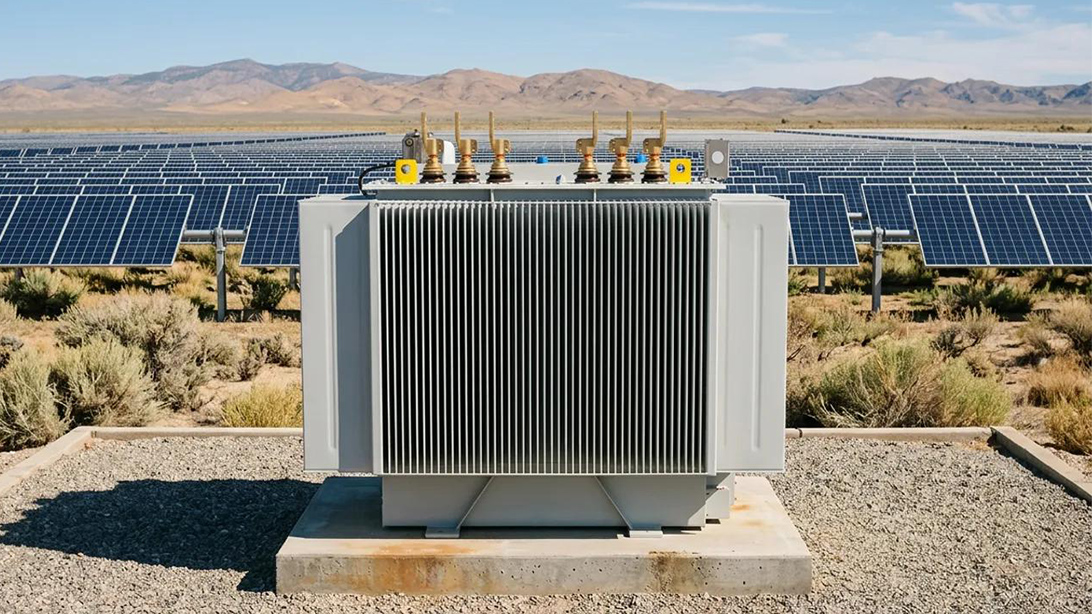
33/0.69kV step-up transformers used in solar photovoltaic power plants in South Asia
33/0.415kV auxiliary transformers used in oil and gas facilities
33kV mining substations operating in high-altitude and heavily dusty environments
IEC 60076-3 specifies standard lightning impulse withstand voltage levels.
For 33kV systems, LI 170 kV is a common selection.
However, we always review the local thunderstorm intensity — specifically, the number of thunderstorm days per year.
The lightning risk in coastal regions of Nigeria can be significantly different from that in inland areas of Saudi Arabia.
In one West African project, our engineering review recommended increasing the lightning impulse withstand level from LI 170 kV to LI 200 kV.
The additional cost was approximately 3-5% of the transformer price.
Compared with the risk of winding damage caused by lightning surges, this cost increase was very small, especially considering that standard insulation levels may not withstand such conditions.
Standard creepage distances may not be sufficient for environments with:
Salt mist in coastal installation areas
Conductive dust in desert regions
Chemical contamination in industrial zones
For a project near the Red Sea coastline, we supplied 33kV bushings with extended creepage distance.
The creepage distance was approximately 25 mm/kV (phase-to-phase), compared with the typical 16 mm/kV requirement for clean environments.
This specification adjustment was made due to the known severe salt contamination conditions at the site.
There is a significant cost difference between an On-Load Tap Changer (OLTC) and a De-Energized Tap Changer (DETC).
The correct choice depends on the specific application:
De-Energized Tap Changer (adjustment only when power is off):
Suitable when the grid voltage profile is stable and seasonal adjustment is acceptable. It offers lower cost and reduced maintenance requirements.
On-Load Tap Changer (OLTC):
Required when voltage regulation must be performed without interrupting power supply. Utility substations and critical industrial production processes typically use this solution.
We ask customers:
“During normal operation, are your grid voltage fluctuations large enough to require tap position adjustment without shutting down power?”
If the answer is no, a de-energized tap changer can reduce investment costs and lower long-term maintenance expenses.
Transformer projects in the Arabian Peninsula, North Africa, and similar regions typically face multiple challenges simultaneously: extreme high temperatures, severe dust storms, coastal corrosion, and continuous industrial loads.
Standard IEC designs usually assume a maximum ambient temperature of 40℃ and normal operating conditions.
However, actual installation environments in the Gulf region often exceed these assumptions.
The aging rate of insulation approximately doubles with every 6-8℃ increase in temperature.
A transformer designed for a 40℃ ambient temperature but operating continuously at 50℃ will experience significantly accelerated aging under the same operating conditions.
Our design approaches for high ambient temperature projects include:
Reducing Temperature Rise Limits:
We design the top oil temperature rise to 50K instead of 60K, or the winding temperature rise to 55K instead of 65K.
Increasing Heat Dissipation Area:
Radiators are designed according to the worst-case ambient temperature rather than the annual average temperature.
Using High-Temperature Rated Accessories:
Seals, cables, and monitoring equipment are selected with ratings suitable for continuous operation at 55℃ ambient temperature.
Coastal installation environments in the Gulf region typically involve high humidity, salt spray, and industrial pollutants at the same time.
Standard coating systems may begin to deteriorate within only a few years.
For these projects, we use:
C4 or C5 corrosion protection coating systems according to ISO 12944 standards
Stainless steel nameplates, fasteners, and terminal box hardware
UV-resistant seals and cable glands
These details may appear to be minor items in the bill of materials.
However, when a transformer is inspected after five years of operation, these details become critical factors determining the equipment’s appearance and condition — whether it remains in good condition or develops corrosion problems.
A project located near Yanbu Industrial City required a 5 MVA, 33/11kV oil-immersed transformer with the following requirements:
Design based on a 50℃ ambient temperature
Top oil temperature rise limited to 50K
ONAN cooling with enlarged radiators
C4 corrosion protection applied to all external surfaces
Extended creepage distance bushings designed for coastal salt spray conditions
Temperature rise test witnessed on site by the customer’s consultant
Complete routine tests and type tests according to IEC 60076 standards
The transformer passed factory inspection before shipment and has been placed into continuous operation.
This specification solution cost more than a standard transformer design — but compared with the losses caused by unexpected downtime of critical production facilities, the additional investment was far lower.
For procurement managers or EPC quality engineers, this section answers the question:
"How can I confirm that the transformer has met the technical specification requirements before it arrives at the site?"
According to IEC 60076 standards, every transformer leaving our factory undergoes:
Winding resistance measurement (all tap positions)
Voltage ratio test and vector group verification
Insulation resistance measurement
Applied voltage test
Induced overvoltage test
No-load loss and load loss measurement
For projects requiring additional verification — typically including utility companies, oil and gas industries, and critical industrial applications — we conduct:
Temperature rise tests (essential for high ambient temperature designs)
Lightning impulse tests (for voltage levels of 33kV and above)
Sound level measurements (for urban areas or noise-sensitive environments)
Export documentation is part of the product.
For every international shipment, we provide:
Approved Inspection and Test Plan (ITP)
Signed routine test reports containing actual measurement data
Type test certificates where applicable
Installation and commissioning manuals
Packing list including package dimensions and net/gross weight
Fumigated wooden packaging certification compliant with export requirements
Our packaging standards come from experience with more than 200 container shipments to the Middle East, Africa, Southeast Asia, and South America.
We know what type of packaging can withstand six weeks of ocean transportation, and we know which methods are insufficient.
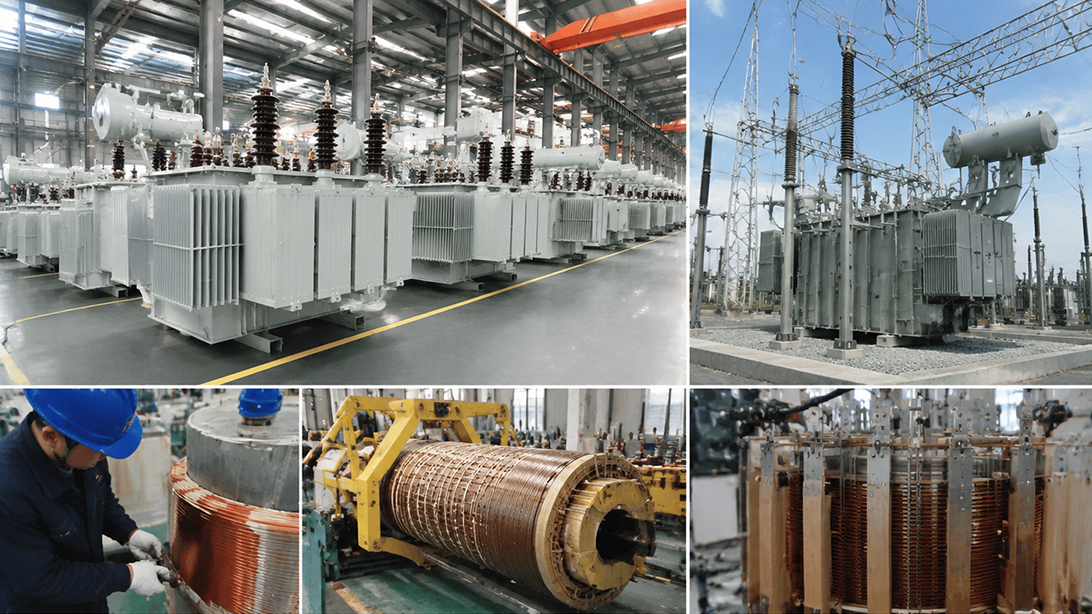
For customers unable to visit the factory personally, we provide dedicated photo and video records showing their transformer during assembly, testing, and packaging.
Remote inspection is not the ideal approach — but it is far better than having no inspection at all.
With more than 20 years of transformer manufacturing experience and project experience across more than 30 countries, we understand what international projects truly require.
When you send us your technical specifications, our engineers review them — not only for quotation purposes, but also to identify potential issues.
Does the application match the correct vector group?
Is the creepage distance sufficient for coastal projects?
Does the cooling design have risks under 50℃ ambient temperature conditions?
We raise these questions during the proposal stage because modifications at this point do not create additional costs.
We have supplied transformers for Gulf desert regions, West African mining sites, Southeast Asian industrial parks, and South American renewable energy projects.
Our designs incorporate lessons learned from previous project deliveries.
You are welcome to visit our production lines and testing facilities.
If an on-site visit is not possible, we provide documentation showing the condition of your transformer during critical manufacturing and testing stages.
Our standard designs follow IEC standards.
At the same time, we adjust designs according to specific project requirements — whether it involves GOST certification required for CIS markets, extended environmental ratings, or customer-specific documentation packages.
Which transformer is better: oil-immersed or dry-type?
There is no single type that is better in every situation.
Oil-immersed transformers are the economical choice for outdoor installations and applications with capacities of approximately 3 MVA and above.
Dry-type transformers are suitable for indoor installations where fire safety regulations require this type of equipment.
The correct choice depends on the project’s installation location, capacity requirements, and safety regulations.
What are 33kV transformers used for?
33kV transformers are mainly used in markets where 33kV is adopted as the medium-voltage distribution level — which is very common in the Middle East, Africa, and parts of Asia.
They are used for:
Industrial park substations;
Solar and wind power plant collector systems;
Mining operation facilities;
Oil and gas facility distribution networks.
How much capacity margin should I specify?
For industrial projects involving motor loads and potential future expansion, we typically recommend transformer capacity 15-20% higher than the calculated maximum demand.
For renewable energy projects, the margin depends on inverter configuration and the expected power generation profile.
Can you design transformers suitable for a 50℃ ambient temperature?
Yes.
This has already become a standard requirement for many of our Gulf region projects.
We adjust the temperature rise limits, cooling design, and material specifications to ensure that the equipment maintains reliability and expected service life even under extreme ambient temperatures.
Power transformers are typically 25-year long-term assets.
The decisions made during specification and selection directly influence operating performance throughout the entire service life.
Oil-immersed transformers provide reliable and economical performance for outdoor and high-capacity applications.
Dry-type transformers provide the required fire safety performance for indoor installations and buildings with high population density.
33kV transformers serve as essential infrastructure for industrial and renewable energy power distribution systems worldwide.
The difference between a transformer that operates reliably for decades and one that continuously develops problems is usually not manufacturing quality — it is whether the initial technical specification truly matches the actual operating conditions.
If you are preparing transformer specifications for industrial, renewable energy, or power engineering projects, our engineering team can review your requirements and provide technical feedback — even during the early design stage.