Please Choose Your Language
At Zisheng Electric, our technical discussions with South American buyers rarely begin with a product catalogue. EPC engineers usually start with harder questions: Which grid voltage applies at the site? Is the system 50 Hz or 60 Hz? Does the installation altitude require correction of external insulation and temperature rise? Will the factory test report be accepted by the owner and the local utility?
Those questions reveal what the market really expects. South American buyers are not simply looking for a factory that can quote a power transformer. They need a supplier that can interpret project conditions, close engineering interfaces, control delivery risk and remain available after the equipment reaches site.
South America is not one uniform electrical market. Brazil, Chile, Peru, Colombia, Ecuador, Argentina and neighboring countries have different utility practices, environmental conditions and approval procedures. IEC-based specifications are common, while some projects use IEEE/ANSI conventions, local utility rules or owner-specific requirements. Many African projects present a similar procurement challenge: dispersed grid parameters, difficult inland transport and limited access to specialist maintenance. A standard export model cannot cover every case.
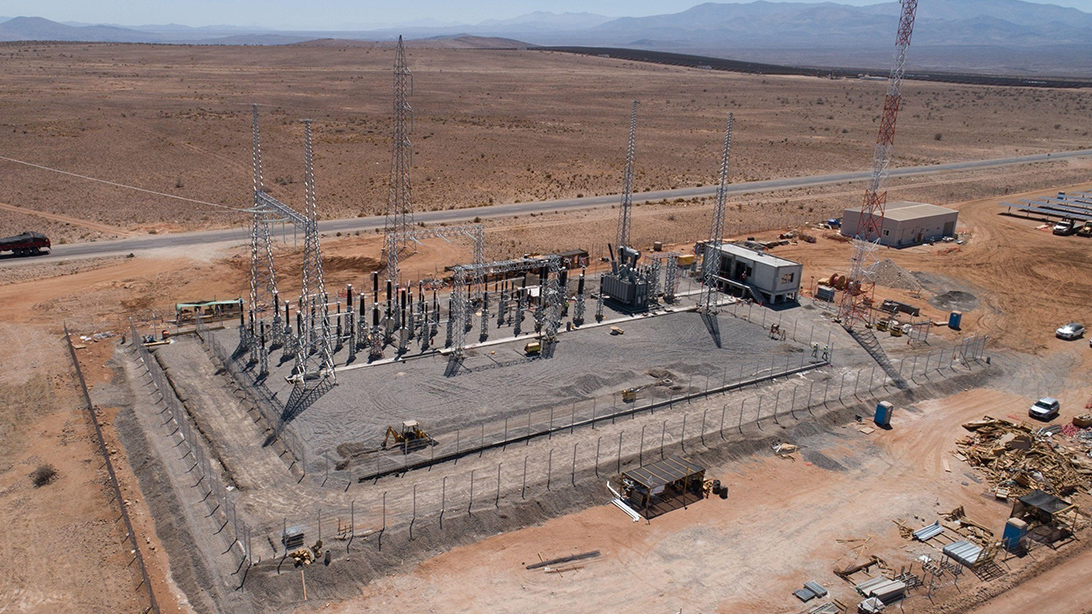
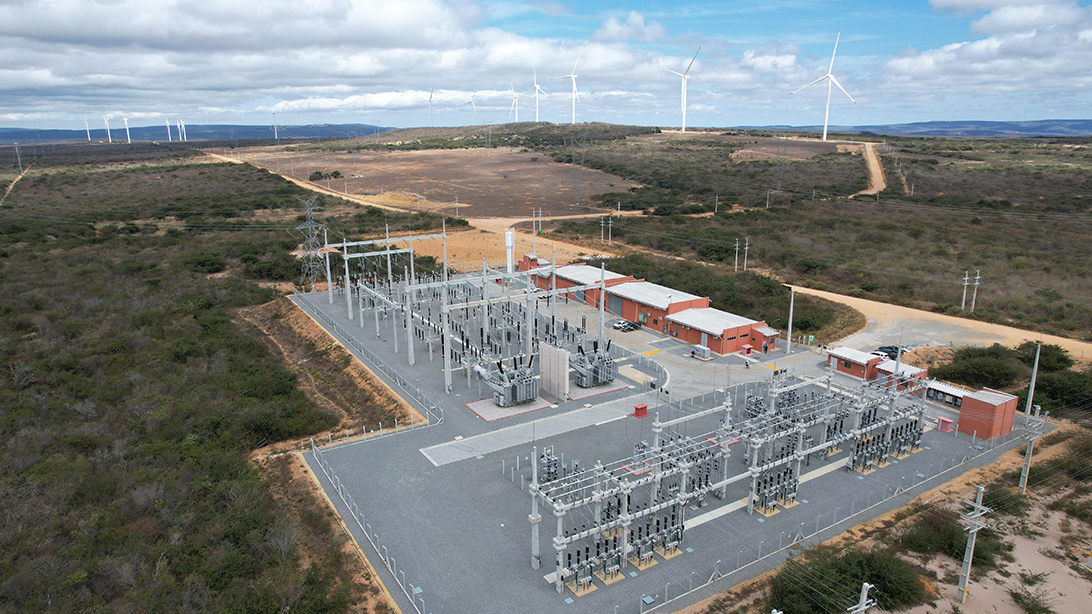
Demand is being created by several types of work: distribution network expansion, mining, solar and wind generation, ports, food processing, petrochemical facilities, industrial parks and urban infrastructure. Each project places a different load on the power transformer and a different burden on the supplier.
A mining site may prioritize fluctuating loads, dust, altitude and maintainability. A coastal factory will focus on salt mist, humidity, sealing and corrosion protection. A renewable energy project must check inverter harmonics, voltage ratio, impedance coordination, parallel operation and grid-connection requirements. The nameplate capacity is only the starting point.
Consider three transformers with the same 2,500 kVA rating. One is installed at a high-altitude mine in the Andes, one at a humid coastal processing plant, and one in a photovoltaic step-up station. Their insulation coordination, cooling margin, coating system, terminal arrangement and monitoring package may all need to differ. Quoting a standard unit before these conditions are reviewed often leads to a revised price, a rejected drawing or costly work at site.
Both 50 Hz and 60 Hz systems are used across South America. Primary voltage, secondary voltage, vector group, neutral arrangement and short-circuit level vary by country, utility and project type. A responsible supplier should verify rated power, voltage ratio, frequency, impedance, tapping range, insulation level, installation altitude, load profile and parallel-running conditions before finalizing a design.
An incorrect frequency or flux-density calculation can increase no-load current, loss, noise and temperature rise. Incorrect impedance can affect fault current and load sharing between parallel units. When an inquiry is incomplete, the right response is a technical clarification list—not an attractive price based on assumptions.
IEC 60076 is an important design and testing reference for many South American and African power transformer projects. Some owners and utilities also specify IEEE/ANSI practices. The differences are not limited to the standard printed on the nameplate. Terminal identification, accessories, allowable tolerances, test scope and documentation format can change.
The supplier should prepare a clause-by-clause deviation list that clearly marks compliant items, proposed adjustments and points requiring owner approval. This document is more valuable to an EPC team than a general statement that the transformer “meets international standards.” It exposes interface risks before the purchase order is signed.
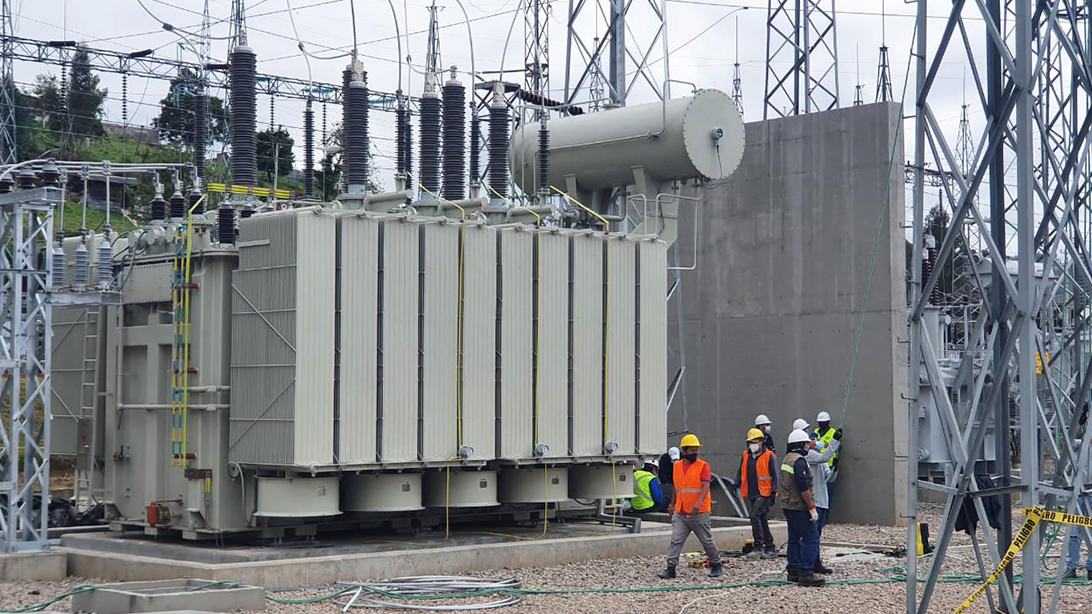
Environmental conditions vary sharply across the continent. At higher elevations in the Andes, lower air density affects external insulation and heat dissipation. Tropical areas face high humidity, heat and heavy rainfall. Industrial zones near the Pacific and Atlantic coasts must also manage salt-induced corrosion. In parts of Africa, high ambient temperature, dust, transport vibration and limited maintenance resources become the controlling factors.
Environmental adaptation requires more than adding radiator area. The engineering review should cover creepage distance, bushing insulation level, temperature-rise limits, gasket material, tank coating, corrosion-resistant fasteners, terminal-box protection and the choice between a conservator and a hermetically sealed design. Coastal projects should state the required corrosion category, coating system and exposed metal materials in the technical agreement.
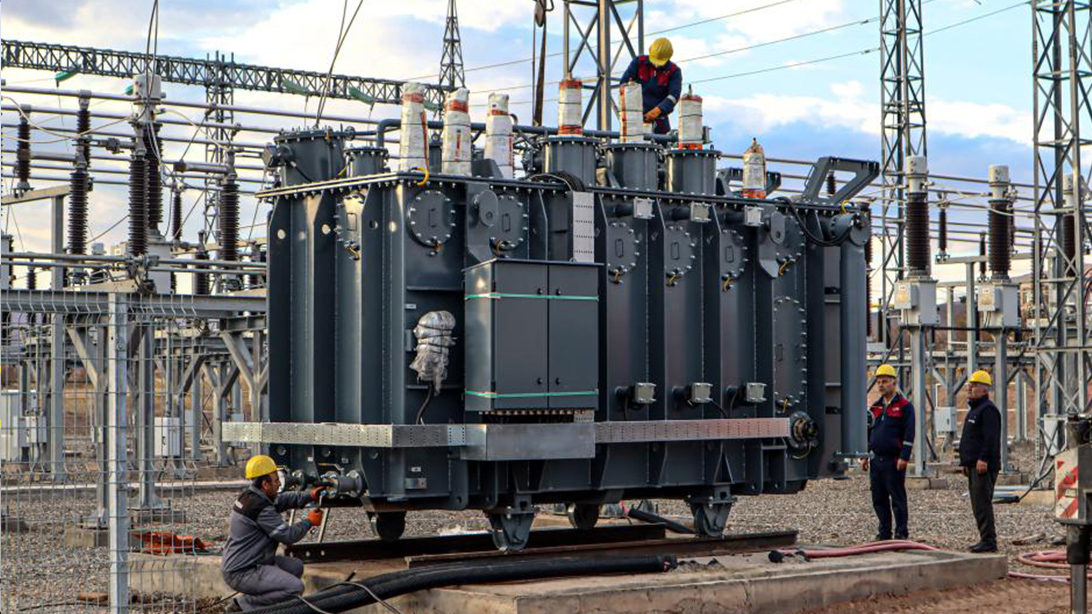
An EPC contractor delivers a functioning system, not an isolated transformer. The supplier should submit the datasheet, general arrangement drawing, foundation plan, terminal drawing, nameplate drawing, equipment weight, lifting information, protection points, secondary wiring and guaranteed loss and impedance data according to the document schedule.
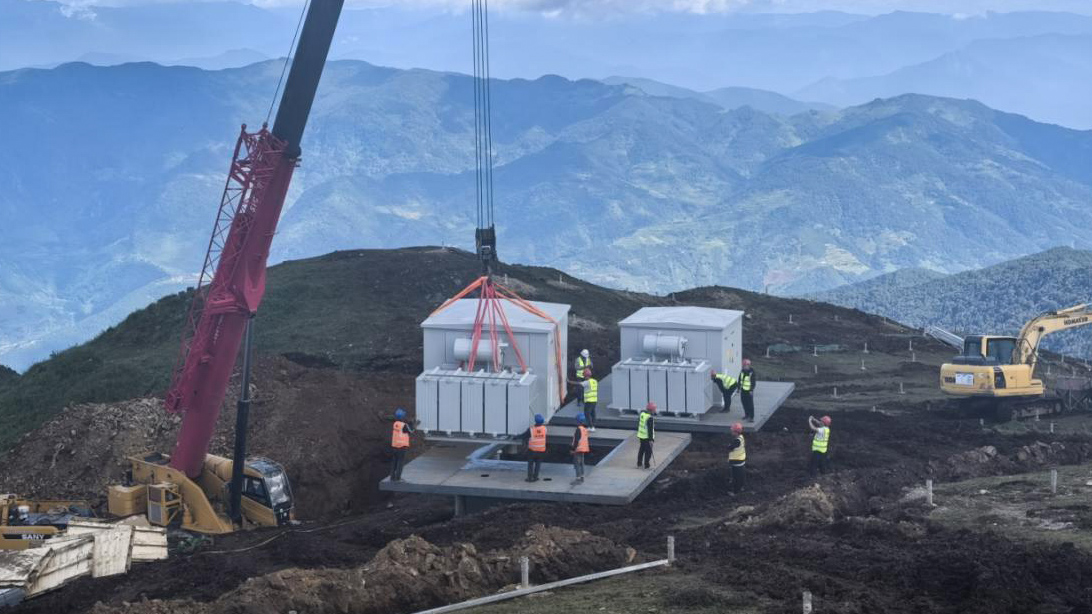
Interfaces with MV switchgear, LV switchboards, cables, protection systems and civil foundations must be closed before drawings are approved. Many site problems are not factory defects. Cable bending radius may conflict with a terminal box, foundation holes may not match the approved drawing, or the shipping height may exceed a route restriction. Early engineering coordination costs far less than field modification.
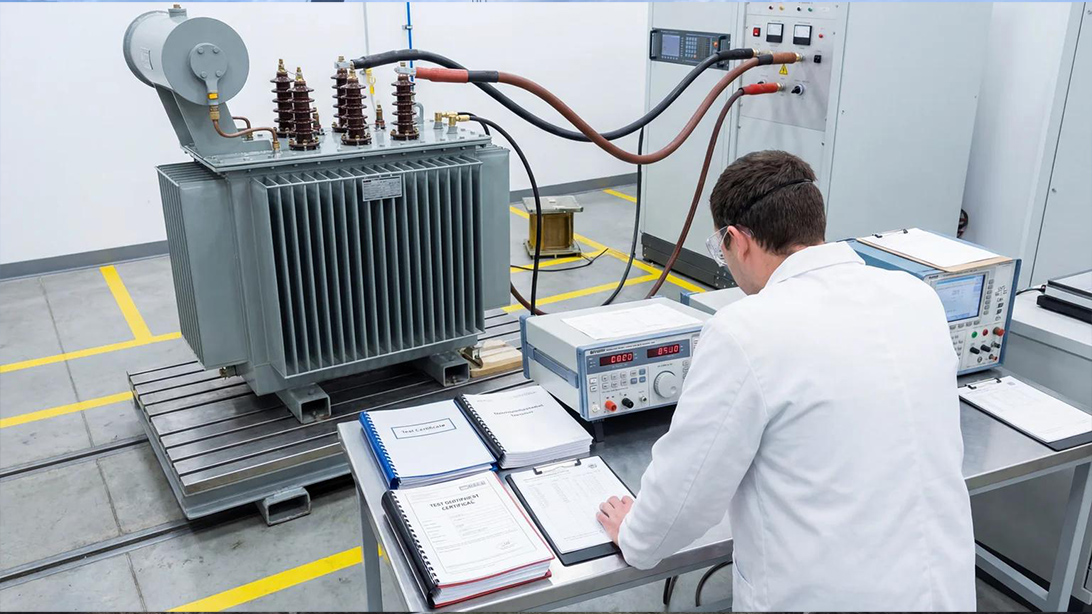
A compliant power transformer should not be accompanied by a generic test template. Serial number, approved nameplate data, measured values and acceptance criteria must all refer to the actual unit. EPC clients may also require witnessed FAT, remote video inspection or independent third-party verification.
The purchase specification should define hold and witness points before production. Depending on the applicable standard and contract, routine testing may cover winding resistance, voltage ratio and phase displacement, short-circuit impedance and load loss, no-load loss and current, insulation resistance, applied-voltage withstand, induced-voltage withstand and insulating-oil tests. Temperature-rise, lightning-impulse, partial-discharge and sound-level tests should be agreed during quotation because they affect scheduling and cost.
For South American and African projects, delivery risk often appears outside the factory. Late document approval, route restrictions, missing customs files or inadequate sea-freight packaging can all delay energization. A credible schedule separates drawing submission, technical approval, key-material procurement, manufacturing, testing, packing and shipment. A single statement such as “90-day production” is not enough.
The packing method should be designed around the route. The project team must decide whether radiators and bushings will be removed, how accessories will be secured, whether the main tank will travel oil-filled or nitrogen-filled, and whether impact and tilt indicators are required. For remote mines and inland sites, shipping dimensions, road limits and crane capacity should reach the transformer manufacturer early.
Distance itself is manageable. The real risk is receiving no engineering judgment when a site reports a problem. A capable transformer supplier retains design, material, production and test records for each unit and provides an installation checklist, pre-energization test requirements, oil-treatment guidance, spare-parts list and troubleshooting route.
Remote support should connect the site team with a technical engineer. When the customer reports oil temperature, unusual sound, protection operation or insulation measurements, the engineer must distinguish between load, connection, accessory, environment and active-part causes. If field service is required, response time, responsibility and spare-parts arrangements should already be stated in the contract.
Project | Typical Equipment | Technical Focus | Supplier Support |
|---|---|---|---|
Grid expansion | Oil-immersed distribution, pole-mounted and substation transformers | Utility voltage, losses, short-circuit withstand, vector group, parallel operation | Utility-standard review, batch consistency, type-test evidence |
Mining and heavy industry | Power transformers, dry-type transformers, packaged substations | Impact loads, altitude, dust, vibration, maintainability | Load review, environmental correction, commissioning and spares |
Solar, wind and BESS | Step-up transformers, pad-mounted transformers, main transformers | Harmonics, cyclic loading, impedance, grid voltage, efficiency | Inverter interface review, system coordination, loss guarantee |
Coastal industry and ports | Oil-immersed and dry-type transformers, complete distribution equipment | Humidity, salt mist, corrosion, condensation, enclosure protection | Coating specification, sealing design, environmental test plan |
Rural electrification | Single- and three-phase pole-mounted distribution transformers | Voltage variation, overload, lightning, low maintenance | Standardized batch supply, installation guidance, accessible spares |
Both markets remain price-sensitive, but experienced buyers do not evaluate ex-works price alone. Sea freight, inland transport, installation, spare parts, losses and unplanned downtime form the real lifecycle cost. Both markets also reward suppliers that can handle small batches with several specifications and support the customer remotely.
The differences still matter. South American projects often combine IEC requirements with American conventions and local utility rules; 60 Hz equipment and American-style terminals are relatively common. African standards vary by country and legacy system. In rural electrification and distribution upgrades, pole-mounted transformers, low-maintenance construction and spare-part availability may carry more weight.
During technical evaluation, ask for evidence at six points:
A complete technical offer and deviation list based on the project datasheet;
Design experience at the required capacity, voltage class and standard;
Traceable material, manufacturing, inspection and test records;
Named responsibility for drawings, FAT, packing, logistics and site support;
A delivery schedule tied to approvals and key materials, not a verbal promise;
Continued access to spare parts, technical consultation and fault analysis after warranty.
At the inquiry stage, buyers should provide rated power, primary and secondary voltage, frequency, phases, vector group, tapping range, installation type, altitude, maximum ambient temperature, applicable standard and load type. Accurate input produces a power transformer design and price that can be compared fairly.
Zisheng Electric works with EPC contractors, engineering companies and industrial buyers, as well as renewable energy developers. Our project support begins with specification review and continues through datasheet confirmation, customized design, drawing approval, manufacturing quality control, FAT, export packing and installation or operating support.
Our main products include oil-immersed power transformers, dry-type transformers, pad-mounted transformers, pole-mounted transformers, step-up transformers, substation transformers, prefabricated substations and MV/LV distribution equipment. Capacity, voltage, frequency, loss, impedance, accessories and environmental protection can be configured to IEC, IEEE/ANSI and project-specific requirements.
If you are planning a distribution, renewable energy, mining, industrial or infrastructure project in South America or Africa, send us the datasheet, single-line diagram or basic electrical parameters. Zisheng Electric will provide a response within 24 hours, with our technical and commercial teams reviewing the requirement together.