Please Choose Your Language
At the beginning of 2026, we conducted a technical review of a transformer for a photovoltaic project in Chile. The technical specification provided by the owner was very comprehensive — capacity, voltage level, impedance voltage, and loss limits were all clearly defined. The design process followed IEC standards, and everything appeared to be in order.
However, when we reviewed the environmental conditions section, we noticed one critical detail: the maximum summer ambient temperature at the project site was specified as 45°C.
The default design ambient temperature according to IEC 60076 is 40°C. A difference of 5°C means a 5K reduction in the available winding temperature rise margin. This may not be noticeable during the initial operation stage, but over three to five years, the difference in insulation aging rate can gradually become significant. We included this risk in our technical feedback, and the owner later adjusted the temperature rise design parameters accordingly.
This case highlighted an important issue: in South American renewable energy projects, many design teams are not lacking technical knowledge. The challenge is that during the design input stage, environmental conditions are often based on standard default values rather than actual site conditions.
This guide summarizes three typical application scenarios based on the experience accumulated by Shengsheng Electric's engineering team in supporting wind power and photovoltaic projects across South America, providing practical references for EPC contractors and engineering consultants.
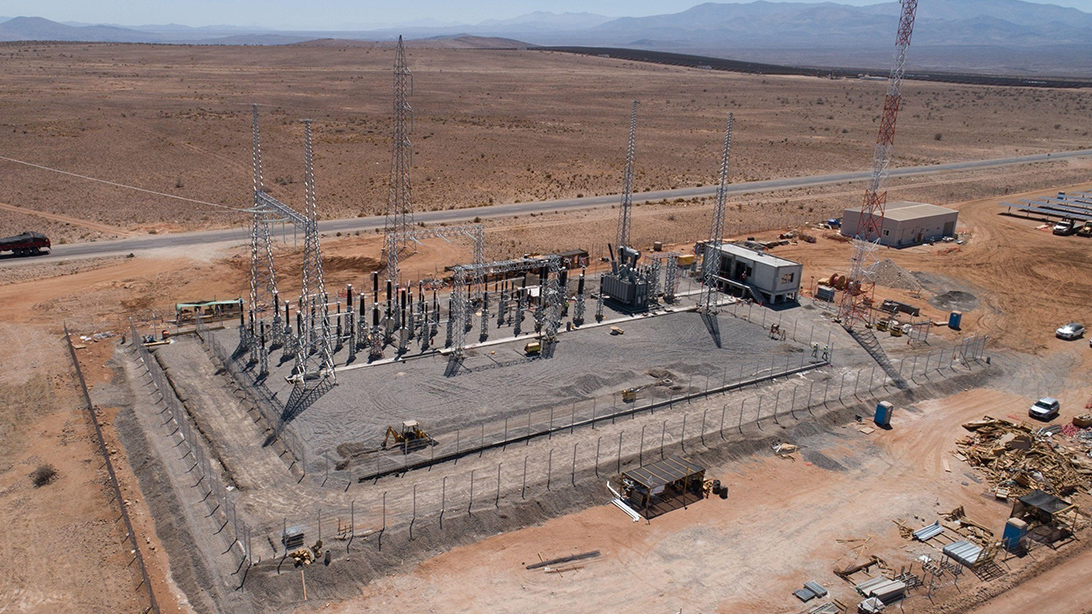
The Atacama Desert is one of the regions with the highest solar radiation levels in the world. According to IEC 60076, the standard reference ambient temperature for transformer design is 40°C. However, in desert areas, the summer afternoon ambient temperature often exceeds 45°C, while ground surface temperatures can be even higher.
The operating pattern of photovoltaic projects further intensifies this challenge. During the daytime, transformers operate at full load when solar generation reaches its peak, while at night the load drops close to zero. This means the transformer experiences a complete thermal cycle every day. The repeated expansion and contraction caused by temperature changes place greater stress on insulation systems and sealing components compared with continuous stable operation.
The aging rate of transformer insulation roughly doubles for every 6–8°C increase in operating temperature. When the ambient temperature rises from 40°C to 48°C, the winding hot-spot temperature increases accordingly. The insulation aging process is not a linear increase but an accelerated, exponential deterioration.
In projects supported by the Shengsheng Electric engineering team, we found that transformers with standard designs operating in desert environments showed higher moisture content in transformer oil and increased dielectric loss values compared with equipment of the same age after only two to three years of operation. In more severe cases, oil replacement or factory overhaul may be required after around five years of operation.
Do not apply standard temperature rise design parameters without adjustment.
During the transformer selection stage, project owners should provide historical climate data for the installation site, preferably covering at least the past 10 years. The focus should be on the extreme maximum ambient temperature, rather than average monthly temperatures. The winding temperature rise and top oil temperature rise should then be recalculated based on actual site conditions.
The temperature rise limits specified in IEC 60076-2 for liquid-immersed transformers are based on a reference ambient temperature of 40°C. For every additional 1°C increase in ambient temperature, the available temperature rise margin is reduced by approximately 1K.
During technical reviews of desert photovoltaic projects, we often find that radiators are selected based on the standard 40°C ambient condition. Although the transformer may pass factory tests and initial commissioning without issues, operating continuously in environments above 45°C can result in significantly higher top oil temperatures during long-term operation.
For desert solar projects, transformer thermal design should therefore be evaluated based on the actual worst-case environmental conditions, including maximum ambient temperature, full-load operation, cooling capability, and insulation aging requirements.
Sand and dust are major challenges in desert environments
In desert areas, strong winds and airborne sand particles create additional risks for transformer operation. For conventional conservator-type transformers, the breather can easily become clogged by dust and sand. Once the moisture removal function is compromised, the insulating oil is directly exposed to moisture in the air, significantly increasing the risk of oil contamination and insulation degradation.
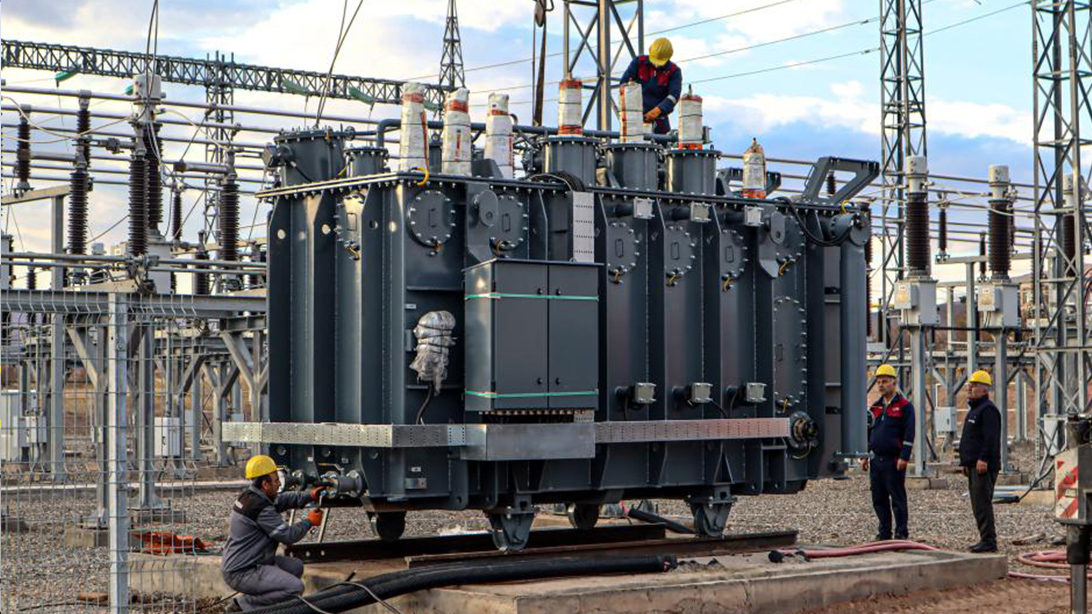
A fully sealed corrugated tank transformer eliminates this failure mode. It does not require an oil conservator or breather, and the insulating oil is completely isolated from direct contact with external air. The 33kV/0.69kV step-up transformers supplied by Shengsheng Electric for solar power plants in Saudi Arabia adopt this structure, combined with Class F insulation, ONAN cooling, and IP55 protection, and have achieved stable operation in harsh environments.
The ONAN (Oil Natural Air Natural) cooling method may not always be sufficient for desert environments with extremely high temperatures.
If sufficient installation space is available, increasing the radiator surface area can improve heat dissipation performance. However, where space is limited, alternative solutions such as ONAF (Oil Natural Air Forced) cooling or forced oil circulation systems should be evaluated.
The key evaluation criteria are whether the calculated top oil temperature rise and average winding temperature rise remain within allowable limits under the most severe conditions, including the highest ambient temperature and full-load operation.
A photovoltaic project located in Chile’s Atacama Desert, one of the world’s most extreme solar environments, was equipped with three 220kV step-up transformers. The project site experiences exceptionally large daily temperature fluctuations compared with most renewable energy sites in South America.
These projects placed higher requirements on transformer cooling capability and sealing performance than standard applications.
Based on our experience with similar environments, when the ambient temperature exceeds 45°C, Class F insulation should be considered a basic requirement. The required cooling surface area must be recalculated according to actual site conditions, rather than simply applying standard transformer designs.
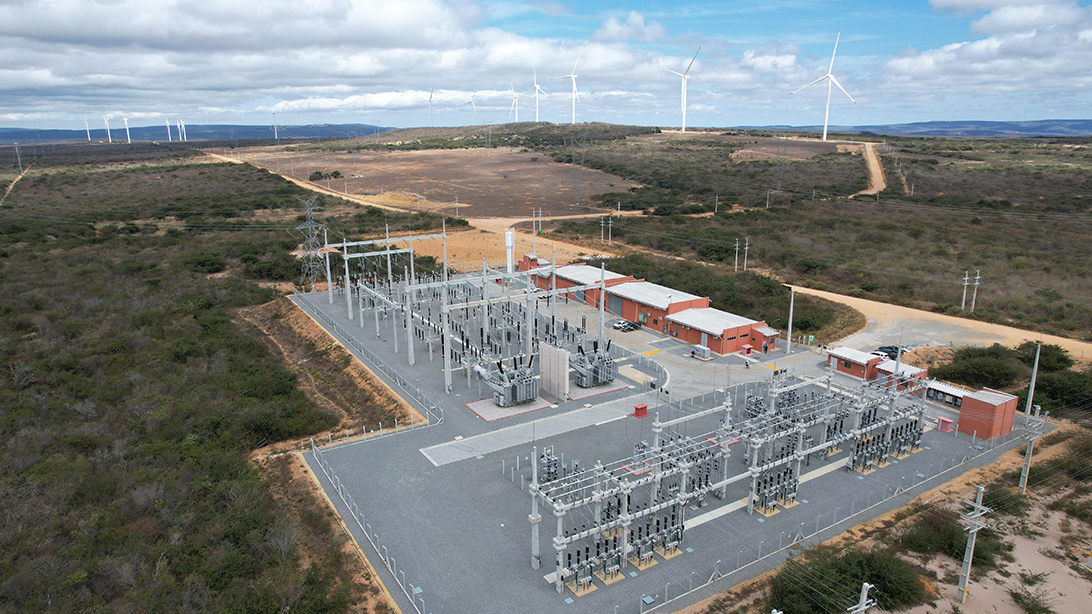
The northeastern coastal region of Brazil is one of the richest wind energy areas in South America. From Ceará to Bahia, thousands of kilometers of coastline are home to numerous wind farms. Equipment installed at the bottom of wind turbine towers or near turbines is continuously exposed to salty marine air.
Salt spray causes comprehensive damage to transformers, including coating blistering and peeling, corrosion of terminals leading to increased contact resistance, rusting of fasteners that makes maintenance and disassembly difficult, and aging seals that allow salt-laden air to penetrate into the transformer tank. Under these conditions, standard anti-corrosion coatings may begin to show rust spots within only two to three years.
A corrosion survey conducted on a 1,150 km transmission line project in Brazil provides valuable reference. The project was initially designed according to C3 corrosion category requirements. However, after one year of operation, field measurements showed that the actual corrosion environment had reached C5-Cx (extreme corrosivity) levels. Carbon steel corrosion rates measured on substation samples ranged from 23 μm/year to 225 μm/year.
The difference between theoretical estimation and actual corrosion conditions can reach two corrosion categories. Selecting materials based on underestimated corrosion levels can significantly reduce the service life of the equipment.
For coastal projects, the corrosion protection system should be designed at least according to ISO 12944-2 C4 category requirements. For installations within 500 meters of the coastline, C5-M category protection is recommended.
Terminal components and fasteners should use 304 or 316 stainless steel materials. Nameplates should be made of stainless steel with laser engraving, as conventional aluminum nameplates may become unclear or damaged after several years in salt spray environments.
The difference between C5-M and C4 protection is not simply applying "one more layer of paint." The complete coating system — including primer, intermediate coating, and topcoat — requires different materials, thicknesses, and application procedures.
For a containerized substation project supplied by Shengsheng Electric in Santiago, Chile, the equipment was designed according to C5-M corrosion protection requirements with an IP54 protection rating, considering the project's coastal location and high humidity conditions.
Salt spray not only corrodes external structures but can also enter the transformer interior through weak sealing points and contaminate the insulating oil.
All sealing materials must have sufficient resistance to salt spray aging. Cable entry points require careful sealing treatment without any weak points. The welding process of corrugated tanks must ensure there are no pores, cracks, or welding defects that could compromise sealing performance.
Transformers installed inside wind turbine towers face additional challenges, including vibration and limited installation space.
The mechanical structure must be designed with sufficient vibration resistance. The transformer dimensions must match the internal tower space requirements, and some turbine locations may require consideration of inclined installation conditions.
The Three Gorges Brazil Palmeiras Wind Power Project is located in Paraíba State, Brazil. The project has a total installed capacity of 648MW, including 108 wind turbines rated at 6MW each, along with a 500kV substation equipped with two 370MVA/500kV split transformers.
Large-scale renewable energy projects typically have strict requirements for high-level corrosion protection. For transformer engineers involved in these projects, corrosion protection is not limited to coating thickness alone. The housing material, welding process, and coating system must all be designed systematically according to C5-M requirements, rather than simply stating "enhanced anti-corrosion treatment" in a quotation.
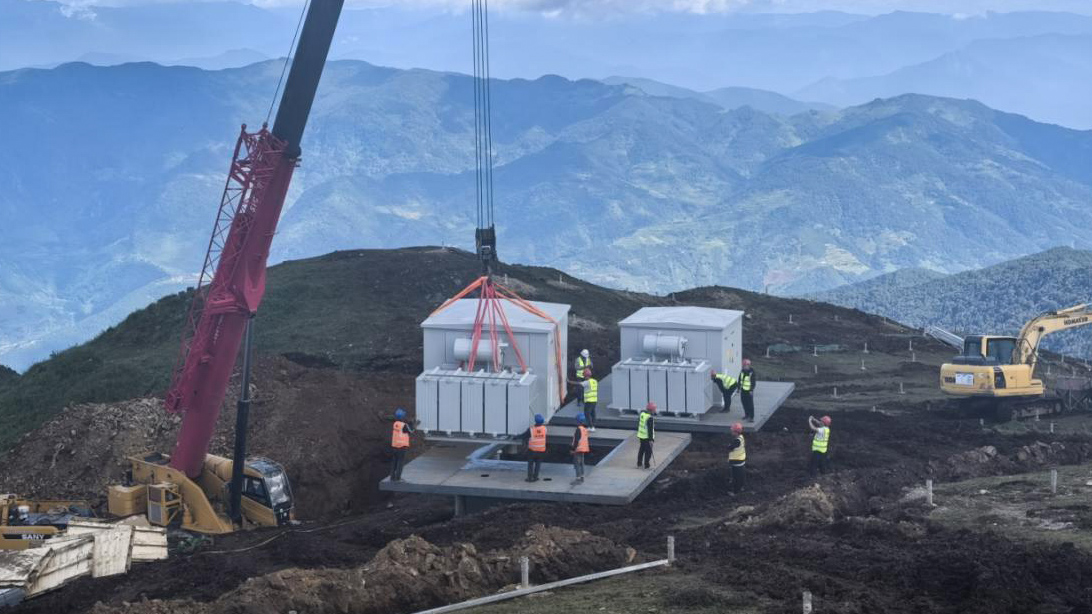
The Andes Mountains stretch along the western side of South America, and many renewable energy projects in Peru, Chile, Argentina, and Bolivia are located at elevations above 3,000 meters.
High-altitude environments affect transformers in two major ways:
First, reduced air density decreases heat dissipation capability. As altitude increases by every 1,000 meters, air density decreases by approximately 10%, resulting in reduced convection cooling efficiency.
Second, reduced air insulation strength requires increased external insulation distances. For every 1,000-meter increase in altitude, air insulation strength decreases by approximately 8–10%.
According to IEC 60076-2, insulation parameters must be corrected when the installation altitude exceeds 1,000 meters. The correction factor is:
Ka = exp((H-1000)/8150)
where H represents the installation altitude in meters.
However, in actual project reviews, a transformer installed at 3,000 meters altitude cannot be addressed simply by increasing insulation distances. Many projects pass high-voltage withstand tests but later experience excessive operating temperature rise because thermal correction has not been considered together with insulation adjustment.
A common mistake is correcting only the insulation level while ignoring cooling performance. As a result, the transformer’s high-voltage side passes dielectric tests, but the actual load capacity at high altitude is reduced — not because the transformer cannot handle the electrical load, but because heat dissipation is insufficient and winding temperatures exceed allowable limits, forcing operational derating.
Both insulation and cooling performance must be corrected.
According to IEC requirements, above 1,000 meters altitude, the allowable temperature rise limit should be reduced by approximately 1K for every additional 250 meters.
For example:
A transformer installed at 1,600 meters altitude should have its temperature rise limit reduced by approximately 3°C.
At 3,000 meters altitude, the temperature rise limit should be reduced by approximately 8K.
In practical transformer design, a transformer originally designed for a 40°C ambient temperature at sea level may have its usable capacity reduced to around 90% when installed at 3,000 meters altitude.
The exact derating factor depends on the cooling method. Naturally cooled transformers are generally more affected by altitude compared with forced-air-cooled transformers.
Bushing clearances, phase-to-phase distances, and live-part-to-ground distances must all be recalculated according to altitude correction factors.
At an altitude of 3,000 meters, the required insulation distance for the same voltage level may be approximately 27% higher compared with sea-level installations.
If installation space is limited, solutions may include selecting bushings with higher insulation ratings or using composite insulation bushings to compensate for reduced air insulation strength.
A photovoltaic power plant located in the Andes region of Peru is one of the largest solar projects in the country. The project is expected to enter operation in 2026, with an annual electricity generation capacity of approximately 1.2TWh.
The two SFFZ-235000/220 split transformers supplied for the project were specially designed for high-altitude operation, while also considering seismic requirements in Peru, including a 0.5g earthquake acceleration level.
CHINT supplied a 75MVA 138kV oil-immersed transformer for the ENGIE Peru wind power project. The transformer adopts a fully sealed structure to withstand high-altitude environments with strong wind and dust exposure.
Based on our experience with similar projects, we recommend not finalizing a transformer solution before obtaining accurate altitude and local climate data.
The correct approach is:
Calculate insulation correction factors according to IEC 60076-2.
Evaluate temperature rise correction requirements.
Determine whether capacity adjustment or insulation level upgrades are necessary.
Completing this analysis at the beginning of the project can prevent major technical adjustments later.
From our practical project experience, many long-term transformer operation issues in renewable energy projects are not caused by manufacturing quality problems, but by missing critical environmental parameters during the initial design input stage.
Recommended Design Input Data for EPC Contractors and Owners
Design Input Parameter | Main Influencing Factors | Impact on Transformer Design |
|---|---|---|
Maximum ambient temperature at project site | Extreme summer temperatures in desert and high-temperature regions | Affects winding temperature rise, radiator sizing, and cooling method selection |
Minimum ambient temperature | High-latitude or mountainous areas | Affects sealing structure, accessory selection, and insulating oil performance |
Installation altitude | Andes mountains, high plateau projects | Affects external insulation level, bushing selection, and temperature rise correction |
Air quality and dust level | Desert and arid regions | Affects tank structure, protection rating, and sealing design |
Salt spray level | Coastal wind power projects | Affects corrosion protection level, coating system, and external component materials |
Humidity and rainfall conditions | Tropical and coastal regions | Affects moisture protection, corrosion resistance, and insulation reliability |
Seismic intensity | Earthquake-prone areas such as Chile and Peru | Affects mechanical strength and seismic design requirements |
Grid connection parameters | Voltage level, short-circuit capacity, system requirements | Affects impedance, electrical parameters, and testing requirements |
Operating conditions | Continuous operation, cyclic loading, overload requirements | Affects capacity margin and thermal stability design |
Based on our experience with renewable energy projects in South America, three actions are critical during the transformer selection stage.
Extreme temperature, altitude, salt spray level, humidity, and seismic intensity are the key parameters determining transformer design.
The earlier these parameters are confirmed, the more accurate the technical solution will be.
IEC standards provide reference conditions, but actual project conditions must be collected from the owner, engineering consultant, or local meteorological sources.
Different South American countries have different technical requirements:
Brazil: ABNT NBR 5356 series + INMETRO certification + ANEEL requirements
Chile: IEC 60076 + SEC certification (energy efficiency requirements may require IE3 level)
Colombia: IEC 60076 + RETIE technical regulations
Argentina: IRAM standards + IRAM certification
Peru: IEC 60076, with higher requirements often applied in mining projects
Before transformer selection, confirm the specific standards listed in the technical specification and verify that the supplier’s type test reports cover the current design version.
Non-standard transformer designs — such as:
Increased cooling surface area
Higher insulation levels
Customized anti-corrosion coating systems
require additional engineering design and manufacturing time.
Waiting until the project is about to start and then urgently requesting delivery usually results in selecting standard products with limited environmental adaptability.
For renewable energy projects in extreme environments, early technical communication with the transformer manufacturer is essential to ensure long-term reliability.
Founded in 2014, Shengsheng Electric specializes in the manufacturing of power equipment, including oil-immersed transformers, dry-type transformers, amorphous alloy transformers, prefabricated substations, and switchgear.
The company provides customized transformer solutions according to international standards such as IEC 60076 and GOST. Its products have been supplied to more than 30 countries and regions, including markets in the Middle East, Africa, Southeast Asia, and South America.
The approach of the Shengsheng Electric engineering team is to evaluate environmental conditions and operating requirements first, then develop the technical solution — rather than waiting until equipment arrives at the project site to solve compatibility issues.
After receiving project specifications, our engineers review whether the selected transformer design matches the actual application conditions. Potential risks are identified and technical recommendations are provided during the early design stage.
For challenging operating environments such as:
High-temperature desert areas
High-altitude regions
Coastal areas with severe salt spray exposure
Shengsheng Electric has developed customized design solutions based on practical project experience.
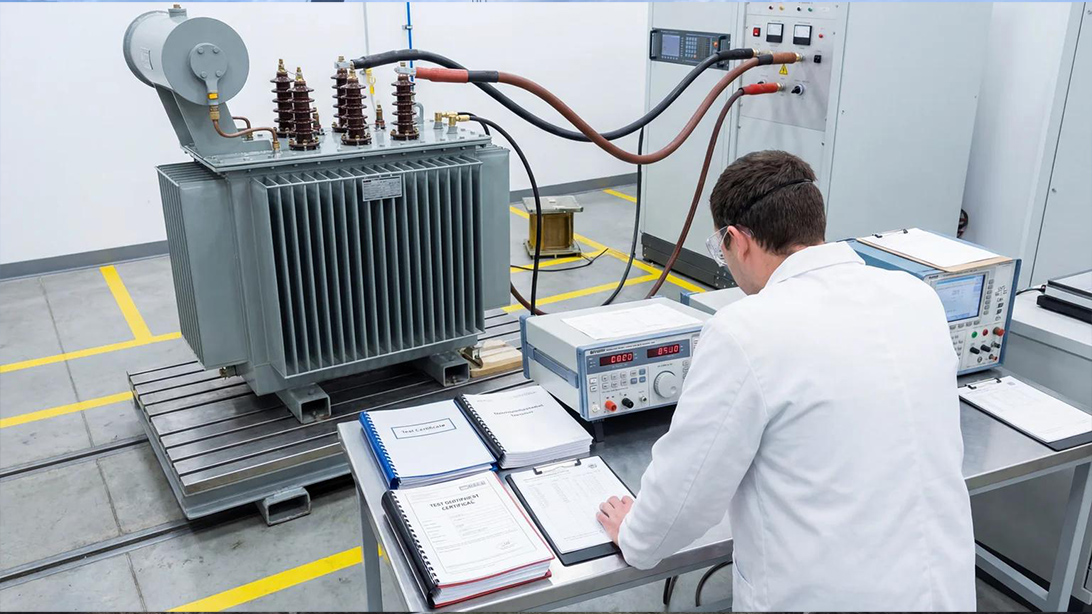
We can provide production and testing records, including manufacturing and inspection videos, supporting both remote inspection and on-site factory acceptance testing (FAT).
Products are designed and manufactured according to IEC 60076 standards and can be customized according to project requirements, including:
GOST certification requirements
Extended environmental condition ratings
Customized technical documentation packages
Through early technical coordination, customized engineering design, and strict manufacturing control, Shengsheng Electric helps renewable energy projects achieve reliable transformer performance in demanding environments.
A: The selection depends on the installation environment and application requirements.
For outdoor photovoltaic substations and wind farm substations, oil-immersed transformers are the mainstream choice due to their lower cost, better heat dissipation performance, and advantages in large-capacity applications.
For indoor installations or space-limited locations, such as control buildings inside substations, dry-type transformers may provide higher safety advantages.
There is no absolute "better" option — the key is selecting the transformer type that matches the actual project conditions.
A: In South American medium-voltage distribution networks, 34.5kV and 13.8kV systems are more commonly used.
However, 33kV transformers are also applied in some international EPC projects, especially projects following IEC standards.
Before transformer selection, it is important to confirm the local grid connection voltage level and utility requirements.
A: Conventional conservator-type transformers require regular inspection of the breather and silica gel condition. When the silica gel changes color due to moisture absorption, it needs to be replaced or regenerated.
A fully sealed corrugated tank transformer does not require an oil conservator or breather. Since the insulating oil has no direct contact with external air, sand and dust exposure have minimal impact on oil quality.
This advantage is especially important for remote photovoltaic plants where permanent maintenance teams are not available on site.
A: Yes.
This type of design has been applied in our projects in the Middle East and North Africa. The technical solutions usually include:
Reducing allowable temperature rise limits
Increasing radiator and heat dissipation capacity
Upgrading accessory temperature ratings
Optimizing insulation systems
The cost is higher than standard transformer designs, but for extreme temperature environments, these improvements are essential to ensure long-term operational reliability.
Hebei Shengsheng Electric Co., Ltd.
Products are designed and manufactured according to international standards including IEC 60076 and GOST, serving renewable energy and power infrastructure projects in South America, the Middle East, Africa, and Southeast Asia.
For projects in the early design stage, we recommend confirming environmental conditions and operating requirements as early as possible to reduce later technical modifications.
Our engineering team can provide an initial technical solution within 24 hours.