Please Choose Your Language
Views: 0 Author: Site Editor Publish Time: 2026-09-09 Origin: Site
Zisheng Electric reviews transformer enquiries by connecting every offered value to the project specification, single-line diagram, load schedule, site conditions, and testing requirements. A low price or a familiar kVA rating does not make a technically acceptable offer. A disciplined transformer technical bid evaluation identifies deviations before purchase order placement, when they can still be resolved without redesign, delay, or commercial dispute.
Transformer tenders often contain requirements distributed across the employer specification, data sheets, drawings, bill of quantities, approved-vendor requirements, document schedules, and commercial clarifications. If reviewers compare quotations only by headline rating and price, hidden differences in losses, impedance, insulation level, tapping, accessories, enclosure, documentation, testing, or delivery scope can remain unnoticed.
The evaluation should therefore use a clause-by-clause compliance matrix. Each requirement needs a source reference, the bidder’s response, supporting document, deviation status, technical consequence, responsible reviewer, and closure action. Statements such as “complied” or “as per IEC” are not enough when no guaranteed value, drawing, or test scope is provided.
Load schedules, operating cases, motor starting and harmonic sources should be reviewed before accepting the offered transformer rating.
A fair comparison begins with one common evaluation basis. Freeze the applicable specification revision, drawing revision, bidder-question responses, and approved deviations. Then convert the requirements into a matrix before reading individual offers. This prevents the first bid from defining the comparison standard and reduces the risk that one bidder’s terminology is mistaken for the project requirement.
Separate mandatory requirements from preferences. A mandatory item may affect safety, grid compatibility, interface fit, statutory acceptance, or guaranteed performance. A preference may allow engineering alternatives if the consequence is understood. Keep commercial price out of the first technical pass so that an attractive price does not influence compliance judgments.
Evaluation item | Required evidence | Why it matters | Risk if unclear |
|---|---|---|---|
Rated power and cooling stages | Guaranteed data sheet and nameplate proposal | Links capacity to operating duty and temperature limits | Overload, shortened insulation life, or unnecessary capital cost |
HV/LV voltage, frequency, vector group | Single-line diagram cross-check and winding connection drawing | Determines system compatibility and phase displacement | Parallel-operation failure, protection errors, or unusable equipment |
Impedance and tolerance | Guaranteed value at stated MVA and reference temperature | Controls fault current, voltage regulation, and load sharing | Switchgear duty exceedance or poor motor-starting voltage |
No-load and load losses | Guaranteed losses and evaluation basis | Drives lifecycle energy cost and heat rejection | Misleading price comparison and higher operating expenditure |
Insulation levels and clearances | Applicable standard, LI/AC values, drawings | Coordinates transformer insulation with the network | Noncompliance or inadequate surge withstand |
Tap changer and control | Range, steps, current rating, scheme and interfaces | Defines voltage-control capability and automation integration | Insufficient regulation or incompatible control signals |
Accessories and monitoring | Detailed bill of materials and terminal schedule | Prevents scope gaps at installation | Late procurement, interface changes, and commissioning delay |
FAT and documentation | Inspection and test plan, procedures, document register | Establishes acceptance evidence and hold points | Unverifiable compliance or delayed approval |
The transformer rating should not be accepted merely because it matches the load total in a spreadsheet. Check continuous demand, diversity, seasonal peaks, motor starting, cyclic loads, emergency operation, generator transfer, future expansion, and the intended redundancy philosophy. For an N-1 arrangement, confirm whether one transformer must temporarily carry the full essential load and for how long.
Harmonic-producing loads such as variable-frequency drives, rectifiers, UPS systems, and large data-processing equipment can increase eddy-current and stray losses. The bid should state how the manufacturer has considered the declared harmonic spectrum or the project’s specified derating method. If harmonic information is unavailable, record it as an input gap rather than assuming a conventional sinusoidal load.
Voltage data must be read as a system. Confirm nominal system voltage, highest voltage for equipment where applicable, frequency, neutral arrangement, basic insulation requirements, tapping range, tapping step, off-circuit or on-load operation, and the normal tap position. A technically correct tap range can still be wrong if it is centered on the wrong nominal voltage or if the tap changer cannot carry the specified through current.
Vector group affects phase displacement, zero-sequence paths, protection settings, harmonic behavior, and parallel operation. Compare it with the single-line diagram and existing transformers. Where parallel operation is required, review ratio, phase displacement, polarity, impedance, tapping arrangement, and load-sharing expectations as one package.
Ambient temperature, altitude, contamination, access and enclosure requirements can change the acceptable transformer design.
Percentage impedance is not just a catalog value. It influences prospective short-circuit current, downstream switchgear duty, voltage drop, motor-starting performance, and parallel load sharing. Confirm that each bidder quotes impedance on the same power base, tapping position, winding pair, and reference temperature. For multi-winding transformers, the required pairwise impedances must be clearly identified.
A higher impedance may reduce fault current but worsen voltage regulation and motor starting. A lower impedance may support transient loads but raise the required interrupting capacity. The evaluation team should therefore check the offered value against the short-circuit and load-flow studies instead of ranking “lower” or “higher” as inherently better.
No-load loss is present whenever the transformer is energized; load loss changes approximately with the square of load current under comparable conditions. Compare all bids at the same reference temperature and rating. Confirm whether auxiliary power is included and whether tolerances are treated consistently under the governing specification.
If the purchaser applies capitalization factors, calculate evaluated cost using the stated no-load-loss and load-loss factors rather than inventing factors during review. Where no factors are supplied, present guaranteed losses separately and run transparent sensitivity cases. The technical recommendation should show how much of the ranking depends on purchase price and how much depends on projected operating losses.
Ambient temperature, altitude, solar exposure, contamination, humidity, seismic requirements, corrosive atmosphere, indoor or outdoor location, and fire-safety constraints can affect insulation, cooling, enclosure, creepage distance, coating, terminals, and accessories. Confirm that the bid states the design conditions it assumes. A generic compliance statement may conceal a standard design that does not match the project site.
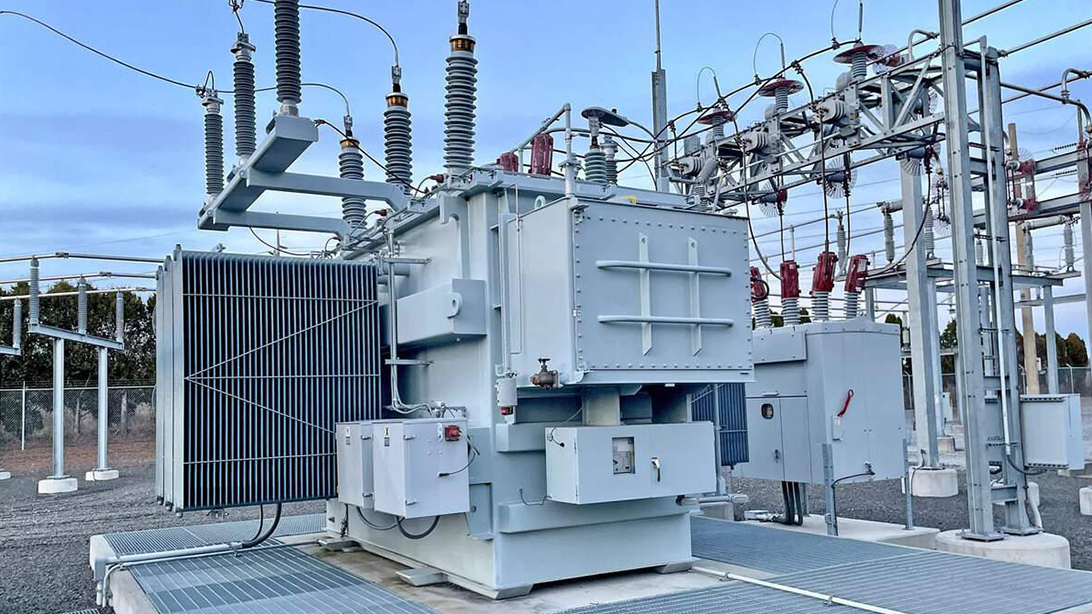
For oil-immersed units, review liquid type, conservator or sealed-tank arrangement, pressure-relief provisions, oil-level indication, temperature devices, marshalling facilities, and bund or fire-interface requirements assigned to the transformer package. For dry-type units, check insulation system, enclosure rating, ventilation path, temperature sensors, space heaters where required, and the effect of room ventilation on rated output.
Many transformer problems are interface problems rather than electromagnetic-design problems. Verify overall dimensions, mass, jacking and lifting points, rail or wheel arrangement, foundation reactions, terminal orientation, cable-box dimensions, bus-duct interface, neutral termination, earthing pads, clearances, access for maintenance, and transport envelope.
Control interfaces need equal attention. Review auxiliary supply voltage, alarm and trip contacts, terminal numbering, communication protocol if specified, current-transformer ratios and classes, marshalling-box arrangement, remote temperature indication, and tap-changer controls. Every external signal should appear in a preliminary terminal schedule or interface drawing before the bid is declared technically closed.
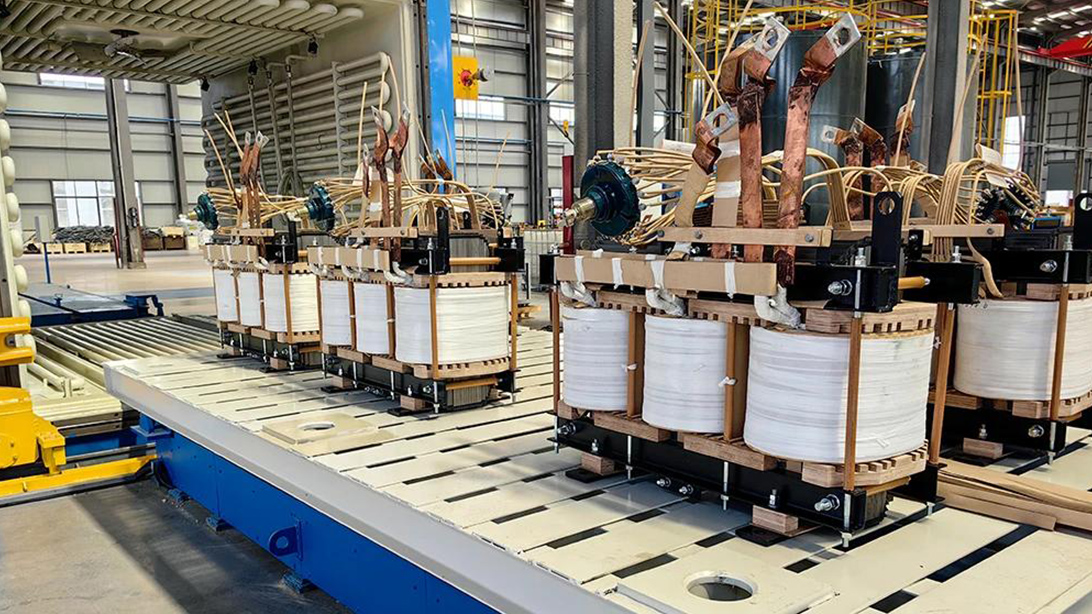
The evaluation should request only evidence relevant to the offered design and contractual quality plan. Useful documents can include a proposed inspection and test plan, manufacturing schedule, winding and core data required by the specification, material certificates where contractually required, routine-test procedures, type-test evidence where acceptable, and a document register.
Do not convert marketing language into an assumed capability. If a bidder claims a feature, rating, test, or material, require the corresponding guaranteed data or document reference. Unverified claims should remain open or be listed as deviations. This keeps the recommendation auditable and protects both the purchaser and the supplier from later misunderstandings.
Manufacturing records, the inspection plan and agreed FAT procedures provide traceable evidence for final technical acceptance.
The factory acceptance test scope should be settled before award, not during the inspection visit. Identify routine tests, specified type or special tests, witness and hold points, notice periods, applicable procedures, measuring-instrument records, report format, and the process for resolving nonconformities. Test names alone are insufficient; acceptance criteria and contractual responsibilities must also be clear.
For each guaranteed parameter, confirm whether the value is a design target, contractual guarantee, or test acceptance limit. State how tolerances will be applied and what happens when a measured result exceeds a guarantee. This avoids disputes caused by different interpretations after the transformer has already been manufactured.
A bid with fewer deviations is not automatically stronger. One unresolved deviation involving insulation level, impedance, short-circuit withstand, or terminal arrangement may be more serious than several minor documentation comments. Classify deviations by effect: safety or statutory acceptance, electrical-system compatibility, civil or mechanical interface, performance guarantee, operations and maintenance, schedule, and commercial scope.
Each deviation should have one of four outcomes: accepted with documented consequence, accepted subject to a defined clarification, rejected as noncompliant, or converted into a priced option. Avoid vague labels such as “noted.” The final technical bid evaluation report should make the decision and residual risk understandable to an approver who did not attend the clarification meetings.
The following is a hypothetical example for specification practice only; it is not a real Zisheng Electric project.
An industrial substation requires two transformers, each intended to support an agreed share of the normal load and a defined emergency operating case. Bidder A offers lower capital cost but quotes a higher load loss and excludes the cable boxes shown on the single-line diagram. Bidder B includes the cable boxes and lower guaranteed losses but proposes an impedance outside the study assumption. Bidder C meets the electrical values but leaves the FAT witness scope and document schedule undefined.
The evaluator should not rank these bids immediately. First, request a priced clarification for Bidder A’s cable boxes and recalculate lifecycle cost. For Bidder B, rerun or obtain confirmation against the short-circuit and motor-starting studies. For Bidder C, agree the inspection plan and document milestones. Only after these points are technically and commercially normalized can the offers be compared fairly.
Confirm the specification, data sheet, single-line diagram and load schedule use the same revision.
Record guaranteed ratings, cooling stages, voltage ratio, frequency, vector group, tapping and impedance.
Check losses on a common reference basis and document any capitalization factors.
Verify insulation levels, environmental conditions, enclosure, terminals and site interfaces.
Compare accessories, monitoring, protection devices and auxiliary supplies line by line.
Review drawings, document register, manufacturing schedule, inspection plan and FAT procedures.
List every exclusion, qualification and deviation with its technical and schedule consequence.
Confirm transport limits, delivery split, site assembly scope and preservation requirements.
Identify all purchaser inputs still required before design release.
Keep the technical recommendation separate from final commercial negotiation.
For related engineering guidance, review our articles on 13.8 kV versus 34.5 kV transformer selection, selecting a 2500 kVA transformer for an industrial plant, and industrial distribution transformer design factors.
Zisheng Electric can review the required duty against suitable oil-immersed transformers, dry-type transformers, or pad-mounted transformers. Send the project specification, transformer data sheet, single-line diagram, load list, harmonic information, short-circuit study assumptions, site conditions, interface drawings, and required FAT scope. A structured transformer technical bid evaluation can then focus on genuine differences instead of unresolved inputs.
Our engineering team will review the requirements and respond to project inquiries within 24 hours.