Please Choose Your Language
Views: 0 Author: Site Editor Publish Time: 2026-08-25 Origin: Site
I am an engineer from the transformer design team at Zisheng Electric, with long-term experience in the design and technical support of power transformers under special environmental conditions.
In recent years, I have witnessed the rapid growth of renewable energy projects in Middle Eastern countries such as Saudi Arabia and the United Arab Emirates. Large-scale solar, wind power, and energy storage projects are being developed one after another, and the requirements for medium-voltage distribution equipment are continuously increasing.
In these renewable energy projects, 33kV power transformers play a critical role. They are responsible for power collection and step-up grid connection. If the transformer cannot operate reliably, the overall power plant reliability and grid connection efficiency will be directly affected.
With the transformation of the energy structure, Saudi Arabia, the UAE, and other Gulf countries are continuously accelerating the development of renewable energy infrastructure.
Taking Saudi Arabia’s Vision 2030 as an example, renewable energy has become an important part of the country’s future energy strategy, with large-scale solar and wind power projects being continuously implemented.
These projects typically feature:
Large installed capacity
Complex operating environments
High grid connection requirements
As a result, they place higher demands on medium-voltage collector systems and step-up equipment.
In renewable energy plants, the 33kV collector system and supporting transformers are responsible for power collection and voltage step-up. They are key equipment for delivering generated electricity and connecting the plant to the grid, ensuring stable project operation.
It sits right at a practical balance point — keeping transmission losses under control while avoiding the higher cost and complexity associated with extra-high-voltage equipment.
Represented by large-scale renewable energy power plants such as the Dubai MBR Solar Park, utility-scale renewable projects in the UAE generally adopt 33kV voltage levels for the medium-voltage collector system. The 1500V DC power from the PV side is converted into low-voltage AC through inverters, then stepped up to 33kV by the field step-up transformers. The power is collected through the 33kV collector network to the substation, and then stepped up to 132kV/220kV through the main transformer before being connected to the public grid.
The Saudi 33kV system has no natural neutral point. It must rely on a grounding transformer to create a neutral point, and then connect a neutral grounding resistor to achieve resistance grounding. The transformer neutral point cannot be directly grounded.
Wind power projects follow the same approach. The 600MW Al Ghat wind farm in Saudi Arabia, consisting of 80 wind turbines rated at 7.7MW each, is equipped with a 33/132kV substation. The power generated by the wind turbines is first collected at 33kV and then stepped up and transmitted to the grid.
Selecting a transformer is not simply a matter of choosing based on installed capacity. The inverter output voltage, the collector system design, grid connection requirements, transmission distance, and future expansion plans all need to be considered together.
For example, in large-scale solar power plants, if the collector lines are long, slightly increasing the medium-voltage system level can significantly reduce line losses. Energy storage projects are different, requiring special attention to bidirectional power flow and the impact of frequent charging and discharging cycles on equipment reliability.
Different types of renewable energy projects have different requirements for transformer capacity, voltage levels, and cooling methods. The following table provides typical configuration references.
Project Type | Typical Capacity Range | High Voltage Side | Common Low Voltage Side | Recommended Cooling Method | Vector Group | Remarks |
|---|---|---|---|---|---|---|
Centralized Solar Power Plant | 1000–3150 kVA | 33 kV | 0.4 kV / 0.69 kV | ONAN (Oil Natural Air Natural) | Dyn11 | Match inverter total capacity; avoid excessive reserve margin |
Large-scale Solar Power Plant | 4000–10000 kVA | 33 kV | 0.69 kV / 0.8 kV / 11 kV | ONAN / ONAF | Dyn11 / YNd11 (not recommended) | Dual-split structure can be selected to accommodate multiple inverter inputs |
Wind Farm | 2000–12500 kVA | 33 kV | 0.69 kV / 1.14 kV | ONAN / ONAF | Dyn11 | Consider harmonic impact; K-factor design is recommended |
Battery Energy Storage System (BESS) | 1000–8000 kVA | 33 kV | 0.4 kV / 0.69 kV | ONAN / ONAF | Dyn11 | Consider bidirectional power flow and frequent charge/discharge operation |
Industrial Park Distribution | 500–20000 kVA | 33 kV | 11 kV / 6.6 kV / 415V | ONAN / ONAF | Dyn11 / Yyn0 (not recommended) | Select according to load diversity factor of 0.6–0.8 |
Of course, these are only typical configurations. The actual design must also consider grid connection voltage, load characteristics, and short-circuit impedance. When the selection is uncertain, consulting with our technical team is always available at no cost.
In reality, capacity matching is only the first step. During the technical evaluation stage, many EPC contractors pay closer attention to details such as transformer losses, short-circuit impedance, noise level, and maintenance convenience.
A common characteristic of Middle East renewable energy projects is that equipment must operate continuously under high-temperature conditions. Therefore, sufficient thermal margin must be considered during the design stage to ensure stable operation during peak summer loading.
The most significant difference between Middle East renewable energy projects and projects in other regions is the harsh natural environment: inland areas can experience surface temperatures reaching 55°C in summer, together with severe sand and dust accumulation; coastal areas face additional challenges from strong salt spray corrosion.
Transformers designed according to the conventional 40°C reference environment of IEC 60076 may experience issues such as actual temperature rise exceeding limits, accelerated insulation aging, radiator blockage, and corrosion of metal components when directly operated in these conditions. This can significantly increase maintenance frequency.
Therefore, equipment must undergo complete tropicalized adaptation design. Based on IEC 60076 requirements, temperature rise calculations should be carried out according to the actual maximum ambient temperature of the project (55°C in Saudi Arabia and 50°C in the UAE), while considering additional losses caused by renewable energy harmonics.
An intelligent ONAN/ONAF hybrid cooling system can be adopted to ensure continuous full-load operation under extreme high-temperature conditions at midday.
For coastal projects, the complete unit should follow the ISO 12944 C5-M heavy-duty anti-corrosion coating system to withstand salt spray, ultraviolet radiation, and sand erosion.
Containerized (E-house) equipment solutions are widely used. These systems can be fully integrated and tested in the factory, reducing onsite workload. The enclosure provides high-level protection against dust and salt mist. However, additional temperature rise caused by heat accumulation inside the enclosure must be evaluated during the design stage.
Design Factor | Key Considerations |
|---|---|
Ambient Temperature | Saudi Arabia adopts 55°C and UAE/Jordan approximately 50°C as maximum ambient temperature for temperature rise verification; consider inverter harmonic additional losses and reserve winding hot-spot margin |
Cooling Method | Select ONAN / intelligent ONAN-ONAF variable frequency hybrid cooling according to capacity; containerized / E-house solutions require additional verification of internal heat accumulation to ensure full-load operation under extreme temperatures |
Protection and Anti-corrosion Design | Inland desert projects require dust and sand protection; coastal projects follow ISO 12944 C5-M heavy-duty corrosion protection coating system; configure sand-resistant breathers, radiator filters, and wide-temperature-resistant sealing materials |
Insulation Design | 33kV equipment insulation level Um=36kV; designed according to inverter-duty operating conditions, controlling winding temperature rise and hot-spot temperature; withstand daily thermal cycling and improve long-term reliability |
Frequency and Power Quality | Distinguish between 50Hz and 60Hz projects; consider harmonic loading, adopt K-factor winding design to reduce harmonic heating; Dyn11 vector group is preferred for field step-up transformers |
System Grounding Adaptation | Saudi Arabia and other 33kV systems without inherent neutral points require Z-type grounding transformers + neutral grounding resistors (NER) to meet grid protection requirements for single-phase grounding faults |
Installation Method | Differentiate between outdoor open installation and containerized / E-house transformer solutions; factory-integrated container equipment requires evaluation of enclosure heat dissipation and transportation protection |
From an engineering design perspective, for Middle East projects, temperature rise limits and protection levels are two absolute boundaries that cannot be compromised.
The IEC standard provides minimum requirements, not the final target. When temperature increases by 6–8°C, the insulation life can be reduced by half. This is not an exaggeration, but a proven physical relationship.
In our projects in the Dubai MBR Solar Park and several Saudi Arabian projects, we have always followed this design approach, and the equipment has been operating reliably.
The biggest challenge of Middle East renewable energy projects is not simply the high temperature, but whether equipment can withstand long-term operation under complex environmental conditions. In countries such as Saudi Arabia and the UAE, solar power plants and wind farms are usually built in open areas, where equipment is exposed to high temperatures, sand and dust, and in coastal regions, salt spray throughout the year.
The real challenge for 33kV transformers is not the voltage level itself, but long-term reliability under extreme environmental conditions.
A transformer with conventional design may perform well under normal operating conditions, but in the Middle East, every aspect needs to be re-evaluated — how to control temperature rise, which cooling method to apply, what level of protection is required, and whether the insulation system needs upgrading. Each factor requires detailed engineering calculation.
When ambient temperature increases, heat dissipation efficiency naturally decreases. During long-term high-load operation, internal temperature rises and the aging rate of insulation materials accelerates significantly. Therefore, transformer design for Middle East projects must include sufficient thermal margin, which is a fundamental requirement.
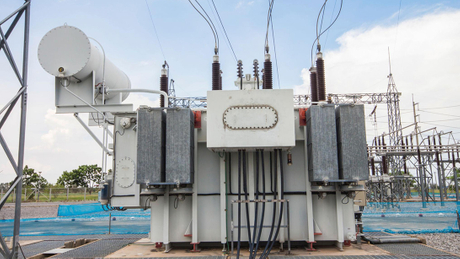
For cooling systems, small and medium-capacity transformers generally use ONAN natural oil circulation, while large oil-immersed transformers used in major renewable energy projects usually adopt ONAF forced air cooling for stronger heat dissipation performance.
Protection design also cannot be overlooked. Sand and dust can block radiators, while salt spray can corrode metal components. For outdoor-installed 33kV transformers, enclosure protection, anti-corrosion treatment, and sealing design must be specially reinforced instead of simply applying standard product configurations.
Based on our own project experience, whether a transformer can operate reliably for more than 20 years depends largely on whether the local environmental conditions were fully considered during the design stage. Even with high-quality materials, if the design does not account for the actual environment, the performance will still be compromised.
Renewable energy projects are well known for their strict requirements on equipment reliability. Whether it is solar power or wind power, the transformer plays a critical role in the power conversion and collection system. Once a transformer fails, not only do maintenance costs increase, but the entire power plant’s energy production revenue can also be affected.
Therefore, the manufacturing process and factory testing are extremely important. Without strong control over these two aspects, even the best design remains only a concept on paper.
A reliable 33kV power transformer requires strict control throughout the entire manufacturing process, including core processing, winding production, insulation treatment, assembly, and inspection.
During actual production, winding clamping force, core assembly accuracy, and insulation processing technology all directly affect the long-term operating stability of the equipment. Every step matters.
The core manufacturing process directly affects no-load losses and operating efficiency. The design and manufacturing quality of the windings determine mechanical strength and short-circuit withstand capability. The quality of insulation treatment directly influences the service life of the transformer.
Before delivery, a complete set of transformer tests is essential, including:
Winding resistance test
Turns ratio test
Insulation resistance test
No-load loss test
Load loss test
Power frequency withstand voltage test
Induced voltage test
For large-scale renewable energy projects, according to EPC contractor and owner requirements, additional tests are usually required, including temperature rise tests, partial discharge tests, and sometimes third-party inspections.
In my opinion, testing is not only about providing a quality report. More importantly, it helps identify potential problems during the factory stage instead of discovering them after installation on site.
Renewable energy projects usually have tight construction schedules and complex site conditions. After the equipment arrives, installation, commissioning, and grid connection need to be completed as quickly as possible. The more fully the equipment is verified at the factory, the lower the risk during onsite commissioning.
This is also why more and more international EPC companies do not only focus on price when selecting transformer suppliers. They pay more attention to manufacturing capability, quality control systems, and whether the supplier has experience with similar projects.
After years of development in the renewable energy industry, customer expectations have long gone beyond simply “buying a transformer”. A solar power plant may require a complete solution including 33kV step-up transformers, solar transformer skids, and medium-voltage distribution equipment. Wind power and energy storage projects need to consider the collector system, grid connection requirements, and long-term operational reliability. The entire solution needs to work together.
To meet the requirements of different renewable energy projects, Zisheng Electric provides oil-immersed transformers, substation transformers, pad-mounted transformers, pole-mounted transformers, dry-type transformers, and other power distribution equipment. equipment. The company owns 22 utility model patents and 3 software copyrights, has passed ISO9001 quality management system certification, and complies with relevant IEC standards.
For the Middle East renewable energy market, we focus on actual project requirements and operating environments — including how to deal with high temperatures, sand and dust, and salt spray conditions, how to optimize product design, and how to manufacture and test equipment according to IEC 60076 requirements. These are areas where we have developed mature engineering practices.
A transformer is not an isolated piece of equipment. It is a key part of the safe operation of the entire power plant. Reliable design, strict manufacturing processes, and comprehensive testing together determine the performance and service life of a transformer over the next several decades.
Zisheng Electric looks forward to working with more Middle East solar, wind energy, and industrial power projects, providing customers with reliable 33kV transformer solutions.