Please Choose Your Language
Views: 0 Author: Site Editor Publish Time: 2026-08-25 Origin: Site
As a technical engineer at Zisheng Electric, I face various technical questions from EPC contractors and distributors every day. Among them, the question I am asked most frequently is — how should oil-immersed transformers be designed and manufactured according to the IEC 60076 standard? Behind this question is actually a high level of attention to product quality and compliance. Today, I will explain this standard clearly from an engineering practice perspective.
IEC 60076 is the core series of standards developed by the International Electrotechnical Commission for power transformers, covering the technical requirements, test methods, and manufacturing specifications for power transformers, reactors, voltage regulators, and other related equipment. For an oil-immersed transformer manufacturer, whether the company can fully understand and strictly implement this standard directly determines whether its products can enter international markets and achieve long-term reliable operation under demanding conditions.
Currently, this series of standards has been updated to the third edition (with different parts released successively after 2011). Compared with previous editions, significant adjustments have been made in areas such as loss limits, temperature rise limits, and short-circuit withstand capability. In our actual design work, we have found that many domestic manufacturers still follow outdated indicators, which can easily cause problems during export projects or acceptance inspections for international projects.
Full Implementation of Standards Throughout the Design and Manufacturing Process
Insulation level is the starting point of transformer design and one of the areas where compromise is not acceptable. The standard clearly defines the lightning impulse withstand voltage and power frequency withstand voltage requirements for different voltage levels. The graded insulation and full insulation design solutions we adopt are strictly verified according to the tables specified in the standard.
In practical engineering, the control of electric field strength at the winding ends, the selection of electrostatic ring curvature radius, and the arrangement of angle rings all directly affect insulation margin. The design team at Zisheng Electric reserves at least an additional 8% margin in lead arrangement design. This is not a mandatory requirement of the standard, but an experience-based value accumulated from the operating feedback of hundreds of transformers.
Loss limits are one of the most frequently reviewed clauses in EPC contracts. The standard defines clear tolerance ranges for no-load losses and load losses — typically +15%. However, experienced transformer designers understand that controlling losses within +10% of the standard value during the manufacturing stage is necessary to leave sufficient safety margin for subsequent temperature rise tests and on-site acceptance.
We select high magnetic permeability grain-oriented silicon steel sheets (high-performance grain-oriented silicon steel materials, such as low-loss grade materials) to reduce no-load losses. At the same time, we reduce load losses through optimized winding conductor specifications and transposition processes. The shearing burr of silicon steel sheets is controlled below 0.02 mm. Although this process appears insignificant, it is critical for controlling the dispersion of no-load loss performance.
Temperature rise directly affects transformer service life. The standard specifies the following temperature rise limits:
Part | IEC 60076-2 (2011) Limit | Zisheng Electric Internal Control Value | Test Method |
|---|---|---|---|
Top oil temperature rise (K) | According to cooling method and insulation system requirements | ≤55 | Thermocouple method |
Average winding temperature rise (K) | Typically 65K (typical value for mineral oil transformers) | ≤60 | Resistance method |
Temperature rise of core and structural component surfaces (K) | ≤80 | ≤75 | Thermocouple method |
Tank wall surface temperature rise (K) | ≤85 | ≤80 | Thermocouple method |
Note: The above limits are based on an ambient temperature of 40°C and continuous rated operating conditions.
The internal control values are 5K stricter than the standard requirements, which means we need to put more effort into oil duct design. The dimensions and distribution of layer oil ducts and spacer oil ducts, as well as the opening positions of cooling guide structures and clamping plates, are all verified through thermal-fluid coupling simulation.
This is one of the aspects that most tests a transformer designer’s technical capability. The standard requires transformers to withstand short-circuit currents for 0.5 seconds at the rated tap position, while maintaining both dynamic and thermal stability without failure.
In our winding pre-tightening force calculations, we introduce a dynamic axial force distribution model. The end clamping structure adopts a combination design of disc springs + insulating pressure plates, effectively absorbing mechanical stress during short-circuit impacts.
The low-voltage winding uses self-bonding transposed conductors, which significantly reduce circulating current losses while improving the overall mechanical rigidity of the winding.
For critical projects or special customer requirements, short-circuit withstand capability verification tests can be carried out for confirmation. This is the bottom line, with no compromise.
The standard specifies clear requirements for transformer oil dielectric loss, moisture content, and gas content.
During the oil filling process, we use a dual process of vacuum oil filling + hot oil circulation to ensure that the moisture content in the oil is controlled below 10 ppm.
For sealing, all flange connections adopt a double sealing ring structure and undergo a 24-hour positive pressure leakage test.
From winding production to core stacking and final assembly, every stage has corresponding standard requirements.
What I especially want to emphasize is that — the execution capability of process documents is far more important than design calculations.
Even the most perfect design can still result in an unqualified final product if deviations occur during the manufacturing process.
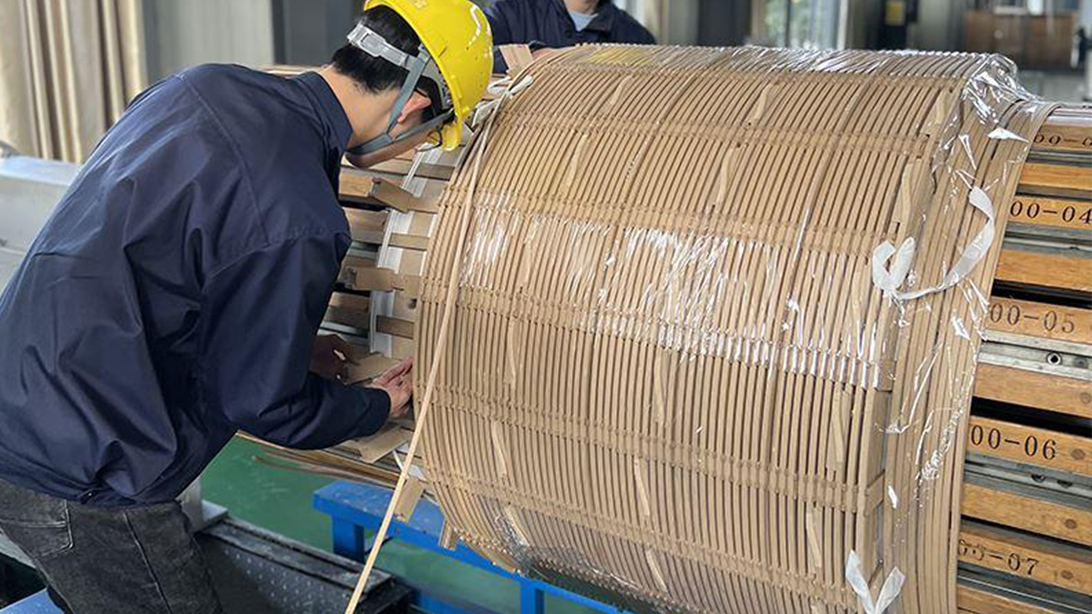
Taking winding production as an example, the standard does not specify a specific winding tension value. However, we set process parameters for each transformer according to conductor specifications and insulation thickness, and continuously monitor tension fluctuations during the winding process.
Insufficient tension can cause the winding to become loose, while excessive tension can damage conductor insulation. Finding the correct balance requires engineering experience and accumulated production data.
The selection of core stacking joint methods (direct joints or mitered joints) directly affects no-load performance and noise levels.
At present, we fully adopt the multi-step graduated mitered joint process, and the noise level is generally 5–8 dB(A) lower than standard values.
When working with EPC contractors, we are often asked several practical questions:
Regarding the validity period of type test reports: The IEC standard does not specify a validity period, but project owners usually require the reports to be issued within the past 5 years. We arrange complete type tests for at least two capacity levels of products every year to ensure that our test report database is continuously updated.
Regarding the transition period for standard revisions: When IEC releases a new version, there is usually a transition period of 12–24 months. We proactively inform customers about the current project stage and assist them in determining which version of the standard should be applied, avoiding deviations in standard references during project acceptance.
Regarding on-site installation and acceptance: Field tests specified in the standard, such as induced voltage withstand tests and partial discharge measurements, have specific requirements for testing equipment and environmental conditions. We define acceptance conditions in advance within the technical agreement to avoid disputes during later project execution.
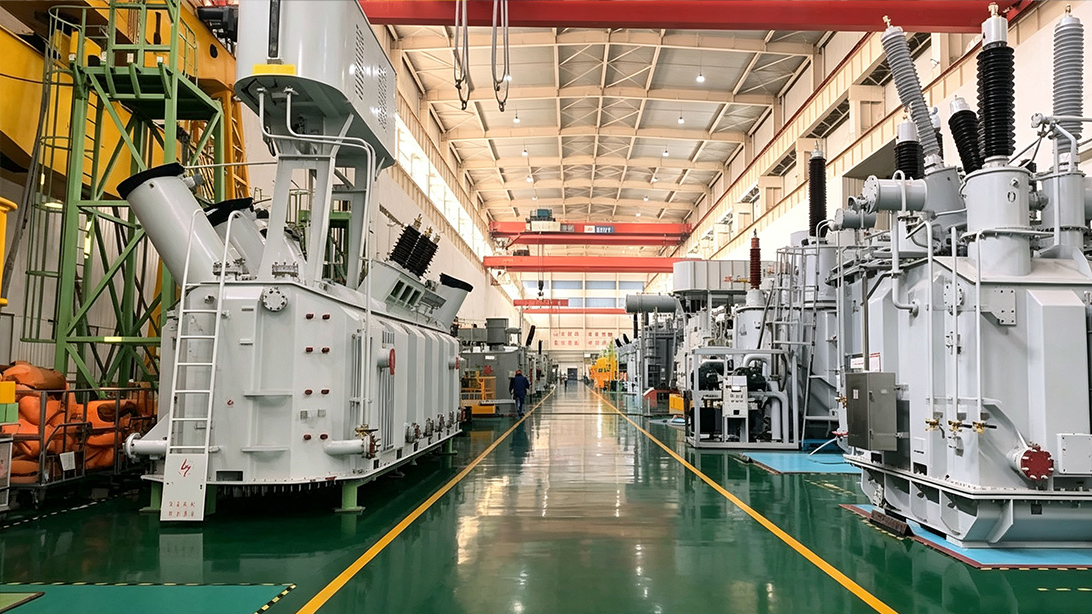
As an oil-immersed transformer manufacturer specializing in oil-immersed transformer manufacturing, we have provided more than 200 customized products for EPC projects in Southeast Asia, the Middle East, Africa, and other regions according to the IEC 60076 series standards.
We support the design and manufacturing of 110kV and 132kV power transformers, meeting the requirements of power grids, renewable energy projects, and industrial applications.
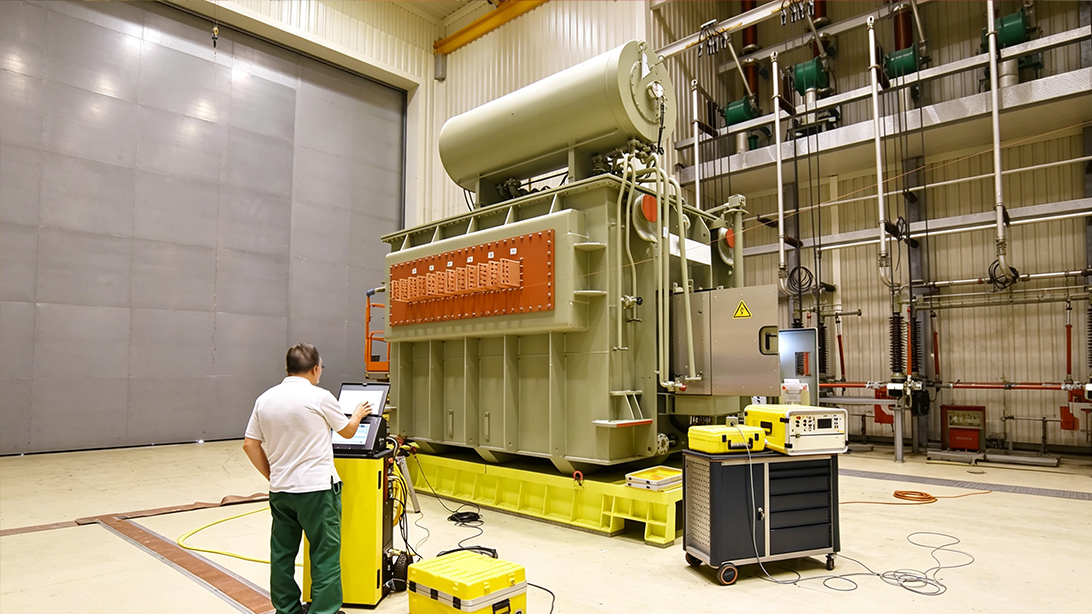
Each transformer is supplied with complete factory test reports and type test reports. The testing scope includes:
Voltage ratio measurement
Winding resistance measurement
No-load loss and no-load current measurement
Short-circuit impedance and load loss measurement
Insulation characteristic measurement
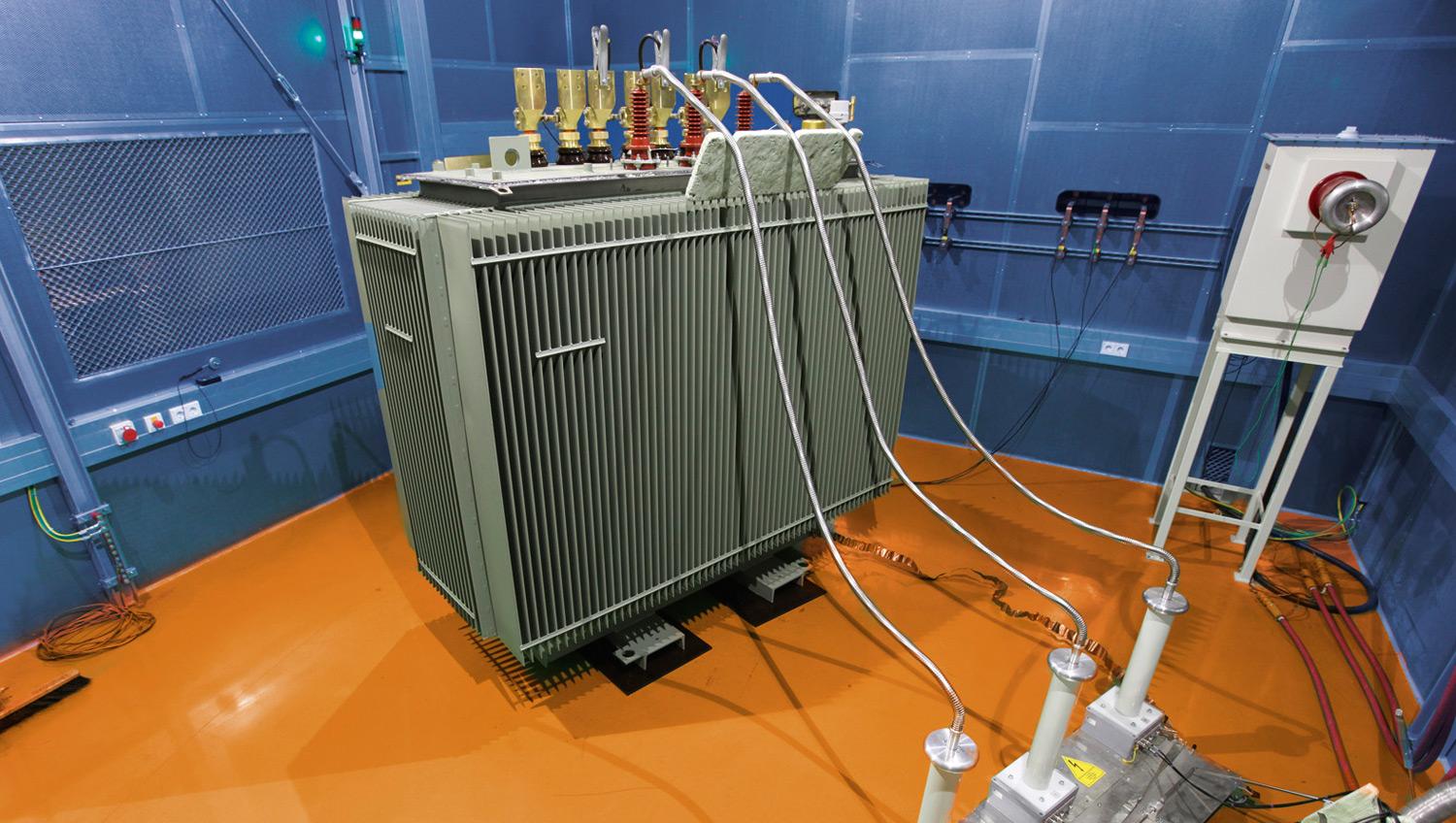
Power frequency withstand voltage test
Induced voltage withstand test
Partial discharge measurement
For projects with special requirements, we also provide third-party inspection and witness testing services to ensure full traceability throughout the entire process, from raw material inspection to final product shipment.
Standards are the baseline, not the limit.
In actual engineering projects, environmental conditions such as altitude, ambient temperature, and installation ventilation conditions are often more demanding than standard operating conditions. We carry out customized design solutions based on actual project parameters rather than simply applying standard tables mechanically.
If you are preparing a transformer selection plan for a project or have questions regarding specific standard requirements, please feel free to contact us.
Zisheng Electric — Making Every Transformer Ready to Stand the Test of Standards.
This article is based on the technical requirements of the IEC 60076 series standards (2011 edition and subsequent revisions). Actual project execution shall follow the standard version specified in the contract agreement.